Answering the question: the best 12V battery for gas golf carts depends on your needs for reliability, maintenance, and lifetime. This guide highlights five top 12V batteries that are commonly used in gas-powered golf carts and similar rides. They cover sealed lead-acid (SLA/AGM), gel, and lithium options, with notes on durability, maintenance, and performance in varying climates. Whether you want a maintenance-free option, extra longevity, or higher cold-cranking power, there’s a choice here for classic gas carts and modern upgrades alike.
Buyer overview: choose sealed lead-acid (SLA/AGM) or gel for traditional golf carts that prioritize easy replacement and lower upfront cost. For lighter weight and longer life with fewer maintenance needs, consider lithium iron phosphate (LiFePO4) options. The best fit depends on your priorities: upfront price, total lifespan, weight, and climate tolerance. The following table compares the five products to help you quickly compare capacity, type, and best-use cases.
| Product | Battery Type | Capacity (Ah) | Best For |
|---|---|---|---|
| Mighty Max ML35-12 SLA | SLA | 35 | Classic golf carts, low-maintenance needs |
| Mighty Max ML35-12 Gel | Gel | 35 | Moderate temperature tolerance, maintenance-free feel |
| Goodyear GYTX12-12V | SLA/AGM | 14 | Compact or auxiliary power, quick replacement |
| UPLUS 12V 100Ah Deep Cycle | AGM/Hybrid Gel | 100 | Extended run time, solar or trolling motor-style use |
| WEIZE 12V 100Ah AGM | AGM | 100 | High-capacity, maintenance-free, rugged climates |
Mighty Max ML35-12 SLA Battery — 12V 35Ah
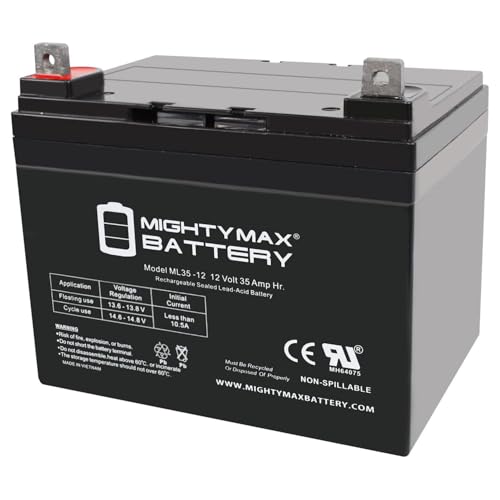
The ML35-12 is a 12V 35Ah sealed lead acid (SLA) battery. It is described as maintenance-free and replacement-ready for a range of trolling motors and small vehicles. It lists compatibility with several deep-cycle and trolling motor applications, making it a straightforward option for standard gas golf carts that use lead-acid power. Best for buyers seeking an affordable, plug-and-play replacement with familiar lead-acid performance and widely available screws, though wiring harnesses are not included. A potential limitation is that it does not include mounting hardware or wire harnesses, so plan accordingly.
Who this is best for: cart owners needing a reliable, readily available SLA 12V battery with a proven track in golf carts and similar equipment. Why chosen: strong compatibility with common 12V systems and a conventional form factor that fits many existing mounts. Caution: check your cart’s mounting space and ensure you have screws/fasteners compatible with the terminal layout and size.
Mighty Max ML35-12 Gel — 12V 35Ah

The ML35-12 Gel is a 12V 35Ah rechargeable gel battery designed for steady power delivery with low self-discharge. Gel batteries typically offer good performance in a wider range of temperatures and defense against leakage. This model emphasizes long-term reliability and stability, suitable for climates where temperature swings are common. Best for golf carts used in back-and-forth sessions or storage where maintenance-free operation is valued. Caution: gel batteries can be heavier than comparable LiFePO4 options and may have different charging requirements.
Who this is best for: cart owners who want a maintenance-free gel option with good temperature resilience. Why chosen: gel chemistry tends to deliver reliable power with less risk of spills. Caution: verify your charger’s compatibility with gel chemistry to avoid charging issues.
Goodyear GYTX12-12V — 14Ah SLA/AGM

This Goodyear option delivers 14Ah in a compact 12V package with maintenance-free operation. It is designed to withstand shocks and extreme temperatures, featuring a high discharge rate and reliable recovery. It’s best for those with smaller power demands or as an auxiliary battery in vehicles with limited space. Best for: smaller carts or secondary power needs. Limitations: lower capacity means more frequent recharges for longer trips, and it may be less suitable for full-day golf cart use without recharging cycles.
Why chosen: compact form factor and robust design for rugged use. Caution: not ideal for high-demand, all-day golf cart sessions on a single charge.
UPLUS 12V 100Ah Deep Cycle

The UPLUS 12V 100Ah Deep Cycle is a large-capacity battery designed for extended run times and heavy-duty cycling. It uses hybrid AGM/gel technology and has a thick AGM separator with a robust valve-regulated design. It is suitable for solar setups, RVs, golf carts, and trolling motors where longer intervals between charges are beneficial. Best for: carts used for longer golfing sessions or those paired with auxiliary solar or backup power. Caution: larger size and weight may require more substantial mounting hardware and space planning.
Why chosen: high capacity supports longer trips and slower discharge, making it a solid long-life option for gas golf carts. Better for: buyers prioritizing endurance and a maintenance-free experience, with modern AGM/gel technology for safer operation.
WEIZE 12V 100Ah AGM — Deep Cycle

The WEIZE 12V 100Ah AGM is a maintenance-free option with a low self-discharge rate and an 1100A max discharge current. It is designed for RVs, solar systems, trolling motors, and golf carts. It aims to provide strong reliability in a variety of environments. Best for: users who want a high-capacity, maintenance-free AGM battery that can handle climate variation. Caution: ensure your charging system is compatible with AGM chemistry and follow venting guidelines where applicable.
Buying Guide: Key Considerations For 12V Golf Cart Batteries
- Battery chemistry: Decide between SLA/AGM, Gel, or Lithium LiFePO4. SLA/AGM and Gel are typically more affordable and widely compatible with existing chargers, while LiFePO4 offers lighter weight, longer life, and deeper cycling.
- Capacity needs: Larger carts or multi-day use benefit from 100Ah or greater. For light use, 35–60Ah may suffice. Consider daily running time and recharge opportunities.
- Maintenance requirements: SLA and Gel often require minimal maintenance, while LiFePO4 needs appropriate BMS integration and charger compatibility.
- Charger compatibility: Ensure your charger matches the battery chemistry (gel, AGM, LiFePO4) and charging current. Mismatched charging can reduce battery life.
- Temperature tolerance: Extreme climates affect performance. Gel and LiFePO4 generally handle temperature swings better than some SLA options.
- Physical fit: Confirm dimensions and mounting space. Some 100Ah batteries require more room and stronger hardware.
- Weight considerations: LiFePO4 is significantly lighter than lead-acid options, easing installation and affecting cart handling.
FAQs
- Q: Is a 12V battery enough for a gas golf cart? A: Most gas golf carts use a 12V system for accessories; some may have larger duty cycles with 24V or more. Check your cart’s electrical diagram to confirm the correct single-battery requirement.
- Q: Can I mix battery types in a cart? A: Do not mix different chemistry types. Mixing can create imbalanced charging and reduced performance or safety risks.
- Q: How often should I replace a 12V golf cart battery? A: Replacement timing depends on usage and chemistry. SLA/AGM and Gel batteries typically last 2–5 years; LiFePO4 can exceed 5–10 years with proper care.
- Q: Do I need a specific charger for 100Ah batteries? A: Yes, use a charger compatible with the battery’s chemistry and capacity. A charger rated around 0.25C (e.g., 25A for a 100Ah battery) is common but follow manufacturer guidelines.
- Q: What factors affect run time the most? A: Battery capacity (Ah), discharge rate, and how often you recharge. Temperature and storage state also influence performance.
- Q: Should I choose lead-acid or lithium for a golf cart? A: Lead-acid options (SLA/AGM/Gel) are usually cheaper upfront, while LiFePO4 provides lighter weight, longer life, and deeper cycles, with higher long-term value for frequent use.