When choosing a 12-volt deep cycle battery for a golf cart, reliability and long runtime matter most. This guide highlights five strong options, explaining who each is best for and why. Use this to compare capacity, durability, and maintenance needs to pick the right fit for your cart and usage pattern.
Product Quick Reference
| Product | Brand | Type | Approx. Capacity | Best For |
|---|---|---|---|---|
| US Battery US12VXC2 GC12 (Set of 4) | U.S. Battery | Flooded Lead Acid | 155 Ah each | High runtime, heavy-duty use |
| CROWN CR-GC150 12V 150Ah | CROWN BATTERY | Flooded Lead Acid | 150 Ah | Consistent power, long life |
| Trojan T-1275 12V (Pack of 4) | Trojan Battery Company | Flooded Lead Acid | 150 Ah (20h) | Traditional reliability, easy replacement |
| WEIZE Deep Cycle AGM 12V 100Ah | WEIZE | AGM | 100 Ah | Maintenance-free, lower leakage risk |
| US Battery US12VRX XC2 12V 155Ah | U.S. Battery | Flooded Lead Acid | 155 Ah | Advanced XC2 tech, long life |
Set of 4 | US Battery US12VXC2 12 Volt 155 Ah Deep Cycle GC12 Battery
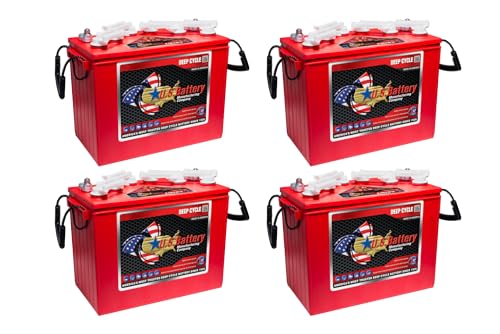
The US12VXC2 is a 12-volt deep cycle battery designed for extended runtime in golf carts. With 155 Ah at the 20-hour rate, these batteries suit setups requiring steady, long-lasting power. Best used in fleets or carts that cycle repeatedly through long days of play or service. The GC12 classification confirms compatibility with many standard golf cart configurations. This option is well-suited for operators seeking reliable, heavy-duty performance and straightforward replacement.
Best for: high-usage golf carts and fleet replacements where maximum runtime is essential. A potential limitation is that these are flooded lead-acid units, requiring regular maintenance and water checks in some climates.
Crown CR-GC150 12V 150Ah Deep-Cycle Batteries
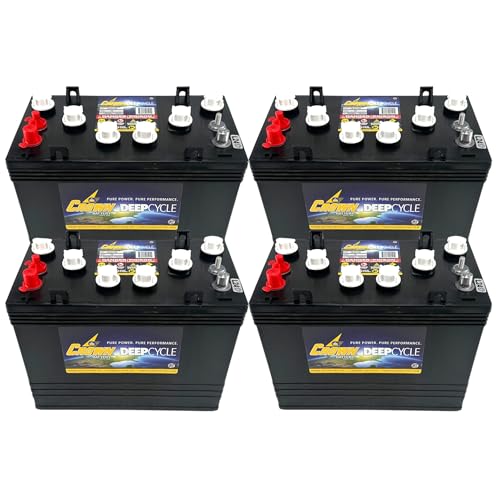
The Crown CR-GC150 delivers 150 Ah in a robust, long-life design. Crown emphasizes durable construction and steady performance across heavy-duty cycles, making it a solid pick for carts used in demanding environments, RVs, or solar back-up applications. Its 12-volt flooded lead-acid chemistry remains familiar and widely supported. It’s best for buyers prioritizing consistent power output and longevity over ultra-lightweight maintenance needs.
Best for: buyers seeking durable, long-lasting power with predictable discharge profiles. Limitation: flooded lead-acid chemistry requires periodic maintenance and water refills in some climates.
Trojan T-1275 12V Flooded Lead Acid (Pack of 4)

Trojan’s T-1275 is a classic GC12-sized, 12-volt flooded lead-acid battery with 150 Ah at the 20-hour rate. Built for durability, it uses polypropylene casing and T2 Technology for better performance and longer life in vibration-heavy golf cart use. This option is a good match for carts needing established, proven technology with straightforward replacements.
Best for: traditional golf carts and fleets that favor a well-known, long-standing manufacturer. Caution: flood-friendly maintenance is still required, and performance can depend on proper charging practices.
WEIZE Deep Cycle AGM 12V 100Ah Battery

The WEIZE 12V 100Ah AGM battery is maintenance-free, featuring a sealed design to minimize leakage risk and a low self-discharge rate. It is suitable for multiple applications, including RVs, trolling motors, and off-grid systems. The AGM chemistry makes it a convenient choice for users who want to reduce upkeep and avoid electrolyte management.
Best for: buyers who want a maintenance-free option with solid trunk-life characteristics. Limitation: 100 Ah is lower than the 150–155 Ah options, which may limit runtime for high-demand carts.
US Battery US12VRX XC2 12V 155Ah Flooded Lead Acid

The US12VRX XC2 builds on US Battery’s XC2 technology to deliver enhanced performance and cycle life. With 155 Ah at the 20-hour rate, this option prioritizes long runtime for extended golf-cart sessions. XC2 enhancements are designed to improve reliability under repeated deep discharges, making it a strong choice for active carts with heavy daily use.
Best for: buyers seeking extra-long runtime with improved cycle life. Caution: as a flooded lead-acid package, ensure proper watering and charging routines are followed to maximize life.
Buying Guide
Key considerations can help you compare these choices more effectively. Use these questions to assess fit for your cart and usage.
What capacity do I need?
Capacity, measured in amp-hours (Ah), determines runtime. For carts that run long days or have frequent stops, 150–155 Ah options generally offer longer continuous use between charges. If you mainly cruise for shorter periods, 100–120 Ah models can suffice.
Which chemistry should I choose?
Flooded lead-acid batteries (GC12) are traditional and affordable but require regular maintenance, water checks, and venting. AGM batteries are maintenance-free and leak-resistant, ideal for space-constrained setups. Lifepo4 alternatives exist for longer life and lighter weight but typically cost more upfront.
Maintenance and durability
Flooded batteries are robust but need water management and proper charging to prevent sulfation. AGM options reduce maintenance but may have different charge profiles. For carts used daily, consider a maintenance plan and compatible charger.
Compatibility and replacement ease
GC12 sizing is common in many golf carts, which eases replacement. Check terminal configuration and dimensions to ensure a direct fit. If upgrading to a higher Ah rating, verify space and weight allowances in the cart’s battery compartment.
Which is best for heavy use vs. casual use?
For heavy-use fleets, the 155 Ah XC2 or GC12 setups provide longer runtimes and solid cycle life. For casual users or lighter carts, a 100–150 Ah option with an AGM profile can balance performance and ease of maintenance.
Safety and charging considerations
Lead-acid batteries require proper charging to extend life; avoid mixing brands or using incompatible chargers. Keep batteries in a ventilated area and follow manufacturer guidelines for watering and terminal care. If you switch to LiFePO4, ensure the charger and BMS are compatible with the new chemistry.
FAQ
- Q: Which battery type lasts the longest in a golf cart?
- Q: Do I need to water flooded lead-acid batteries regularly?
- Q: Is AGM safer for attic or smaller spaces?
- Q: Can I mix different brands in the same golf cart?
- Q: What should I consider when upgrading to higher Ah batteries?
- Q: Do these batteries require special chargers?
A: LiFePO4 and XC2-enhanced flooded lead-acid options typically offer longer cycle life under proper use. For traditional setups, XC2 or high- Ah flooded options provide strong longevity.
A: Yes, regular watering and proper charging help maintain performance and extend life.
A: AGM batteries are maintenance-free and leak-resistant, making them favorable for tight installations.
A: It’s generally not recommended due to differing charge characteristics and cycle life, which can shorten overall performance.
A: Ensure space, weight, and charging capacity align with the higher Amp-hour rating to avoid electrical or structural issues.
A: Most 12V flooded lead-acid and AGM batteries use standard 12V chargers, but verify the charger’s compatibility with the specific chemistry and capacity.