Get the right 383 stroker engine block setup for your GM small-block build. This guide highlights five top options that balance power, reliability, and installability for different buyers—from weekend hobbyists to professional engine builders. The focus is on blocks and kits that deliver the 383 cubic inches with strong torque and race-ready potential. Best choices vary by whether you want a dressed long block, base dressed, or a full carbureted or fuel-injected setup.
Product Comparison Snapshot
| Product | Type | Horsepower / Torque | Best For |
|---|---|---|---|
| BluePrint Engines GM 383 c.i. Deluxe Dressed Carbureted | Inline small-block assembly | 436 HP / 443 ft-lbs | Performance street build with carburetor |
| BluePrint Engines GM 383 c.i. Base Dressed Fuel Injected | Fuel-injected dressed | 436 HP / 443 ft-lbs | Modern EFI ease and reliability |
| BluePrint Engines GM 383 c.i. Base Dressed Carbureted | Base dressed carbureted | 436 HP / 443 ft-lbs | Classic carbureted performance |
| BluePrint Engines GM 383 c.i. Long Block | Long block | 436 HP / 443 ft-lbs | Full long-block replacement |
| Eagle 383 Rotating Assembly | Rotating assembly | — | Precision parts for builder projects |
BluePrint Engines GM Small Block 383 c.i. Deluxe Dressed Carbureted
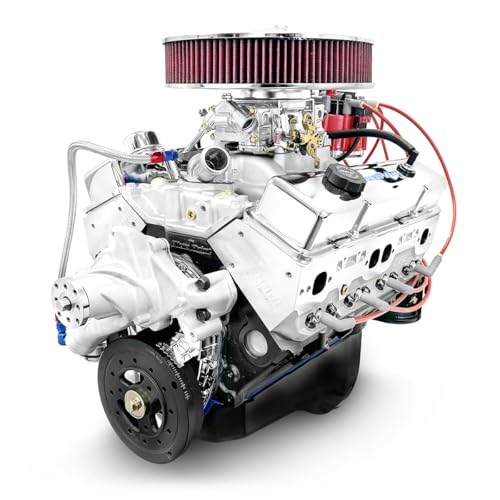
Overview: This 383 c.i. engine is built with aluminum cylinder heads, a hydraulic roller cam, and a compression ratio of 10:1. It delivers 436 HP and 443 ft-lbs of torque, making it a strong choice for street-strip cars that rely on a carburetor. The crank is a robust steel unit with a 3.750″ stroke and 5.700″ rods. This version is best for buyers who prefer a classic carbureted setup that’s ready to bolt in and run with minimal aftermarket work.
Best for: Performance enthusiasts who want a ready-to-run carbureted powerplant with strong torque and reliable components. Choose this if you’re aiming for a traditional big-block vibe with straightforward tuning and strong mid-range punch.
Limitation: Carbureted intake may require more frequent tuning compared to modern EFI in varied climates. Ensure your fuel system and manifold are matched to carb sizing for optimal performance.
BluePrint Engines GM Small Block 383 c.i. Base Dressed – Fuel Injected

Overview: This base-dressed package uses fuel injection and aluminum cylinder heads to deliver 436 HP and 443 ft-lbs, with 10:1 compression. The hydraulic roller cam has a .544 intake / .555 exhaust lift, and durations of 230/236 degrees at .050″, with a 110-degree LSA. The crank is steel with a 3.750″ stroke and 5.700″ rods.
Best for: Buyers who want modern drivability and easier startup with EFI while maintaining high power output. Choose this if you value precise fuel control and simpler tuning in variable weather.
Limitation: EFI systems can require specialized installation considerations; ensure your harness and sensors are compatible with your chassis and intake manifold.
BluePrint Engines GM Small Block 383 c.i. Base Dressed Carbureted

Overview: This base-dressed variant emphasizes reliability in a carbureted configuration with the same 436 HP and 443 ft-lbs output. Aluminum cylinder heads and a 10:1 compression ratio keep performance strong while maintaining drivability. The hydraulic roller cam features the same lift and duration as other BluePrint 383 builds.
Best for: Builders who want a straightforward carb-ed setup that’s easy to diagnose and tune, with strong torque for street and light strip use.
Limitation: Carbureted systems demand precise jetting and tuning; adverse weather or altitude changes can affect idle and throttle response.
BluePrint Engines GM Small Block 383 c.i. Long Block

Overview: The long-block version provides the same horsepower and torque figures with a complete bottom end and heads, ready for install with your choice of induction and accessory packages. Aluminum cylinder heads and a steel crank with a 3.750″ stroke and 5.700″ rods are standard across this family.
Best for: Enthusiasts who want a drop-in replacement that minimizes assembly work and offers a solid platform for drivetrain upgrades.
Caution: Long-blocks require compatible intake, cam, and valvetrain components; verify alignment with existing manifolds and accessories to avoid fitment issues.
Buying Guide
What to consider when selecting a 383 stroker engine block
- Induction type: Carbureted vs. fuel-injected affects tuning, cold-start reliability, and drivability. EFI is often easier in variable climates, while carburetors offer classic throttle response.
- Head material: Aluminum heads reduce weight and improve flow but may require different intake manifolds and gaskets.
- Compression ratio: A 10:1 ratio balances power and pump fuel tolerance for street use. Higher compression can improve performance at the expense of fuel requirements.
- Camshaft and roller lifters: Hydraulic roller cams provide strong power with reduced maintenance compared to solid cams, but require compatible lifters and timing gear.
- Crank and rod dimensions: A 3.750″ stroke with 5.700″ rods is common for 383 builds, offering good balance of rpm potential and torque.
- Block compatibility: Ensure bore spacing and deck height align with your chassis and engine mounts. A long-block can reduce installation time but still requires accessory fitment.
- Support and accessories: Consider ignition, fuel system, exhaust, and cooling solutions that fit within your build plan and budget.
What’s the simplest path for a first 383 build?
Pick a base-dressed or long-block option with ignition and fuel system already matched to your goals. For classic looks and throttle response, a carbureted Deluxe version is appealing. For everyday usability, a fuel-injected base dressed option provides easier handling and tunability.
How to balance performance with reliability?
Choose a long-block or dressed kit with proven components—aluminum heads, steel crank, and a hydraulic roller cam—to maximize reliability while maintaining strong power. Regular maintenance and correct fuel management are essential for sustained performance.
Key installation tips
- Verify compatibility with your transmission and bellhousing pattern.
- Check the engine block deck height and head gasket thickness to avoid compression issues.
- Match the cam and lifter types to the intake manifold and exhaust system for optimal airflow.
- Prepare the fuel system for the required octane level and delivery needs, especially for high-compression builds.
Frequently Asked Questions
- Q: What is a 383 stroker engine block best used for? A: It’s ideal for high-torque street performance and mid-range acceleration in GM small-block builds.
- Q: Is EFI better than carbureted for a 383 stroker? A: EFI offers easier tuning and consistent drivability; carbureted setups appeal to traditional setups and certain racing rules.
- Q: Do I need aftermarket parts with a 383 stroker? A: Depending on the kit, some components are included, but you’ll typically need a compatible induction, exhaust, and ignition system.
- Q: Can I install a 383 stroker block in a stock chassis? A: Most builds are feasible with proper matching components and mounting hardware; verify clearances and fitment.
- Q: How important is head choice on performance? A: Head flow and compression greatly influence horsepower and torque, especially in a 383 setup.
- Q: Are there reliability concerns with a high-performance 383? A: Use quality components, proper break-in procedures, and regular maintenance to maximize longevity.