Looking for an effective under-dash air conditioner (A/C) kit to upgrade a classic car? This guide highlights five reliable choices designed for vintage builds, trucks, and off-grid classics. Each option targets different needs—from quiet operation and fast cooling to installation ease and all-season performance. The top picks are suited for classic car enthusiasts who want cooler rides without rooftop units or engine-idle fuel waste.
Summary table of chosen products:
| Product | BTU / Heating | Best For | Notes |
|---|---|---|---|
| Bailigo 12000 BTU Under Dash A/C | 12,000 BTU | Quiet, energy-efficient cooling | Low-noise inverter, off-engine operation potential |
| Onsaeimei 13,700 BTU Under Dash A/C | 13,700 BTU | All-season comfort, long standby | Ultra-long standby, compact installation |
| ZFQPTO 12V A/C Unit | 12V, 550W | Versatile compatibility | Works with battery or generator |
| 12V Cool&Heat E-404-100 Kit | 12,700 BTU | Universal fit, ease of install | Includes all required components |
| Classic Auto Air Universal A/C Kit | 18,800 BTU | High-capacity cooling | Versatile and high capacity for larger classics |
Bailigo 12000 BTU Under Dash A/C Kit

This 12,000 BTU under-dash system targets classic cars and light trucks. It uses an inverter cooling approach with a low-noise evaporator and smart temperature control, delivering operation below 50 dB. Best for buyers who want quiet operation and strong cooling without rooftop installation.
Who it’s best for: enthusiasts seeking fast, quiet cooling for standard-size vintage interiors and those prioritizing a compact under-dash footprint. Why selected: proven quick cooling (minutes) and energy-conscious design.
Considerations: refrigerant R-134A is mentioned as not included; verify compatibility with your vehicle’s refrigerant handling.
Onsæimei 13,700 BTU Under Dash A/C

Delivering 13,700 BTU for cooling plus electric heating, this unit is designed for all-season comfort. It emphasizes ultra-long standby (7–9 hours) and a space-saving under-dash design, making it ideal for trucks, RVs, and modified vehicles where rooftop units aren’t feasible.
Who it’s best for: owners planning extended parking or camping in vintage builds who need reliable heating as well as cooling. Why selected: excellent standby duration and compact form factor.
Limitations: potential trade-off between standby duration and battery configuration; confirm your vehicle’s electrical capacity before installation.
ZFQPTO 12V A/C Unit
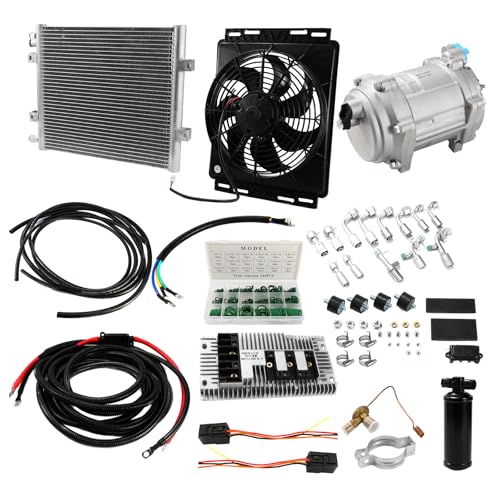
This 12V DC outdoor-unit A/C system is designed for wide compatibility, including vintage cars, trucks, RVs, and farm or construction vehicles. It’s powered by a 12V battery or generator, with low noise and energy efficiency as core benefits. Suitable for off-grid or standby cooling uses.
Who it’s best for: buyers seeking a versatile, battery-friendly option for diverse vintage vehicles. Why selected: broad compatibility and the ability to run independent of engine power.
Limitations: ensure your vehicle’s wiring and power setup can handle sustained 550W operation.
12V Cool&Heat Electric Underdash Kit
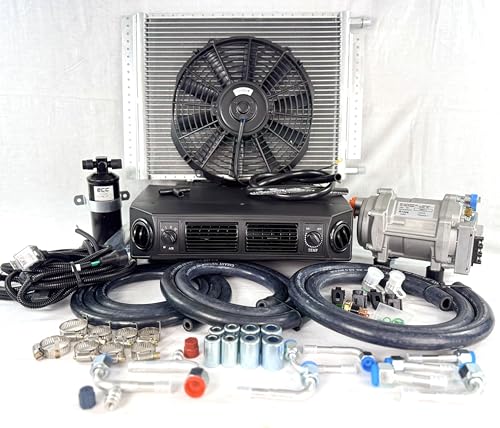
This kit features a 12,700 BTU capacity with heat and cooling, a four-way aluminum coil, and a plug-and-play harness. It’s designed for universal under-dash installation and includes mounting brackets and hoses. It’s a solid all-around choice for classic builds needing straightforward installation.
Who it’s best for: hobbyists who want an easier install and ready-to-run components. Why selected: strong cooling capacity with a straightforward installation path.
Caution: ensure your system refrigerant type aligns with the kit’s requirements and local regulations for R134a systems.
Classic Auto Air Universal A/C Kit

This kit delivers 18,800 BTU and a 359 CFM blower, using a 12V coil and parallel-flow condenser. It is designed for universal use with many classic vehicle layouts, including muscle cars and vans needing substantial cooling power.
Who it’s best for: owners of larger classic cars or muscle cars that demand higher cooling capacity. Why selected: high BTU rating supports robust performance.
Limitation: higher BTU units may require more complex installation and electrical planning; verify space and wiring compatibility before purchasing.
Buying Guide
- Installation space: Measure dash depth and clearance to ensure the unit fits without interfering with pedals or steering.
- Power source: Decide between engine-powered, battery-powered, or generator-supported units. Battery-only systems need sufficient battery capacity for prolonged operation.
- BTU needs: Classic cars with large cabins benefit from higher BTU units; smaller interiors may do well with 12,000–13,700 BTU options.
- Ease of installation: Plug-and-play harnesses and documented wiring diagrams simplify retrofits. Consider kits labeled “universal” for flexibility.
- R134a compatibility: Confirm refrigerant type matches your vehicle’s system and local regulations for refrigerants.
- Quiet operation: If you plan frequent open-window driving, prioritize low-noise evaporators and efficient compressors.
- Heating capability: All-season use may require integrated heating in addition to cooling.
FAQ
- What BTU is best for a classic car interior? A: For typical classics, 12,000–13,700 BTU provides solid cooling while preserving dash space.
- Can these kits run without the car engine? A: Some models support off-engine operation via battery or external power, depending on the design.
- Which kits are easiest to install in a restoration project? A: Kits marketed as universal with plug-and-play harnesses tend to install more quickly.
- Do these systems require professional refrigerant handling? A: Many installations can be done by enthusiasts, but refrigerant handling and disposal should follow local regulations and may require a certified technician.
- Are heating options included? A: Several kits offer heating, which is valuable for all-season comfort in colder climates.
- Will higher BTU units overcool a small classic interior? A: Yes, larger interiors may benefit from higher BTU outputs, but excessive cooling can waste energy; calculate cabin volume to match BTU needs.