If you’re tackling car decals, sticker residue, or window tint glue, these adhesive removers are designed to soften and lift sticky messes without harming most vehicle finishes. This guide highlights five purpose-built options, suitable for automotive surfaces, that balance effectiveness with surface safety. The buyers below are ideal for car owners, detailers, and DIY enthusiasts who want quick, reliable results without aggressive scrubbing.
Summary of chosen products
| Product | Best For | Surface Suitability | Notes |
|---|---|---|---|
| Perco Glue Off Adhesive Sticker Remover | Stubborn labels on cars and metal trims | Metal, painted surfaces, plastics | Not for delicate or porous surfaces |
| Goo Gone Automotive Adhesive Remover | Bumper stickers, sap, brake dust on cars | Car exterior and interior surfaces | Safe on finishes; no-drip formula |
| 3M Adhesive Remover | Post-collision masking and residue | Painted surfaces, glass, vinyl | Low VOC; easy-to-use aerosol |
| SHIELDOM Adhesive Remover | Stickers, decals, and labels on glass and paint | Metal, glass, plastic, painted surfaces | Includes plastic scraper and towel |
| MCTRHG Adhesive Sticker Remover | Car decals and window decals | Paint, glass, plastic | Water-based formula; includes multiple scrapers |
Perco Glue Off Adhesive Sticker Remover
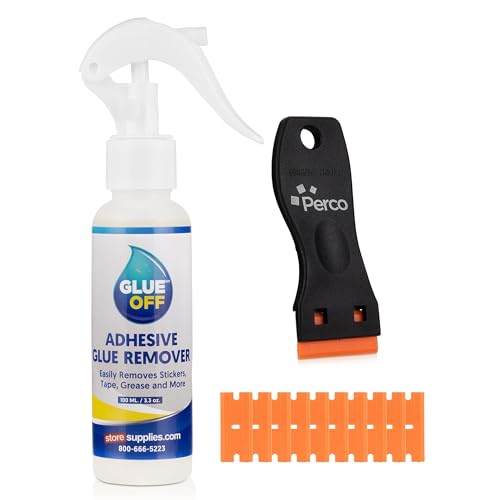
Best for: Car owners dealing with tough labels on metal or painted surfaces. Perco’s remover targets adhesives, silicone caulk, and similar residues, helping prepare surfaces for detailing or re-coating. It’s especially useful when you need a single product that also handles grease or tar buildup around trims.
Why selected: Its broad adhesive scope makes it a versatile auto maintenance tool. The formula emphasizes automotive surfaces while avoiding delicate or porous substrates, which helps prevent unintended damage during removal.
Caution: Not recommended for rubber, leather, fabric, unpainted drywall, unsealed stone, or unfinished wood. Use on test spots first if unsure about finish compatibility.
Goo Gone Automotive Adhesive Remover

Best for: Automotive exterior and interior cleanup, including bumpers, decals, sap, and tar. This remover is designed for multi-surface use, letting you tackle both the car’s finish and interior fibers without damaging sealed finishes.
Why selected: It combines citrus-based cleaning power with a thick gel that clings to surfaces, aiding dwell time for stubborn residues. It’s a convenient option when working on large areas like bumpers or window decals.
Limitation: Although versatile, avoid long exposure on porous or unfinished materials, and always wipe away residue to prevent streaks on glass or paint.
3M Adhesive Remover

Best for: Post-collision repair work or quick cleanup of masking residues on painted surfaces. The blend of non-abrasive solvents helps dissolve adhesive residues without harming cured paint.
Why selected: The product is designed for use during and after repair work, with a no-residue-after-use expectation. It’s available as an easy-to-use aerosol, enabling targeted application.
Caution: Confirm compatibility with the specific paint finish and test in a hidden area if you’re unsure about the finish.
SHIELDOM Adhesive Remover

Best for: Removing stubborn glue, labels, and decals from glass and painted surfaces without scratching or leaving residue. The included spatula and scraper improve precision and control during removal.
Why selected: The kit emphasizes safe surface interaction with a gentle plastic scraper that reduces the risk of marring. It’s well-suited for glassy surfaces such as windshields and side windows, as well as metal and painted panels.
Limitation: The kit’s efficiency depends on dwell time; excessive sitting can dull some finishes, so follow recommended contact times.
Adhesive Sticker Remover For Cars By MCTRHG

Best for: Rapid removal of car decals, window tint glue, and large sticker areas. The 3.3 oz spray with 19 plastic razors makes it a strong option for quick, broad-cleanup tasks.
Why selected: The water-based formula reduces heavy odor and sticky residues, while the supplied plastic razors minimize risk of scratching paint, glass, or sealants. It’s a practical all-around car decal remover.
Warning: Avoid aggressive scraping on edges where paint may be thin; always test on a small spot first.
Buying Guide: How To Choose The Right Car Adhesive Remover
- Surface type: Prefer products that specify automotive-friendly surfaces (paint, metal, plastic) and avoid porous or unsealed materials.
- Residue strength: For stubborn decals, thicker gels or multi-surface formulas work best. For light residue, lighter sprays can suffice.
- Delivery method: Aerosols power fast coverage; gels cling to vertical surfaces; sprays with scrapers reduce extra tools needed.
- Safety and finish: Look for low odor, low VOC, and non-abrasive formulas to minimize risk to the paint finish and clear coats.
- Tools included: Scrapers, spatulas, and towels enhance control and reduce scratching risk in delicate areas.
- Testing: Always test on an inconspicuous area first to confirm compatibility with clear coats and finishes.
Frequently Asked Questions
- Can I use adhesive remover on tinted windows? Yes, but test first on a small area and avoid prolonged dwell time to prevent film damage.
- Will these products remove window tint glue without removing tint itself? Many are formulated to minimize tint damage, but test in a hidden area first.
- Is there a risk of paint damage? Use products labeled safe for automotive finishes and follow dwell times; avoid abrasive scrapers on fresh paint.
- How do I remove residue after using remover? Wipe with a clean microfiber cloth and, if needed, repeat a light application before final polishing.
- Are these products suitable for interior surfaces? Some are safe on plastics and finished wood; always check the surface compatibility on the product page.
- Do I need to wash the area after removal? Yes, wipe clean and rinse or wipe with a damp cloth to remove any remaining chemical traces.