Answer: If you’re looking to prevent and control microbial growth in stored diesel, these products are effective biocides and fuel stabilizers designed for storage tanks and diesel systems. The top picks balance high gallon coverage with practical use for fleet or home storage. This guide highlights who each product is best for, why it was chosen, and a clear caution when applicable.
Buyer’s quick summary (selected products):
- FPPF KILLEM 16 oz — Best for mid-size storage, treats up to 1,280 gallons; strong bacteria and fungi control.
- Power Service Bio Kleen Diesel Biocide 16 oz — Best for dual-phase protection in fuel and water; recommended by diesel engine manufacturers.
- Biobor JF 16 oz (Hammonds/Duda Diesel) — Best for preventing sludge and clogged filters; treats up to 1,280 gallons.
- FPPF KILLEM EPA Registered 16 oz (Pack of 2) — Best value for multi-tank storage maintenance programs.
- Biobor JF 8 oz (8 oz bottle) — Best for smaller storage needs or where precise dosing matters; dual-phase chemistry.
FPPF KILLEM Biocide 16 oz
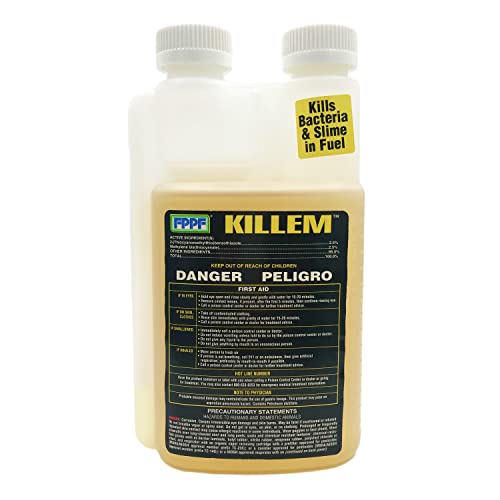
What it is: A fuel oil biocide formulated to control bacteria and fungi in stored fuel systems. Coverage: one 16 oz bottle treats up to 1,280 gallons. Best for mid-sized tanks and fleets needing straightforward microbial control.
Best for: fleet operators and facility managers who want a reliable, EPA-registered option for ongoing storage tank maintenance. Why selected: strong broad-spectrum microbial kill and familiar application for routine maintenance. Caution: effectiveness depends on proper dosing and uniform distribution in the tank; follow mixing directions precisely to ensure even coverage.
Power Service Bio Kleen Diesel Biocide 16 oz

What it is: A dual-phase biocide designed for both diesel fuel and water, aligning with major engine manufacturer recommendations. Coverage specifics aren’t listed here, but the product emphasizes effectiveness in both phases to reduce contamination risk.
Best for: users who want dual-phase protection and alignment with engine manufacturer guidance. Why selected: dual-phase chemistry helps control microbes in water-contaminated tanks and protects fuel as it travels through diesel systems. Caution: ensure the product is compatible with your storage setup and that water separation is properly monitored to maximize effectiveness.
Hammonds Biobor JF 16 oz Biocide

What it is: A 1:80 treatment ratio biocide for diesel fuel, kerosene, biodiesel, and other fuels. Treats up to 1,280 gallons with 16 oz. Prevents bacterial and fungal growth and helps reduce sludge formation.
Best for: applications needing proven sludge control and compatibility across multiple fuels. Why selected: strong track record for keeping fuels cleaner and reducing clogged filters. Caution: dosing accuracy matters for larger tanks; mis dosing can reduce effectiveness or increase costs.
KILLEM EPA Registered Biocide 16 oz (Pack of 2)

What it is: An EPA-registered fuel oil biocide designed to manage microbial growth in stored fuel systems. Pack of two provides extended coverage for multi-tank storage or periodic treatment cycles.
Best for: facilities running multiple tanks or those wanting a bundled option for ongoing maintenance. Why selected: consistent microbial control across tanks helps prevent cross-contamination and sludge buildup. Caution: ensure each tank receives proper dosing; skip dosing in already treated or empty tanks without proper guidance.
BioBor JF Diesel Biocide 8 oz

What it is: An 8 oz bottle with dual-phase chemistry that treats smaller volumes while providing microbial control and lubricity benefits. It also supports fuel storage tank maintenance by reducing corrosion risks caused by microbial by-products.
Best for: smaller storage setups, home garages, or frequent top-offs where precise dosing matters. Why selected: compact size makes it easier to manage for limited storage. Caution: smaller bottles require careful measurement to avoid under-dosing in larger tanks.
Buying Guide
- How to choose by storage size: For large tanks (thousands of gallons), prefer products with high gallon coverage per bottle and clear dosing guidance (like 1:80 or 1:1280 ratios).
- Phase considerations: Dual-phase products work well where water intrusion is a concern; choose these when water separation is common in your storage, or if corrosion from microbes is a priority.
- Tank material and fuel compatibility: Verify compatibility with your tank material (steel, aluminum, fiberglass) and whether the fuel types stored include diesel blends, biodiesel, or kerosene.
- Regulatory and safety: Look for EPA-registered options when possible and follow all label directions to maintain safe storage practices.
- Dosing strategy: For multi-tank operations, consider packs or larger bottles to reduce handling frequency; ensure even distribution during mixing or circulation.
FAQs
- What is a diesel fuel biocide used for? – It kills or inhibits microbial growth (bacteria and fungi) in stored diesel and related fuels to prevent sludge, corrosion, and clogging of filters.
- Can I use these products in all diesel storage tanks? – Most are designed for a range of fuels and tank materials; always check the product label for compatibility with your specific tank and fuel type.
- How quickly do biocides work? – Effects depend on dosage, tank conditions, and contamination level; follow the manufacturer’s dosing schedule for best results.
- Is dual-phase chemistry better than single-phase? – Dual-phase products address both fuel and water phases, which can provide more comprehensive protection in tanks that accumulate water.
- Are EPA-registered products always required? – EPA-registration indicates established standards for microbial control; it is preferred for larger fleets and regulated storage.