For classic car enthusiasts, upgrading to an all‑aluminum radiator can improve cooling efficiency, reduce weight, and extend engine life. This guide introduces five well‑matched aluminum radiators designed for vintage and collectible models. Each option suits different classic builds—whether you’re restoring a Ford Mustang, Chevy Bel Air, or a vintage Mini. Below you’ll find clear comparisons, practical buying notes, and a concise buying table to help you choose the best fit.
| Product | Vehicle Fitment Highlights | Core Size | Inlet/Outlet |
|---|---|---|---|
| ZING KING CC338 3-Row Aluminum Radiator | Ford Mustang 1967-1970; Ford Fairlane 1969; Ford Ranchero 1969; Mercury Cougar XR7 1967-1970 | Core Size: 16.3″ x 23.9″ x 1.73″ | Inlet 1.5″; Outlet 1.77″ |
| Smileracing CC340 3 Row Aluminum Radiator | 1963-1970 Ford Fairlane/Falcon/Galaxie; 1967-1968 Mercury Cougar | Core Size: 15.55″ x 19.61″ x 1.73″ | Inlet 1.50″; Outlet 1.77″ |
| ALLOYWORKS Aluminum Radiator | 1965-1969 Austin Mini Cooper (multiple variants) | Core Size: 11″ x 15.25″ | Inlet 1″; Outlet 1″ |
| RadRace 3 Row Aluminum Radiator Shroud | 1971-1990 Chevy Chevelle/Impala/Caprice; C10/C20/C30; GMC Jimmy | Core Size: 28.27″ x 16.85″ x 1.74″ | Inlet 1.5″ (driver side); Outlet 1.5″ (passenger) |
| VIPDUHI 5.2L Radiator (Dodge Mopar) | 1976-1989 Dodge Aspen/Plymouth Volare, 1980-1989 Mopar cars | Core size: 25.9″ x 17.9″ | Upper 1.5″; Lower 1.5″ |
ZING KING CC338 3-Row Aluminum Radiator for Ford Mustang and More
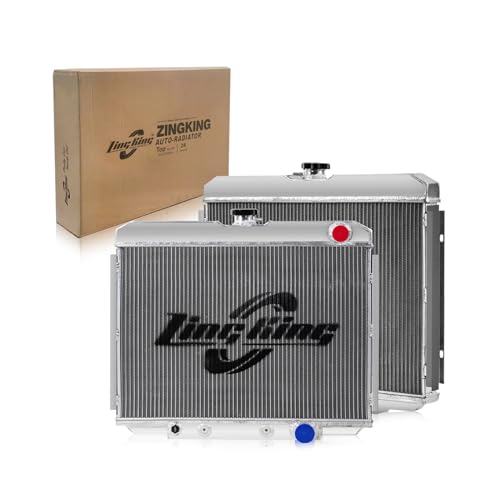
The ZING KING CC338 is a full‑aluminum, 3‑row radiator designed for classic Ford and Mercury models from the late 1960s. Its all‑aluminum construction aims to deliver reliable heat transfer without the weight of traditional radiators. Best for: enthusiasts restoring 1967–1970 Mustangs, Fairlanes, Rancheros, or Mercury Cougars who want a lightweight, durable core.
Why chosen: It features a robust aluminum build with a matching inlet/outlet layout to typical classic V8 applications. Caution: Verify exact core dimensions against your frame clearance and fan shroud before purchasing.
RadRace 3 Row Aluminum Radiator Shroud for Classic Chevys

The RadRace 3 Row radiator is a direct bolt‑on upgrade for several Chevy and GMC classic models. It includes a shroud and a temperature‑capable design with a 3‑row core, intended to improve cooling capacity on larger V8s. Best for: mid‑era Chevelles, Impalas, Caprices, and older GMC pickups seeking better cooling efficiency with a straightforward installation.
Why chosen: The 3‑row core and shroud provide substantial cooling benefit for high‑demand engines. Caution: Check the fitment with your radiator support and fan assembly to ensure proper clearance.
ALLOYWORKS Aluminum Radiator For Classic Minis

The ALLOYWORKS radiator is a dedicated all‑aluminum unit intended for classic Mini Coopers from the 1960s and 1970s. Its compact core and full aluminum tanks offer corrosion resistance and a longer lifespan in small‑block setups. Best for: Mini enthusiasts restoring 1965–1969 Austin Mini Cooper models seeking value without compromising cooling efficiency.
Why chosen: Full aluminum design provides strength and durable resistance to pitting. Caution: Confirm compatibility with your specific Mini engine variant and core/fan clearance before ordering.
VIPDUHI 5‑Row Radiator for Classic Mopar and Dodge Cars

The VIPDUHI 5‑row radiator is a high‑capacity aluminum option designed for certain Mopar vehicles and older Dodge/Dodge Truck applications. It emphasizes robust cooling for tougher driving conditions and potential performance needs. Best for: Mopar restorations or classic Dodge pickups requiring extra cooling headroom.
Why chosen: The 5‑row core offers superior cooling in high‑demand setups. Caution: This is a larger unit; verify engine bay clearance and support frame compatibility before purchasing.
Buying Guide: Key Considerations For Aluminum Radiators In Classics
- Core design and material: All‑aluminum radiators resist corrosion and are lighter than copper/brass units, but check core density (single/dual/three/four row) for cooling needs.
- Vehicle compatibility: Confirm model year, engine type, and mounting points. Classic vehicles often have unique inlet/outlet positions; verify with your radiator hoses and fan shroud.
- Core size and overall dimensions: Ensure the radiator fits within the core support, grill opening, and mounting brackets without rubbing on belts or fans.
- Inlet/outlet sizing: Match your current hoses (1.5″ or 1.75″ etc.) to avoid extra adapters and potential leaks.
- Installation considerations: Look for units with direct bolt‑on fitment, weld‑in tanks, and compatible mounting hardware to simplify the process.
- Durability factors: Consider TIG welded cores and reinforced joints if you drive in hot conditions or participate in track days.
- Maintenance and longevity: Aluminum radiators typically require less maintenance but ensure proper coolant type and radiator cap compatibility for long life.
FAQ
- Q: Are aluminum radiators better for classic cars than copper ones?
A: Aluminum radiators are lighter and resist corrosion, which can improve efficiency in some setups. Copper radiators may offer high cooling capacity, but are heavier and more prone to corrosion in older vehicles. - Q: How do I verify compatibility with my classic car?
A: Check core size, overall dimensions, inlet/outlet locations, and mounting points against your vehicle’s radiator support and hoses. - Q: Can I install an all‑aluminum radiator in a non‑stock engine?
A: Yes, but verify core size and flow characteristics match your engine’s cooling needs and upgrade any shrouds or fans if required. - Q: Do all aluminum radiators require special coolant?
A: Use a compatible coolant specified for aluminum radiators, typically long‑life ethylene glycol mixes, and avoid mixing incompatible additives. - Q: Is a multi‑row core always better?
A: More rows can improve cooling under high heat or high‑performance conditions, but may not be necessary for stock engines and can add size and weight. - Q: What about warranty considerations?
A: Check the seller’s warranty terms, especially for classic builds where fitment and use conditions may vary widely.