Answering the common question, the best battery box for an RV is one that protects your batteries from moisture, vibration, and corrosion while allowing proper venting where needed. This guide highlights five top options that suit different battery sizes and setups, helping you choose the right fit for your RV, boat, or trailer. Ideal buyers include full-timers, weekend campers, and DIY RV owners seeking secure, long-lasting battery storage.
Summary of chosen products:
| Product | Best For | Notable Feature |
|---|---|---|
| Camco Double Battery Box (55375) | Two 6V or two 12V batteries | Heavy-duty corrosion-resilient polymer |
| Attwood 9067-1 Vented Battery Box | Group 27 batteries, rugged outdoor use | Ventilated design with water intrusion protection |
| Attwood 9069-1 Standard Non-Vented Box | Group 24 batteries in enclosed spaces | Non-vented lid for moisture barriers |
| Camco Large Battery Box (55373) | Group 27, 30, 31 batteries | Lid, strap, clamps, stainless screws included |
| NOCO Snap-Top BG27 Battery Box | Group 27 and compatible 24V batteries | Rigid snap-top design and simple mounting |
Camco Double Battery Box — Safely Stores (55375)
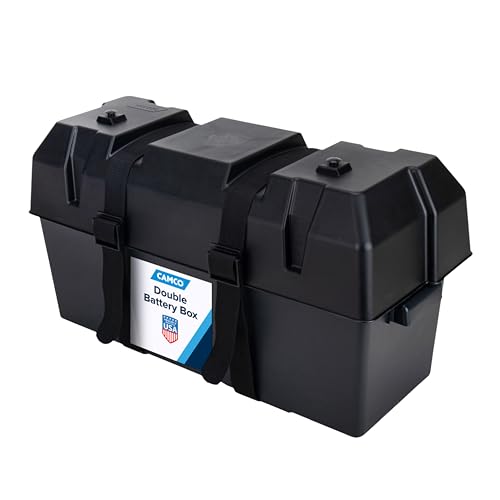
The Camco Double Battery Box is designed to hold two 6V GC2 batteries or two 12V Group 24 batteries. Its inner dimensions measure 21 ½ inches long by 7 3/8 inches wide by 11 3/16 inches high, providing a compact yet roomy layout for common RV battery arrays. Best for RV owners needing a two-battery solution in a slim footprint. A caution: ensure the battery height fits within the 11 3/16 inch clearance to avoid interference with lids or mounting hardware.
Attwood 9067-1 Vented Battery Box

Attwood 9067-1 fits Group 27 batteries with interior dimensions of about 13.06 x 6.9 x 10.5 inches, ideal for larger marine or RV setups. It uses acid-resistant polypropylene, tested across extreme temperatures, and includes a safety vented design that allows gases to escape while minimizing water intrusion. Best for exposed outdoor installations where venting is critical. Consider this option if you prioritize chemical safety and venting in harsh environments.
Attwood Group 24 Vented Marine Battery Box

This Attwood 24V vented box accommodates Group 24 batteries up to 10.125 inches tall with interior dimensions around 10.6 x 7 x 10.125 inches. The vented design supports battery gas management while a protective lid reduces water intrusion. Choose this if you operate standard marine or RV systems with Group 24 batteries and need reliable ventilation and a precise internal fit.
Camco Large Battery Box (55373)
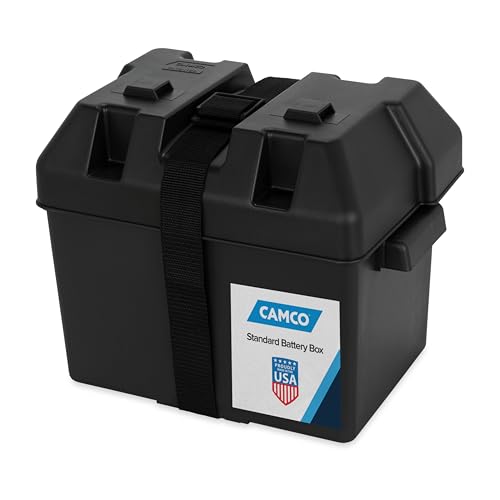
The Camco 55373 box supports Group 27, 30, and 31 batteries and includes a lift-off lid, a heavy-duty strap, foot clamps, and stainless steel screws. This lightweight, corrosion-resistant polypropylene box is well-suited for RVs and boats requiring a sturdy, all-purpose battery enclosure. Best for mixed-group-size fleets and installations where included hardware simplifies mounting. Limitation: check internal dimensions to ensure compatibility with your specific battery height.
NOCO Snap-Top BG27 Battery Box

NOCO Snap-Top BG27 Box is designed for Group 27 batteries and other 24V configurations, offering a rigid snap-top design for easier installation. It supports a broad range of marine, automotive, and RV batteries and is compatible with direct mounting via pre-drilled holes or a strap-mount system. Best for installations requiring quick setup and a secure lid. Limitation: the data note mentions compatibility with various battery sizes; verify exact height fit for your enclosure before purchase.
Buying Guide
Key considerations to choose the right battery box for your RV:
- Battery size compatibility: Confirm group size (24, 27, 31) and height to ensure a proper interior fit.
- Ventilation needs: If venting is required, prioritize vented boxes to manage gases safely.
- Material durability: Look for corrosion-resistant polypropylene or stainless steel components for long-term use in harsh environments.
- Lid and mounting options: A lift-off lid or snap-top design influences ease of access and installation. Check for included straps, clamps, and screws when available.
- Environment and temperature tolerance: Boxes tested across extreme temperatures protect battery health in sun-exposed RV compartments or marine settings.
- Interior dimensions vs. battery height: Avoid tight fits that block lids or prevent secure mounting.
- Water intrusion protection: For exposed locations, select non-vented lids or moisture-resistant designs to minimize corrosion risk.
FAQ
- What size battery box should I use for a Group 27 battery?
– Choose a box with interior height around 10.5 inches and a width/length that accommodates the battery’s footprint and mounting hardware. - Do I need a vented battery box for RV use?
– If your installation is exposed to heat or you have sealed lead-acid or flooded batteries, vented boxes help release gases safely. - Can I mount a battery box without a strap?
– Some boxes offer strap-free mounting using pre-drilled holes; others require straps for stability. Confirm the mounting method in the product specs. - Are metal battery boxes better than plastic?
– Metal boxes offer structural strength but may corrode in saltwater environments; high-quality plastic boxes with corrosion resistance are generally safer for RVs. - Will a larger battery box fit in a compact RV compartment?
– Always measure space and compare with the box’s interior dimensions to avoid clearance issues with lids and mounting. - Is a non-vented box safer for enclosed compartments?
– Yes, non-vented boxes reduce moisture exposure and debris ingress when installation is in an OEM-approved enclosed area.