When starting a vehicle in freezing temperatures, a reliable battery heater can be the difference between a smooth start and a sluggish crank. This guide highlights five top options that suit different needs—from compact under-battery pads to full-wrap blankets. The best choice depends on battery size, installation space, and how quickly you want warmth to spread. Below is a quick summary of the recommended products and who they’re best for.
| Product | Best For | Key Benefit |
|---|---|---|
| Nkiy Quen Silicone Battery Pad | Compact spaces | Uniform heat directly beneath the battery |
| Zerostart 2800063 36-Inch Blanket | All-around protection | CSA approved, extends warmth across battery core |
| Facon 8-1/2″ x 5-1/2″ Pad | Under-battery warming | Auto shut-off, slim design |
| Kat’s 22400 Battery Pad Heater | Budget-friendly warmth | Silicone-coated, easy install |
| Zerostart 2800055 28-Inch Blanket | Mid-size batteries | Thinsulate insulation for stable temp |
Nkiy Quen Silicone Battery Pad
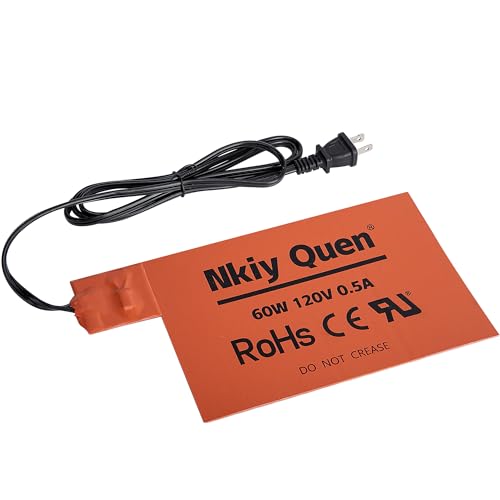
The Nkiy Quen battery pad is a compact 8.2 x 5.5 inch silicone heating solution designed to sit under the battery tray. It uses built-in precision heating wires to quickly generate uniform heat, improving battery activity in cold conditions and helping maintain stable cold start current. Best for owners with limited space who still need effective warming. The built-in thermostat prevents overheating by cutting power when the surface hits about 122°F. Quick heating may show minor temperature variation due to wire distribution. A note: it is thin and requires no structural modifications.
Who this is for: drivers with compact battery bays or tight engine compartments who want straightforward under-battery warming without bulk. Why chosen: it directly targets the battery bottom for efficient warmth with a simple install. Limitation: slight temperature variation across locations can occur and continuous 15–20 minute heating yields the most accurate temperature reading.
Zerostart 2800063 Electric Battery Blanket

This 36-inch battery blanket wraps around the battery area to help maintain core temperature in both warm and cold weather. It includes a 30-inch ground cord for ease of use and is CSA approved. The blanket warms the battery core to roughly 60–70°F above ambient, supporting quicker startups in cold mornings. Best for larger battery setups or those wanting broad coverage around the battery area. Caution: ensure compatible with your battery layout and vehicle wiring before use.
Facon 8-1/2″ x 5-1/2″ Silicone Pad
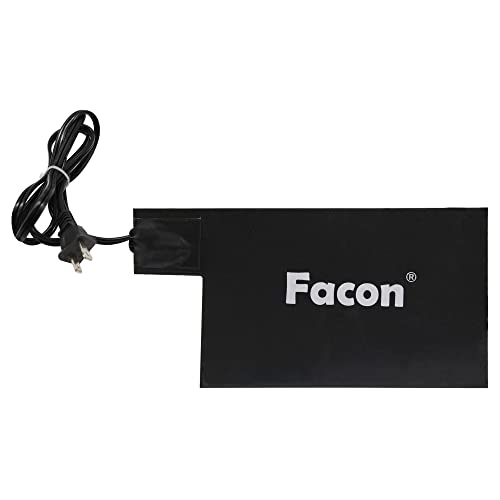
The Facon pad provides under-battery warming with a 120V, 60W heating element. It features a built-in thermostat that turns off automatically when the target temperature (around 68°F) is reached, so you can plug it in, walk away, and rely on automatic shut-off. Its ultra-slim 1.8mm profile fits under most batteries without tools. Best for quick, plug-and-play warmth where space is limited. Choose this if you want simple operation and a slim, durable design. Limitation: heating is contingent on a continuous 120V power source during operation, and temperature uniformity can vary with wire distribution.
Kat’s 22400 Battery Pad Heater

The Kat’s 22400 pad is a silicone-covered heater designed to resist battery acid and oil, with pliable material for easy installation. It requires no specialized mechanical skills—just place it under the battery. Best for budget-conscious buyers who still want reliable cold-start support. It’s easy to trim or adapt for various battery sizes. Caution: ensure the pad aligns with battery dimensions to maximize contact and heating efficiency.
Zerostart 2800055 Electric Battery Blanket
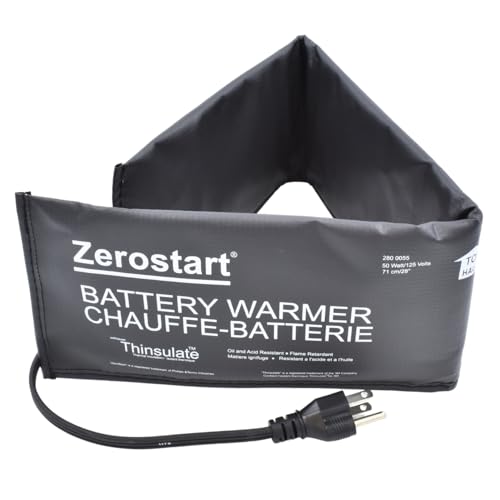
This 28-inch heated blanket uses Thinsulate insulation to maintain battery temperature in both hot and cold conditions. It comes with a 30-inch ground cord and is CSA approved. The blanket warms the battery core to about 60–70°F above ambient, promoting quick starts. Best for mid-size batteries or when you want a balanced warmth across the battery area. Limitation: performance depends on ambient temperature and requires a proper power source to function continuously.
Buying Guide
What should you consider when choosing a battery heater for your car?
- Battery size and location: Ensure the heater’s dimensions fit under or around your battery tray without interfering with moving parts.
- Power source: Most options require a 120V outlet or vehicle power; cordless options rely on batteries or USB power, limiting runtime.
- Heat target and coverage: Pads heat the battery bottom; blankets wrap around the area. Choose based on how much coverage you need.
- Thermostat and safety: Automatic shut-off reduces overheating risk. Look for devices with built-in insulation and thermal controls.
- Durability and resistance: Silicone and insulated materials resist oil, acid, and wear. Consider ease of cleaning and installation.
- Installation ease: Slim designs and simple placement reduce installation time and potential modifications to the vehicle.
Buyer intent questions to guide your choice:
- Do I need a compact pad for a tight battery compartment or a full-length blanket for broad coverage?
- Will I have convenient access to a power outlet, or do I need a cordless option?
- How important is automatic shut-off to prevent overheating in my climate?
- Can the heater tolerate battery acid and engine heat over time?
FAQ
- Are battery heaters safe for car batteries? Yes, when used as directed, these heaters include thermostats and insulation to reduce overheating risks.
- How long should a heater run for effective warming? Most pads and blankets show meaningful warmth within 10–20 minutes of continuous operation.
- Can a heater replace a battery blanket entirely? It depends on the battery and vehicle; for extreme cold, a blanket may offer more uniform coverage.
- What maintenance is required? Inspect for wear or leaks periodically, and ensure any wiring remains dry and unobstructed.
- Do these require professional installation? Most are designed for DIY placement under the battery tray or around the battery area.
- Will using a heater affect electrical systems? When used as intended, normal operation should not affect starting or charging systems.