If you’re looking for a bike rack that mounts on the front of a camper or trailer, you want options that maximize space, minimize bounce, and fit your vehicle’s tongue or A-frame. This guide highlights five reliable front- or tongue-mount racks that are commonly used with travel trailers, campers, and RVs. Each option is described with who it’s best for, how it installs, and a practical caveat. It’s ideal for road-tripping campers who want to free rear cargo space while keeping bikes secure during transit.
Overview at a glance (best use cases and why chosen):
| Product | Best For | Why Pick It |
|---|---|---|
| Let’s Go Aero Jack-It Double Bike Carrier | Front of tongue jack on A-frame trailers | Excellent space savings and stability; versatile mounting |
| Stromberg Carlson CC-275 Bike Bunk | Raised 2″ receiver on A-frame | Durable all-steel design; fits a wide trailer range |
| CURT 18013 Clamp-On Bike Rack | Two-bikes on a ball-mount rack | Strong clamp system; adjustable rubber cradles |
| Futura GP RV Bike Rack (2-Inch Receiver) | Tongue A-frame and hitch transfers | Lightweight aluminum; high mobility between vehicles |
| Neorexon Trailer Tongue Bike Bunk | A-frame mounts with adjustable width | Strong 2” receiver design; wide compatibility |
Let’s Go Aero Jack-It Double Bike Carrier System

The Jack-It system mounts over the tongue jack and attaches directly to an A-Frame trailer. It’s designed to free rear cargo space by carrying bikes at the front, where there is typically less bounce. The carrier supports multiple bike configurations and is marketed for versatile installation across a range of trailer types. This makes it a strong choice for campers who routinely haul two bicycles and need to keep the trailer’s back clear for gear. Best for: travelers who want to maximize rear storage and keep bikes stable on the road.
Why chosen: The front-mount approach minimizes rear sway, and the universal fit helps accommodate common trailer shapes. A potential limitation is clearance with some hitch accessories, so verify clearance before purchase. If you already use a tongue jack, this system can simplify mounting and future reconfiguration.
Who it’s for: families or solo travelers who carry two bikes and value front-loading stability on an A-frame travel trailer. In tight campsites, freeing rear space can improve overall gear organization and ease of parking next to other vehicles.
Stromberg Carlson CC-275 Trailer Tongue Cargo Bike Bunk
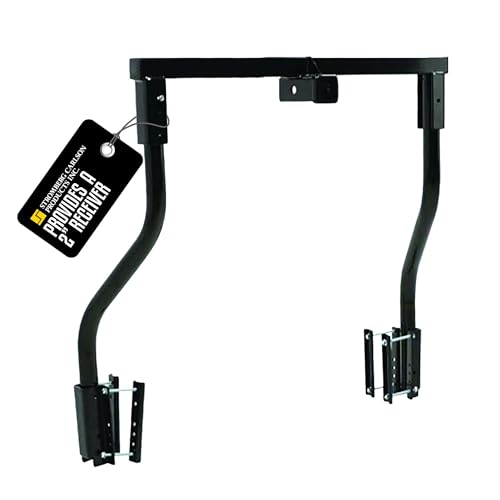
The CC-275 creates a raised two-inch receiver on your A-frame, enabling secure attachment of RV-approved bike racks. It is adjustable and designed to fit a wide range of trailer sizes with an adjustable width range from 14 to 55 inches. The all-steel construction emphasizes durability for long trips and rough roads. Best for: campers who want a robust, mount-onto-the-A-frame solution that works across different trailer widths and can support up to 100 lbs.
Why chosen: It enables a stable, high-mount position that reduces trailer bounce. The raised receiver places the rack in a less congested area and can accommodate larger or heavier bikes with proper Rack compatibility. A caveat is the potential need for compatible RV-approved racks designed for a 2″ receiver.
Who it’s for: RV owners who value a sturdy, adaptable mounting platform and frequently adjust trailer configurations for varying bike racks.
CURT 18013 Clamp-On Bike Rack

The CURT 18013 clamps onto a 2″ x 2″ ball mount shank and can securely hold up to three bikes with a total max weight of 135 lbs. Adjustable rubber cradles help prevent frame scratches. Best for: campers who already use a ball-mount hitch and want to add bike capacity without reconfiguring the trailer’s tongue area. The clamp-on design makes installation straightforward on compatible hubs.
Why chosen: It provides a flexible solution for two or three bikes with a solid clamp mechanism. A limitation is it requires a compatible ball mount hitch setup and may limit other hitch accessories when in use.
Who it’s for: RV owners who need a flexible, upgrade-friendly option that doesn’t require dedicated tongue mounting space and can handle multiple bikes safely.
Futura GP RV Bike Rack for Travel Trailer Tongue A-Frame
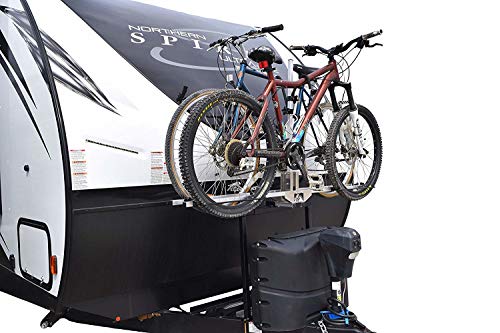
The Futura GP is designed for tongue A-frame compatibility with a 2-inch receiver. It’s positioned as a lightweight yet sturdy solution for moving bikes between trailers and vehicles, with an emphasis on a smooth transfer between transport modes. Best for: cyclists who travel often and need a practical, easy-to-move rack for both RVs and cars. It emphasizes a transferable design and a limited lifetime warranty with a satisfaction guarantee.
Why chosen: The ability to move between vehicles can simplify multi-vehicle trips and seasonal trailer use. A potential drawback is that weight distribution should be monitored when mounting heavier bikes, especially if multiple bikes are on the rack at once.
Who it’s for: travelers who switch between RVs and everyday vehicles and want straightforward transferability without losing bike capacity.
Neorexon Trailer Tongue Bike Bunk Black

The Neorexon bike bunk uses an A-frame mounted design with adjustable vertical posts to fit a wide range of trailer widths, from 12 inches to 45 inches. It includes a raised 2” receiver for secure bike mounting and supports up to 100 lbs, providing a solid balance of compatibility and capacity. Best for: campers who want a configurable, mid-range option that can adapt to various trailer sizes and bike types.
Why chosen: The adjustable width and raised receiver help accommodate different rigs while maintaining a stable ride. A limitation is ensuring the rack remains within allowed clearance on particular trailer models and whether your bikes’ dimensions fit securely within the cradles.
Futura GP 120 lbs Electric Bike RV Rack

This model supports up to 120 pounds total capacity (about 60 pounds per bike) and is designed for heavy bikes such as electric bikes. It emphasizes high load capacity on a 2-inch receiver and transferability between RVs and vehicles. Best for: riders with heavy or electric bikes who need reliable support and straightforward mounting.
Why chosen: High load capacity makes it a strong pick for heavier bikes. A caveat is that the heavier weight may require more careful handling during installation and removal, especially when the rack is mounted on a moving trailer.
Buying Guide
What should you consider when choosing a front-mount or tongue-mike bike rack? Think about compatibility with your trailer’s tongue, the mounting width, bike weight, number of bikes, and how you transport the rack when not in use. If you frequently switch between RVs and everyday vehicles, a transferable or adjustable rack can save time and effort. Material matters: all-steel options tend to be heavier but more durable, while aluminum designs are lighter but may carry fewer bikes or weight per bike. Check installation clearance to avoid interference with accessories like tongue jacks, spare tires, or propane tanks.
Key questions to guide your choice:
- What is the trailer’s tongue or A-frame width, and will the rack adjust to that range?
- How many bikes do you need to carry, and what is their typical weight?
- Will the rack stay secure during travel over rough roads or on curves?
- Is transfer between vehicle and trailer easy, especially if you switch vehicles often?
- Does the rack leave enough space for other front-end gear or the hitch area?
FAQ
- Are front-mount bike racks on campers safe for all bike types? They’re designed to support common frame styles, but always verify compatibility with heavier or non-standard frames.
- Can I install these racks on any travel trailer? Most are designed for A-frame or tongue-mounted setups; check your trailer’s frame and mounting points before purchase.
- Do front-mount racks affect trailer handling? Proper installation and weight distribution are essential; overloading the front can alter sway dynamics if not balanced.
- Is there a limit to the total bike weight I can carry on the tongue? It depends on the rack’s rated capacity and your trailer’s tongue strength; respect厂 manufacturer guidelines.
- What maintenance is needed? Inspect mounting hardware regularly, check for frame scratches, and ensure cradles remain tight and aligned after trips.
- Will these racks interfere with other hitch-mounted gear? Some configurations can; plan layout to avoid clashing pins, stabilizers, or second bike racks.