Answering the question “which blind spot sensors for cars are worth buying?” this guide highlights five top options and explains who they’re best for. These systems help you detect nearby vehicles in your blind spots, support safer lane changes, and alert you with lights and sounds. Ideal buyers include daily commuters, weekend drivers, truck or SUV owners, and anyone seeking extra awareness in heavy traffic or urban streets. Below is a quick summary table of the chosen products to compare key details at a glance.
| Product | Best For | Detection Type | Notes |
|---|---|---|---|
| EASYGUARD EBS001 | General everyday drivers | Radar/LED alerts | Lane change assistant mode; buzzer indicator |
| BlueDex Blind Spot Monitoring System | Hands-on installers and enthusiasts | 24GHz millimeter wave radar | Multi-mode warnings; installation tool included |
| Astibym Blind Spot Detection Monitoring System | Commuters and family vehicles | Radar sensors with LED + buzzer | Real-time alerts; rear traffic and lane change features |
| Wilove Car Blind Spot Monitoring System | Budget-conscious shoppers | Ultrasonic sensors | Clear LED alerts; basic but effective |
| BY-J 24GHz Millimeter Wave Radar BSD System | Tech-savvy buyers and larger vehicles | 24GHz radar; multiple functions | BSD, LCA, DOW; strong feature set |
EASYGUARD EBS001 Car Blind Spot Monitor System

This system is designed to help safe lane changes by detecting nearby objects in the blind zone. It uses LED indicators to warn when a moving object enters the detection area. Best for drivers who want a straightforward, LED-only alert with lane change assistance.
Who it’s best for: daily drivers who want simple, visual alerts and a lane change helper without complex setup.
Why selected: It provides continuous monitoring within a defined range and includes a lane-change mode with rapid LED flashing and a three-beep alert for caution during lane changes.
Caution: The range and sensitivity depend on vehicle wiring and installation quality; improper mounting may reduce effectiveness.
BlueDex Blind Spot Monitoring System

BlueDex uses 24GHz millimeter wave radar to monitor blind spots with a detection range of 1–32.8 ft and offers multi-mode warnings tied to turn signals, lane changes, and hazards. It’s a solid pick for those needing flexible alert behavior and a professional installation approach.
Who it’s best for: drivers who want precise radar-based detection and configurable alert modes for different driving scenarios.
Why selected: The system emphasizes real-time alerts and a robust radar approach, with an installation manual and alignment tools to aid setup.
Caution: Professional installation is recommended for optimal performance, which may add to total cost and time.
Astibym Blind Spot Detection Monitoring System

Astibym provides real-time alerts with sound and light when a vehicle enters the blind zone. It supports lane change warnings and rear traffic alerts, offering a multi-function safety package for broad driving contexts.
Who it’s best for: families and commuters who want continuous, immediate awareness during lane changes and merging.
Why selected: The kit combines real-time auditory and visual signals with additional safety features like rear traffic alerts, helping to prevent lane-change mishaps.
Caution: Performance depends on sensor placement and vehicle geometry; improper installation may affect the detection area.
BY-J 24GHz Millimeter Wave Radar BSD System

This BY-J system uses 24GHz radar with multiple functions suitable for left and right rear detection. It includes BSD, LCA, and optional DOW, designed to help detect collision risks in the blind spots while enhancing lane-changing safety.
Who it’s best for: tech-minded buyers and those with larger vehicles who want an expansive feature set and radar-based accuracy.
Why selected: It combines major BSD and lane-change functions with door-open warnings, providing a broad safety toolkit for driving in varied conditions.
Caution: As a radar-based system, proper calibration and alignment are critical for accurate sensing; misalignment can reduce effectiveness.
BY-J 77 GHz Blind Spot Detection System
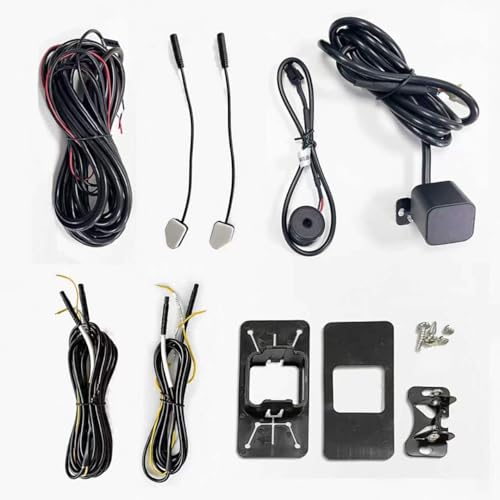
BY-J’s 77 GHz model emphasizes high-precision radar with multiple LED indicators and a broad coverage area. It supports BSD, LCA, DOW, and RCTA-like features for safer driving in challenging weather or traffic.
Who it’s best for: drivers who need high-precision sensing and a more sophisticated feature set for difficult driving scenarios.
Why selected: The higher-frequency radar offers better accuracy and interference resistance, suitable for demanding conditions.
Caution: Higher-end radar systems can require careful installation and governance of vehicle electrical systems to avoid interference.
BY-J Blind Spot Monitoring System (Universal Kit)

This kit uses 24GHz radar with dual sensors to monitor left and right rear blind spots, activating warnings when a moving object enters the detection area. It also includes multi-function options like LCA and DOW for expanded safety.
Who it’s best for: owners who want a comprehensive kit that extends beyond basic blind spot detection to include auxiliary alerts.
Why selected: The expanded feature set makes it a versatile option for drivers seeking more complete lane-change safety coverage.
Caution: As with other radar-based systems, ensure proper wiring and alignment to maximize performance and minimize false alerts.
Buying Guide: Key Considerations For Blind Spot Sensors
- Sensor Type: Radar-based (24GHz or 77GHz) often offers greater range and accuracy than ultrasonic sensors, but may require professional installation.
- Detection Range: Check whether the system covers the side and rear zones you most frequently monitor. Longer ranges help with earlier warnings.
- Alert Modes: Look for multi-mode alerts (LED indicators, sounds, turn-signal linked) and whether the warnings integrate with turn signals or hazard lights.
- Vehicle Compatibility: Some kits are universal and require installation tools, while others are designed for specific vehicle types or dashboards.
- Installation Requirements: Professional installation vs. DIY—consider wiring complexity, mounting points, and how it affects existing electronics.
- Additional Features: Rear traffic alert, door-open warnings, and lane-change assist can add value but may increase cost and complexity.
- Maintenance & Calibration: Periodic checks and recalibration may be necessary after certain maintenance or a battery disconnect.
Frequently Asked Questions
- Do blind spot sensors work in all weather? Most sensors function across typical driving conditions, but performance can be affected by heavy rain, snow, or ice and may require proper cleaning and calibration.
- Are these systems easy to install myself? Some kits are designed for DIY installation with guides and tools; others require professional installation for optimal results.
- Can blind spot sensors trigger during parking? Many systems primarily activate during lane changes but some models include rear traffic or door-open warnings that assist parking scenarios.
- Do these systems replace mirrors? No. They complement mirrors and lighting by adding sensors and alerts to illuminate safer awareness in blind zones.
- What’s the best option for a budget? Budget-friendly units generally rely on LEDs and buzzers with ultrasonic sensors, whereas mid-to-high-end models use radar and more features for broader coverage.
- Will installation affect my vehicle’s warranty? Some installations may affect warranties; consult your dealer or warranty terms before retrofitting a system.