Answering the question of which blow dryer for cars delivers fast, scratch-free drying: these top picks excel at removing water without towel-induced swirl marks. Each option is best for different needs—from portable cordless use to full-featured detailing setups. This guide helps buyers choose a model that matches vehicle type, drying speed needs, and portability preferences.
| Product | Best For | Notes |
|---|---|---|
| KOLENDA Handheld Cordless Car Dryer | Patio cleanup, on-the-go car drying | High-capacity battery, multiple speeds |
| Adam’s Polishes Mini Air Cannon | Safe, touch-free drying for detailed finishes | Lightweight, low risk of scratches |
| Oversize Turbo Dryer Blower for Cars (Azzxfa) | Faster drying, larger vehicles | High CFM, safety grille |
| SHELANDY Motorcycle & Car Dryer | Difficult-to-reach areas | Flexible hose, wheels for mobility |
| Suds Lab JD Jet Dry Car Drying Blower | Delicate finishes, heated airflow | 1.5 HP motor, dual nozzles |
KOLENDA Handheld Cordless Car Dryer

Best for: Quick, portable drying on cars, small patios, and lawn care tasks. This model uses a 21V-10.0Ah battery with four speed modes and a smart power display, offering up to 230 minutes of runtime. The dual-nozzle design (cylindrical and duckbill) enables targeted drying of panels, mirrors, and tight gaps. A built-in safety system supports reliable operation.
Why chosen: The cordless design eliminates power cords during exterior drying, reducing setup time. Higher airflow (335MPH) and a turbo jet motor make it efficient for removing moisture from doors, grilles, and trims without contact.
Caution: Heavier battery packs may cause fatigue during extended sessions; plan breaks or use a lighter stance for extended use.
Adam’s Polishes Mini Air Cannon

Best for: Safe, touch-free drying for high-end finishes, ceramic coatings, and detail work. Weighs just over 3 pounds, enabling easy maneuverability around the vehicle exterior and interior.
Why chosen: Provides warm, filtered air with no contact, reducing swirl risk and scratches. It offers high air velocity (19,000 FPM) and strong CFM while emphasizing quiet operation and compact storage.
Caution: It is a compact unit, so larger vehicles may require multiple passes or a secondary drying method for rapid full-vehicle drying.
Oversize Turbo Dryer Blower for Cars (Azzxfa)

Best for: Fast drying on larger vehicles; high airflow helps reduce overall drying time and minimizes towel use. Features a metal safety grille and patented ducted power design for safer operation.
Why chosen: The unit delivers up to 670 CFM and 260 MPH wind speed, providing robust drying power with a focus on safety and durability. Dynamic balance and copper motors enhance longevity.
Caution: Higher airflow can be noisy; consider using protective hearing protection or choosing lower speed settings for quiet environments.
SHELANDY Motorcycle & Car Dryer
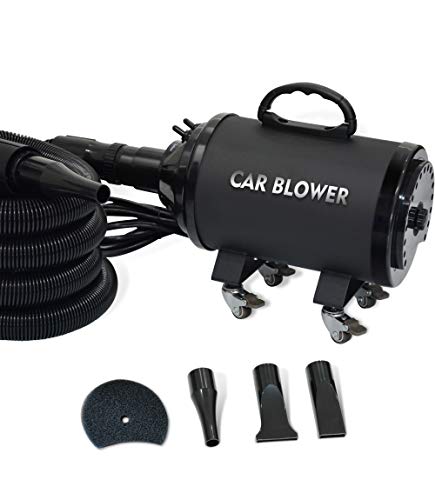
Best for: Thorough drying of motorcycles, cars, and hard-to-reach areas. The 14-foot flexible hose and wheels make it easy to maneuver around vehicles and around tight spaces.
Why chosen: It emphasizes airflow control with adjustable settings to tailor power for engines, grills, and engine bays without scratching finishes.
Caution: Limited motor specs may require longer drying times on very large vehicles; best for mid-sized cars and bikes.
Suds Lab JD Jet Dry Car Drying Blower
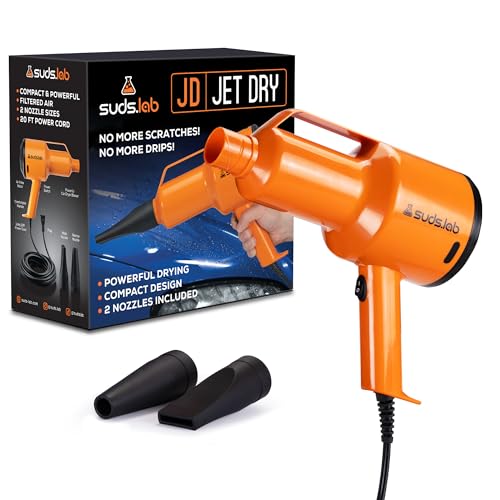
Best for: Delicate finishes with heated airflow; suitable for rapid drying while minimizing water spots. Compact and portable with a 20 ft power cord and two nozzles for flexible use.
Why chosen: Features heated airflow that speeds water removal and helps prevent water spots, while filtration reduces risk of scratching. Dual nozzles enhance control over drying precision.
Caution: Heaters add heat exposure; avoid prolonged heat on sensitive trims or vinyl wraps without proper distance guidance.
Buying Guide: Key Considerations For Choosers
- Drying speed vs. vehicle size: Larger vehicles benefit from higher CFM and MPH. If you own multiple cars, consider a model with detachable handles or long hose reach.
- Power source: Cordless units offer portability but may have shorter runtimes. Corded or hose-fed models provide consistent power for longer sessions.
- Finish safety: Look for filtered, warm or heated airflow and a restricted-nozzle system to minimize contact with paint and chrome.
- Noise and comfort: Noise-reduction features and vibration control improve usability during extended drying sessions.
- Portability and storage: Lightweight designs and compact storage options help with garage space and on-the-go jobs.
- Accessories and versatility: Dual nozzles, adjustable speeds, and flexible hoses increase precision for tricky areas like wheel wells and engine bays.
Frequently Asked Questions
- What is a touch-free car dryer and why use it?
Touch-free dryers use warm, filtered air to remove water without towel contact, reducing risks of swirl marks and scratches on paint and chrome.
- Do cordless car dryers offer enough power for large vehicles?
Some cordless models with high-capacity batteries provide substantial runtime and power for moderate drying tasks, but larger vehicles may require corded options or intermittent use.
- Is heated airflow better for drying?
Heated airflow can speed water removal and help prevent water spots, but prolonged heat exposure should be managed to avoid heat-related damage on sensitive trims.
- What should I consider when choosing nozzles?
Detachable or dual-nozzle designs allow targeted drying (mirrors, grills, door jambs) and reduce the chance of accidental contact with painted surfaces.
- Can these dryers replace towels entirely?
Many high-quality car dryers significantly reduce towel usage, but some owners still use towels for final wipe-downs on certain finishes.
- What safety features are important?
Look for protective grilles, automatic shutoff, stable bases, and power safeguards to minimize risk during operation.