Answering the common question for DIYers and professional technicians: these are the best body filler options for repairing plastic bumpers and other plastic automotive parts. Each pick caters to a distinct need—ease of use, fast drying, flexible performance, or professional-grade durability. Use this guide to pick the right filler based on material compatibility, working time, and finish quality. Whether you’re patching minor scratches or rebuilding damaged bumper sections, one of these products fits your repair scenario.
- Product: J-B Weld PlasticWeld Epoxy Putty
- Product: Roberlo Multiplast Lightweight Body Filler
- Product: J-B Weld Plastic Bonder Adhesive
- Product: Eastwood Contour Premium Flexible Body Filler
- Product: Polyvance Flex Filler 2
| Product | Best For | Key Benefit |
|---|---|---|
| J-B Weld PlasticWeld Epoxy Putty | Immediate repairs on ABS, PVC, CPVC, and bumper surfaces | Hands-on, set in 25 minutes, cures in 3 hours |
| Roberlo Multiplast | Lightweight, easy sand, professional-grade finish | Includes hardener; durable automotive-grade quality |
| J-B Weld Plastic Bonder | Strong bonds for thermoset plastics and composites | 1:1 mix, sets in 15 minutes |
| Eastwood Contour Premium | Flexible plastic repair, minimizes cracking on bumpers | Flexible formula, good for panel flexing |
| Polyvance Flex Filler 2 | Flexible after cure, quick sanding | No mixing tips needed, squeezable tubes |
J-B Weld PlasticWeld Plastic Repair Epoxy Putty – 2 oz.

Best for quick, DIY repairs on ABS, PVC, CPVC pipes, auto bumpers, and similar plastics. The two-part epoxy putty is hand-mixable, sets in about 25 minutes, and cures fully in three hours. It does not shrink and can be molded, sanded, drilled, and cut after curing. The lap shear strength is about 600 psi, with continuous service up to 250°F and intermittent up to 300°F. Best for small to mid-size bumper repairs where a strong, semi-rigid rebuild is needed. Caution: working time shortens in high heat; ensure thorough kneading for a uniform cure.
Who this is best for: DIY enthusiasts repairing minor bumper dents or cracks where a quick, moldable repair is desired.
Roberlo Multiplast Lightweight Body Filler

Best for lightweight, easy-to-apply plastic repairs with professional-grade results. The kit includes a hardener for optimal curing and high-performance outcomes. It is designed for both plastic and metal repairs, providing durability and a smooth finish. This filler is notably easy to sand and work with, making it suitable for beginners and pros alike. Caution: verify compatibility with your specific plastic substrate before application.
Who this is best for: Professionals or serious hobbyists seeking a lightweight, easy-sand option with reliable bonding on diverse plastics.
J-B Weld Plastic Bonder Adhesive and Gap Filler Syringe
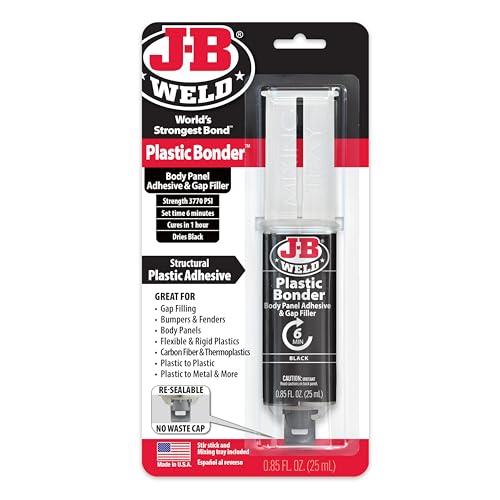
Best for fast-setting, high-strength bonds on thermoset plastics, carbon fiber composites, and coated metals. This two-part urethane adhesive uses a 1:1 mixing ratio, sets in about 15 minutes, and can be sanded after 30 minutes with a tensile strength around 3770 psi. Choose this if you need a strong, structural bond rather than filler texture. Limitation: not ideal for large fill volumes; better for bonding and small gaps.
Who this is best for: Repair professionals needing a quick, permanent bond for structural plastic repairs and minor gaps in bumpers.
Eastwood Contour Premium Flexible Body Filler

Best for automotive plastics where flexibility is needed to resist cracking from flexing panels. It is a polyester filler designed to work on plastics like PP/EDPM, ABS, PA, PUR, PC, and rigid materials such as SMC and UP-GFK. The flexible formula helps prevent hairline cracks after minor impacts and during tool movement. Activator is a benzoyl peroxide type; working times vary by temperature, with a cure around 20–35 minutes depending on conditions. Caution: ensure proper ventilation and follow activator mixing ratios for best results.
Who this is best for: Technicians repairing bumper plastics prone to flexing and minor impacts, seeking a flexible, crack-resistant finish.
Polyvance Flex Filler 2 (Tubes)

Best for post-cure flexibility and quick sanding. The tubes are convenient for precise application without needing specialized mixing equipment. This filler remains flexible after curing and sands readily in about 15 minutes, making it suitable for fast turnarounds on bumper repairs. Best used on flexible plastic substrates and for minor repairs where ease of use matters. Caution: may be less ideal for large fills requiring very rigid backing.
Who this is best for: Shop technicians or DIYers who want a simple, flexible filler that is easy to apply and finish without extra tools.
Buying Guide
What to consider when choosing plastic bumper filler:
- Substrate compatibility: ABS, PP, PVC, CPVC, and coated metals may react differently to each filler. Verify the plastic type before selecting a product.
- Flexibility vs rigidity: Flexible fillers reduce cracking on bumper flex zones; rigid fillers can provide stronger structural bonds but may crack with movement.
- Set and cure times: Shorter times improve workflow but may demand faster handling. Temperature affects working time and cure rate.
- Application method: Putties, two-part epoxies, and ready-to-use tubes vary in ease of use, cleanup, and finishes. Choose based on skill level and project size.
- Finish quality and sanding: Some fillers sand easily with minimal dust; others require more prep. Consider finishing goals and primer compatibility.
- Safety and compatibility: Follow label instructions for ventilation, activators, and curing conditions. Ensure materials are safe for your work environment.
FAQ
- What plastic bumpers can be repaired with these fillers?
Most fillers work on common automotive plastics such as ABS, PP/EDPM, and PU. Always confirm substrate compatibility before use.
- Which filler dries fastest?
Adhesives and certain fast-curing fillers like Plastic Bonder set quickly, often within minutes, but overall cure times vary by product and temperature.
- Do these fillers require a hardener?
Some products include hardeners for optimal curing (for example, Eastwood Contour and J-B Weld options). Others are ready-to-use or come as two-part systems.
- Can I sand these fillers after curing?
Yes, most listed fillers are designed to sand, shape, and feather to a smooth finish suitable for primer.
- Are flexible fillers better for bumpers?
Flexible formulations help prevent cracking from minor impacts and panel flexing, making them a preferred choice for bumpers.
- Is there a drawback to using epoxy putty for bumpers?
Epoxy putty provides strength but may be less forgiving for large voids or highly flexible areas; choose based on the specific repair needs.