The following Boxer/Flat-Six engine model kits blend mechanical realism with hands-on building, ideal for aspiring engineers, hobbyists, and car enthusiasts. Each kit aims to demonstrate engine principles—piston action, gear trains, and rotating assemblies—while offering display-worthy detail. This guide highlights five strong options, covering different scales, power methods, and educational value. Compare piece counts, mechanisms, and potential display appeal to pick the right kit for you or a gift.
| Product | Brand | Pieces | Key Focus |
|---|---|---|---|
| Mould King 10181 Boxer Engine Model Kit | Mould King | 2375+ | Realistic piston motion, turbocharger, exhaust |
| Franzis Porsche 911 Boxer Engine Model Kit | Franzis | Various | Transparent casing, genuine boxer sound |
| Mould King Boxer Engine Kit That Works | Mould King | 609 | 1:4 scale with battery and motor |
| Mould King 10193 Boxer Engine Building Blocks | Mould King | 609+ | Electric drive with XL motor |
| JMBricklayer 3-in-1 Mini Engine Model | JMBricklayer | 840 | Manual crank, three engine layouts |
Note: All links open in a new tab to the respective Amazon product pages for more details and specifications.
Mould King 10181 Boxer Engine Model Kit That Runs

This horizontally opposed engine model is designed with a large piece count (2375+ bricks) and is compatible with mainstream building blocks. It highlights a life-like piston motion, a turbocharger, and a refined exhaust system to mirror real-world engine behavior. The kit emphasizes mechanical scalability, making it suitable for serious hobbyists and STEM learners who want a visible, working engine at the desk or workstation. ABS materials ensure safe handling and a smooth finish, with safety standards in mind.
Franzis Porsche 911 Boxer Engine Model Kit

This model features a transparent engine casing that allows full visibility of internal moving parts, including cams activated by a belt, pistons, and shafts. A dedicated collector’s manual accompanies the set, enriched with Porsche Museum imagery. An electronic sound module adds a genuine boxer engine soundtrack, while LEDs simulate spark plug firing. The combination of mechanical display and audio immersion provides a highly engaging educational experience without external power sources for basic operation.
Mould King Boxer Engine Kit That Works

This 1:4 scale kit includes an exhaust system integrated with the cylinder heads and pipes, showcasing a complete cooling and fuel system through its radiator configuration. An XL engine and a battery case enable powered movement, requiring six AAA batteries. The design is aimed at car enthusiasts and collectors who want a visually striking desktop display with functional motorized action, offering a balance of detail and mechanical demonstration.
Mould King 10193 Boxer Engine Building Blocks

This kit reproduces a flat-six engine with 609 blocks and includes easily understandable instructions. It emphasizes realistic features like a turbocharger and exhaust system to simulate engine operation. The kit supports an XL motor and battery box for automated piston movement, delivering a tangible demonstration of engine dynamics. It is well-suited for mechanical enthusiasts who want to study internal components while watching a functioning model.
Mould King Flat-Six Engine Model Kit That Works
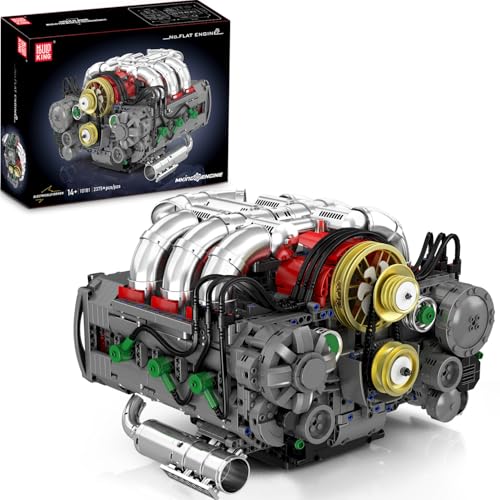
The Flat-Six engine build features 2375+ parts to replicate a horizontally opposed engine. The design emphasizes symmetry, low gravity, and stable operation, with clear articulation of piston movement and valve mechanisms. This kit comes with colorful, user-friendly instructions and is compatible with common building blocks. It can operate with a battery and motor, enabling dynamic demonstrations of the engine’s working principles, ideal for desktops and educational displays.
JMBricklayer 3-in-1 Mini Engine Model

This 840-piece kit offers three engine configurations: W16, V12, and V8. It uses a manual crank for motion, promoting hands-on learning about engine cycles without electric power. The set is accessible for beginners yet provides enough depth for curious teens and adults to explore cylinder layouts, crankshaft movement, and synchronized motion. It serves as a practical educational tool for STEM exploration and mechanical comprehension.
Buying Guide
- Power vs. display: Models with batteries/motors demonstrate motion automatically, while manual-crank kits emphasize learning by doing. Choose based on preference for interactive motion or hands-on assembly up front.
- Scale and complexity: Higher piece counts (e.g., 2375+) offer richer detail and longer build times. Lower counts provide quicker gratification but may sacrifice some realism.
- Educational value: Look for kits that clearly illustrate piston movement, gear trains, and valve mechanisms. Transparent casings and animated sounds can enhance understanding, especially for visual learners.
- Compatibility and safety: ABS materials ensure safety and durability. Check compatibility with standard building blocks to expand future projects.
- Display vs. functionality: Some sets are primarily display pieces; others offer working engines. Decide whether the goal is a faithful replica or an interactive demonstration of engine principles.
- Maintenance and durability: Consider how easily parts can be disassembled for troubleshooting or modifications. Higher-density connections may require gentler handling to avoid wear.
- Educational value for different ages: While many kits target 14+, some designs accommodate older teens and adults seeking advanced mechanical insight.
All five selections emphasize realism and educational merit, with varying focus on motion, sound, and visual accuracy. When choosing, align the kit with the learner’s goals—whether they prioritize mechanical operation, display aesthetics, or a hands-on engineering journey.