Answering the most common buyer question: which brake fluid should I use for modern cars with ABS and disc brakes? This guide highlights five highly relevant options that cover standard DOT 3 and 4 fluids, including high boiling point formulas and compatibility with various braking systems. It’s tailored for DIYers, professional mechanics, and fleet managers seeking reliable performance and clear guidance on suitability for different brake setups.
Overview table of selected products:
| Product | Brand | Size | Key Benefit |
|---|---|---|---|
| Valvoline DOT 3 & 4 Synthetic Brake Fluid (12 oz) | Valvoline | 12 oz | Low-moisture formula with vapor lock protection; ideal for hydraulic and disc brakes |
| Valvoline DOT 3 & 4 Synthetic Brake Fluid (32 oz) | Valvoline | 32 oz | High boiling point; good for ABS and mixed brake systems |
| Prestone AS401 DOT 3 Synthetic Brake Fluid (32 oz) | Prestone | 32 oz | Hot-carbrake safety margin; robust against vapor under extreme conditions |
| STP Synthetic Brake Fluid (DOT 4, 12 oz) | STP | 12 oz | Increased dry boiling point; protects against vapor lock and corrosion |
| BOSCH ESI6-32N Low Viscosity Brake Fluid (1 Qt) | Bosch | 1 Quart | Low viscosity with high wet boiling point; compatible with many DOT specs |
Valvoline DOT 3 & 4 Synthetic Brake Fluid 12 oz

Best for small to mid-size vehicles needing a reliable DOT 3/4 fluid with good vapor lock resistance. Its low-moisture formulation provides solid protection for disc and drum brake systems. Suitable for hydraulic braking setups and ABS-equipped vehicles where a standard DOT 3/4 grade is recommended.
Best for: DIY enthusiasts and owners who perform regular fluid top-offs or flushes in everyday cars.
Limitation: The 12 oz size may require more frequent purchases on high-mileage fleets compared to larger containers.
Valvoline DOT 3 & 4 Synthetic Brake Fluid 32 oz

This larger bottle suits larger vehicles or fleet use, offering the same high-boiling-point formula with corrosion protection and vapor lock resistance. It mixes well with conventional fluids and is compatible with ABS, disc, and drum brake systems. Better for garages that perform multiple flushes or replacements in one session.
Best for: Shops and owners switching to a high-capacity supply or maintaining multiple vehicles with DOT 3/4 fluids.
Limitation: Slightly heavier and less convenient for occasional single-vehicle maintenance compared to smaller bottles.
Prestone AS401 DOT 3 Synthetic Brake Fluid 32 oz

Prestone’s DOT 3 synthetic fluid adds a safety margin under extreme braking conditions. The formulation uses a polyglycol ether blend to prevent dangerous vapor formation at high temperatures. It is a solid choice for ABS-equipped vehicles and brake systems requiring dependable performance across a wide temperature range.
Best for: Drivers in regions with varied climates and for vehicles requiring robust heat tolerance in braking.
Limitation: Packaging notes may vary; ensure you purchase the correct DOT specification for your vehicle.
STP Synthetic Brake Fluid DOT 4 (12 oz)

STP DOT 4 fluid raises the dry boiling point to extend braking life and reliability. It guards against vapor lock and corrosion, which can affect braking performance over time. This option is suitable for many modern brake systems including ABS and non-ABS disc/drum configurations.
Best for: Those seeking an economical DOT 4 solution with solid protective properties for everyday driving and moderate performance needs.
Limitation: May not meet higher-performance requirements in extreme heat or heavy-duty use. Always confirm your vehicle’s specification before use.
BOSCH ESI6-32N Low Viscosity Brake Fluid 1 Qt
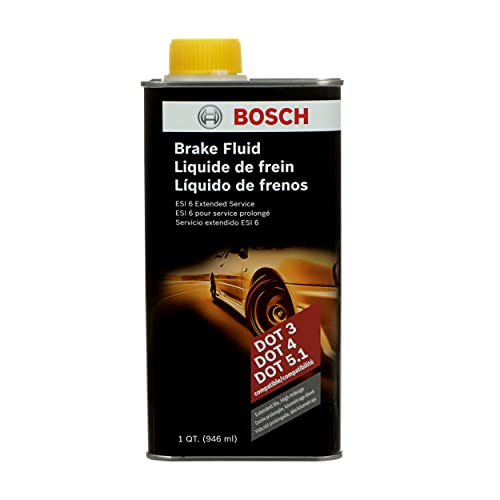
Bosch ESI6-32N is a next-generation fluid designed for modern braking systems. It combines low viscosity with a high wet boiling point to reduce fluid resistance and improve performance in longer intervals between changes. It’s compatible with vehicles that specify DOT 3, 4, or 5.1 fluids, making it a flexible choice for mixed fleets.
Best for: Owners seeking a forward-compatible fluid that balances low viscosity with strong heat resistance, especially in newer vehicles with advanced brake systems.
Limitation: While versatile, confirm that a vehicle’s specification supports the 5.1 compatibility if upgrading from older fluids.
Buying Guide: Key Considerations For Brake Fluid Purchases
What DOT specification does my vehicle require?
Most conventional passenger cars use DOT 3 or DOT 4 fluids. DOT 3 absorbs moisture more quickly than DOT 4, which offers higher boiling points. For high-performance or heavy-use vehicles, DOT 4 or DOT 5.1 fluids may be recommended. Always check the owner’s manual or manufacturer guidance before buying.
Do I need high or low viscosity?
Low-viscosity fluids flow easier at startup and can improve cold-weather performance and hydraulic response in modern ABS systems. However, ensure compatibility with your vehicle’s design and cold-start requirements. The Bosch ESI6 product line highlights a balance of low viscosity with a robust boiling point for demanding applications.
What container size is best for me?
Small containers (12 oz) are convenient for single-vehicle owners who do occasional maintenance. Larger sizes (32 oz or more) are more cost-effective for fleets or frequent fluid changes. Consider your maintenance schedule and how many vehicles you service in a year when choosing size.
Is vapor lock protection important for my climate?
Yes. Fluids with strong vapor lock resistance help maintain braking performance in hot conditions or heavy braking. Many fluids in this guide advertise vapor lock protection, which is especially relevant for performance driving or sustained braking under load.
Are there compatibility concerns with ABS or non-ABS systems?
Most DOT 3/4 fluids are compatible with ABS and non-ABS braking systems. However, vehicles designed for higher performance may require DOT 4 or DOT 5.1 fluids. When in doubt, consult your vehicle’s manual or a certified technician before mixing brands or specifications.
Maintenance tips
- Replace brake fluid at intervals recommended by the vehicle manufacturer or every 2–3 years as a general practice for many cars.
- Use only the correct DOT specification to avoid soft seals or reduced braking performance.
- When performing a flush, ensure all air is purged from the system for optimal braking feel.
Frequently asked questions
- What is the difference between DOT 3 and DOT 4 fluids?
DOT 4 generally has a higher boiling point and better moisture resistance than DOT 3, making it more suitable for modern, high-demand systems. - Can I mix DOT 3 and DOT 4 fluids?
In many cases, mixing DOT 3 and DOT 4 is acceptable since DOT 4 is backward compatible with DOT 3, but always follow the vehicle manufacturer’s guidance and avoid mixing incompatible fluids. - Should I choose a higher capacity bottle for a small garage?
Yes, if you service multiple vehicles, a larger bottle reduces frequent repurchases and simplifies inventory management. - Is synthetic brake fluid better than conventional?
Synthetic formulas often offer superior moisture resistance and higher boiling points, contributing to longer fluid life and better heat stability. - What are signs that brake fluid needs replacement?
Dark or contaminated fluid, reduced braking performance, and a spongy brake pedal are common indicators that a flush is due. - Do all brake fluids last the same in humid climates?
Not exactly; moisture absorption varies by formula. Fluids with lower moisture affinity tend to retain performance longer in humid environments.