Choosing the right brake line fitting kit helps ensure reliable fluid transfer and safe, dependable braking performance. This guide highlights five top-rated options for 3/16″ and 1/4″ brake lines, focusing on inverted flare fittings and corrosion resistance. Each kit includes a range of nuts and unions designed for common automotive brake systems, with materials suited to high-temperature and outdoor conditions. Below you’ll find quick product summaries, a visual table, and a buyer’s guide to help you compare sizes, materials, and compatibility across models.
| Product | Brand | Key Fitment | Notable Feature |
|---|---|---|---|
| MuHize Brake Line Fitting Kit | MuHize | 3/16″ & 1/4″ brake lines | |
| 35PCS Brake Line Fitting Kit (3/16″ & 1/4″) | YGDMD | 3/16″ & 1/4″ brake lines | |
| Tnisesm 35 PCS Kit | Tnisesm | 3/16″ & 1/4″ brake lines | |
| 35PCS Brake Line Fittings Assortment | SSNNUU | 3/16″ & 1/4″ brake lines | |
| The Stop Shop Kit (45 fittings) | The Stop Shop | 3/16″ line fittings and bubble/ISO flare |
MuHize Brake Line Fitting Kit Overview

MuHize’s kit bundles 35 fittings across two sizes: 19 for 3/16″ lines and 16 for 1/4″ lines. The 3/16″ set includes two 1/2-20 nuts, two 9/16-18 nuts, three 7/16-24 nuts, and twelve 3/8-24 nuts, with the 1/4″ set containing two 7/16-24, two 9/16-18, and twelve 7/16-24 nuts. Materials emphasize rust and corrosion resistance, extending service life in demanding conditions. This kit suits DIYers tackling multiple vehicles or repair jobs needing a broad range of inverted flare fittings.
35PCS Brake Line Fitting Kit (YGDMD)

YGDMD’s kit provides 19 fittings for 3/16″ lines and 16 for 1/4″ lines. The 3/16″ group features a mix of 1/2-20, 9/16-18, and 7/16-24 nuts, plus 3/8-24 nuts to cover common inverted flare configurations. For 1/4″ tubing, expect two 9/16-18, two 1/2-20, and twelve 7/16-24 nuts. Builders should verify nut sizes against their specific brake line hardware before purchase. The set targets versatility across different vehicle makes and brake system configurations, expanding compatibility for both steel and brass tubing once inverted flare is applied.
Tnisesm 35 PCS Brake Line Kit

Tnisesm’s offering includes 19 fittings for 3/16″ lines and 16 for 1/4″ lines. The 3/16″ subset comprises 3x 3/16″ 7/16-24, 12x 3/16″ 3/8-24, and 2x 3/16″ 1/2-20, plus 2x 3/16″ 9/16-18 nuts. The 1/4″ group adds 2x 7/16-24, 10x 7/16-24 long, and 2x 9/16-18, 2x 1/2-20 nuts. Copper core with anti-corrosion coating and a steel nut exterior provide durable performance in various climates and engine bays. This kit targets reliability in field repairs and professional-level maintenance alike.
SSNNUU 35PCS Brake Line Fittings

SSNNUU emphasizes brass construction with rust resistance and high ductility at elevated temperatures. The kit includes 19 nuts for 3/16″ lines (2x 1/2-20, 2x 9/16-18, 3x 7/16-24, 12x 3/8-24) and 16 nuts for 1/4″ lines (2x 9/16-18, 2x 1/2-20, 12x 7/16-24). The sizes are clearly labeled to help ensure correct matches with existing brake line components. Aimed at both home mechanics and repair shops, this set provides a robust brass option that resists corrosion in challenging environments.
The Stop Shop 45-Fitting Set
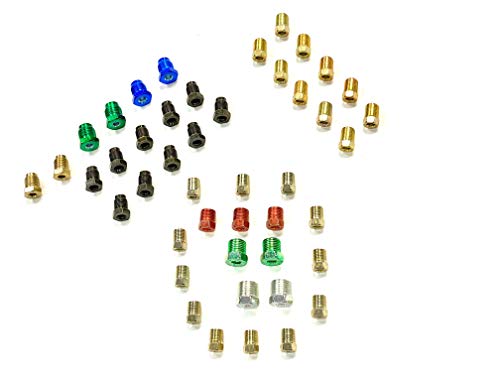
The Stop Shop kit covers a broad spectrum with 45 fittings, including inverted flare 12-3/8″-24, 3-7/16″-24, 2-9/16″-18, 2-1/2″-20, and inverted flare 10-10x1mm. Bubble/ISO flare sizes in assorted dimensions are included, plus corrosion-resistant coating for durability. This selection enables compatibility with a wide range of 3/16″ brake lines and common international and SAE configurations, making it a strong option for shops dealing with mixed fleets or specialty vehicles.
Buying Guide: Key Purchase Considerations
Material and corrosion resistance matter for brake line fittings, where exposure to moisture, road salt, and high temperatures can compromise performance. Brass or brass-coated fittings offer good corrosion resistance and ductility, while steel-bodied nuts can provide strength where needed. Consider the following when choosing a kit:
- Line size compatibility: Ensure the kit includes both 3/16″ and 1/4″ fittings if you work with multiple vehicles.
- Thread patterns: Common patterns include 7/16-24, 3/8-24, 1/2-20, and 9/16-18. Verify these against your existing brake lines.
- Material quality: Brass fittings resist corrosion; steel nuts with protective coatings add strength in rugged environments.
- Inverted vs bubble/ISO flare: Most vehicles use inverted flare; bubble/ISO flare kits are necessary for specific models or regions.
- Packaging and range: A larger set reduces the need for additional orders, but verify you’re not paying for unnecessary duplicates.
Practical Comparison of the Five Kits
Across the five selections, you’ll find a shared emphasis on two main goals: broad compatibility for 3/16″ and 1/4″ brake lines, and reliable corrosion resistance for long-term performance in engine bays and outside weather. The MuHize, YGDMD, and Tnisesm options typically emphasize included quantities and size variety, while SSNNUU focuses on brass material details and corrosion resistance. The Stop Shop option prioritizes breadth of flare types and a large assortment for diverse repair scenarios. When evaluating, weigh the intended vehicle types, climate exposure, and whether you prefer brass over steel-based fittings.
For installation, ensure clean, dry threads and confirm the nut sizes before threading. If you are replacing multiple sections of a braking system, a kit with both common 3/16″ and 1/4″ nuts reduces swapping time and mismatches. Always follow vehicle-specific service manuals or OEM guidelines for the correct flare type and torque ranges to avoid leaks or line failures.