Answering the need for reliable tractor cab warmth, these top 5 12V cab heaters deliver practical heating where space is tight. Best for small work areas inside a tractor cab, these compact units provide steady heat, simple installation, and adjustable airflow. The selected products range from compact UTV-style heaters to universal auxiliary units, helping you choose based on space, power, and installation needs. The table below compares key specs for quick reference.
| Product | Heat Output | Airflow | Best For |
|---|---|---|---|
| JEGS Auxiliary UTV Heater 12 Volt (260 CFM) | 28,000 BTU | 260 CFM | Small cabs with tight spaces |
| RoadPro 12v RPSL-681 | Supplemental heat | Not specified | Simple, quick heat |
| American Cooling Solutions 12V Universal Cab Heater | Not stated; designed for 12V operation | 2-speed fan | Universal fit for tractors, trucks, vans |
| XuSha 8000 BTU 4 Ports | 8000 BTU | Not specified | Low-profile installation |
| Maradyne Santa Fe Floor Mount Heater | Engine coolant powered | 3-Speed Motor | Heavy-duty, durable mounting |
JEGS Auxiliary UTV Heater 12V 260 CFM

Best for: small tractor cabs with limited space. This compact 12V heater delivers up to 28,000 BTU of heat and 260 CFM airflow, helping to warm a tight cab quickly. It features a mountable design, a three-speed motor, and dual front vents for directional airflow. The compact form is ideal when installing inside a tractor cab where space is at a premium. A potential limitation is the higher heat output, which is excellent for rapid warming but may require careful heat control in smaller, enclosed cabs.
RoadPro 12v RPSL-681 12-volt Ceramic Heater/ Fan

Best for: quick, lightweight heat when you need simple operation. This 12V ceramic heater plugs directly into a vehicle battery with a 15-foot 12-gauge lead and offers 300 watts of supplemental heat. It includes a heat and a fan mode, which makes it a practical add-on for tractors needing intermittent warmth. Caution: the 300-watt output may be insufficient for larger cabs in very cold conditions or open tractors without supplemental airflow.
American Cooling Solutions 12V Universal Cab Heater
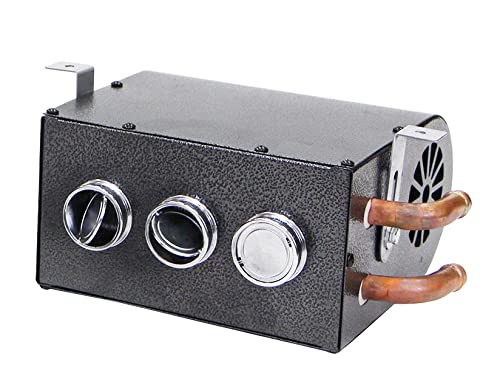
Best for: tractors needing a universal fit with a sturdy build. This 12V auxiliary heater is designed for tractors, trucks, buses, vans, cars, and UTVs. It includes a 2-speed fan, coolant line connections, and an installation kit, aiming for a long-lasting replacement or upgrade. Its compact dimensions and included hardware facilitate installation in tight spaces. Limitation: performance depends on the vehicle’s coolant system and proper coolant connections, which require correct setup to maximize efficiency.
XuSha 8000 BTU 4 Ports Universal Car Truck Heater

Best for: compact installations where multiple ports help distribute heat. This 12V unit provides up to 8000 BTU and four ports for flexible ducting. It’s designed to be easy to install, with a low power footprint that will not overly tax the tractor’s electrical system. Caution: ensure the water/ coolant connections are compatible with your tractor’s system and that you have space for four outlets without obstruction.
Maradyne Santa Fe Floor Mount Heater

Best for: harsh-duty environments where longevity matters. The Santa Fe uses engine coolant for heat, offering quiet operation and steady warmth via a 3-speed motor. It features heavy-duty construction with aluminum fans and a glass-filled nylon housing, and universal mounting. It’s prepared for rugged use but may require a more involved installation due to coolant routing and mounting hardware.
Buying Guide: Key Considerations And Comparisons
- Heat Source: Decide between electric 12V heaters and coolant-based heaters that use the engine’s heat. Engine coolant units tend to provide more consistent warmth in larger cabs, while electric units are simpler to install in compact spaces.
- Cab Size And Space: For small tractor cabs, prioritize compact, space-saving designs with adaptable ducting. For larger cabs, higher BTU options or multiple ports can distribute heat more evenly.
- Power Requirements: Check your tractor’s electrical system. High-heat units can demand significant current; ensure your battery and alternator can handle the load without affecting starting power.
- Installation Kit: Look for included installation hardware, hoses, clamps, or coolant connections. A complete kit reduces setup time and ensures proper sealing and safety.
- Airflow And Distribution: Models with multiple vents or ports can provide better heat distribution in irregular cab layouts. Consider adjustable vents for targeted warmth near feet or chest height.
- Durability And Environment: For off-road or farm use, choose rugged housings and corrosion-resistant materials. Heavy-duty builds withstand vibrations and temperature fluctuations better.
- Maintenance: Prefer units with accessible filters, simple coolant lines, and clear instructions for winterization and routine checks.
Frequently Asked Questions
- What’s the difference between electric 12V heaters and coolant-based cab heaters?
– Electric 12V heaters draw directly from the battery and provide quick warmth in tight spaces. Coolant-based heaters route hot engine coolant to a heater core, delivering steady warmth with potential energy efficiency benefits but requiring coolant connections. - Which heater is best for a small tractor cab?
- Do I need professional installation for a tractor cab heater?
- Can a heater affect tractor battery life?
- Is multiple ports heat distribution better than a single outlet?
– A compact, 12V unit with adjustable vents is typically best for small cabs, offering easy installation and fast heat without large electrical draw.
– Installation complexity varies. Some kits are straightforward and DIY-friendly, while coolant-based units may require hoses, fittings, and mounting hardware that benefit from professional installation.
– High-output heaters can draw noticeable current. Ensure your electrical system can handle the added load, or choose a unit with a lower, efficient power profile.
– Yes. Multiple outlets can distribute heat more evenly to different parts of the cab, reducing cold spots and improving comfort.