Yes—these clutches are designed to fit go karts, minibikes, and small engines with a 3/4″ shaft. This guide highlights clutch kits ideal for Predator 212, Honda GC and GX engines, and other 2–6.5 HP small engines. It targets builders upgrading go-kart drivetrains, hobbyists tuning minibikes, and shop buyers seeking reliable, maintenance-friendly clutches. The top picks focus on common bore sizes, chain compatibility, and durability for everyday mini-bike use.
Summary of chosen products at a glance:
- GYMMEDS Go Kart Clutch — 12T, 3/4″ Bore, #35 Chain
- Go Kart Clutch for 2-6.5HP Engines — 12T, 3/4″ Bore, #35 Chain
- ILONPA Centrifugal Clutch — 10T, 3/4″ Bore, #40/41/420 Chain
- VASHLY Go Kart Clutch — 10T, 3/4″ Bore, #40/41/420 Chain
- LotFancy Go Kart Clutch — 12T, 3/4″ Bore, #35 Chain
GYMMEDS Go Kart Clutch 12T — 3/4″ Bore

12-tooth centrifugal clutch with a 3/4″ bore and #35 chain. Compatible with Predator 212cc and Honda GC/GX engines, plus most 5-6.5 HP clones. Made from high-impact steel for durability and heat dissipation. This option is best for builders seeking a straightforward replacement on engines with a 3/4″ shaft and a 3/16″ keyway.
Best for: go-kart or minibike owners upgrading a Predator 212 or Honda clone system that uses a 3/4″ shaft.
Limitations: confirm keyway width and chain pitch compatibility before ordering. May require chain length adjustment.
Go Kart Clutch for 2-6.5HP Engines — 12T

12-tooth centrifugal clutch with 3/4″ bore and #35 chain. Engine compatibility includes 2–6.5 HP Honda GC/GX family, Tecumseh, Briggs & Stratton, Harbor Freight Greyhound, and Predator 212 variants. Engagement around 2300 RPM. Includes a chain and hardware for install.
Best for: mixed small-engine builds requiring a ready-to-install clutch and chain kit for common 2–6.5 HP engines.
Limitations: explicitly notes bore is 3/4″ and chain pitch is #35; not suitable for engines with larger bore or different chain standards.
ILONPA Centrifugal Clutch 10T — 3/4″ Bore

10-tooth centrifugal clutch with a 3/4″ bore and #40/41/420 chain compatibility. Engine range up to 6.5 HP, suitable for 212cc Predator and Honda-clone engines with a 3/4″ shaft. Includes a connecting link. Durability emphasized by iron/steel construction and heat resistance.
Best for: engines that run on 3/4″ shafts and require lighter engagement at around 2300 RPM.
Limitations: ensure the chain pitch matches #40/#41/#420 and verify the 3/4″ shaft and keyway alignment before install.
VASHLY Go Kart Clutch 10T — 3/4″ Bore

10-tooth clutch designed for 3/4″ bore and #40/41/420 chain. Fits 2–6.5 HP gasoline engines for minibikes, go-karts, garden tractors, and sport karts. Made from iron for durability and heat dissipation.
Best for: single-wheel drive karts needing a compact, lighter clutch with common chain compatibility.
Limitations: chain length not included; verify if replacement chain is needed for your setup.
LotFancy Go Kart Clutch 12T — 3/4″ Bore
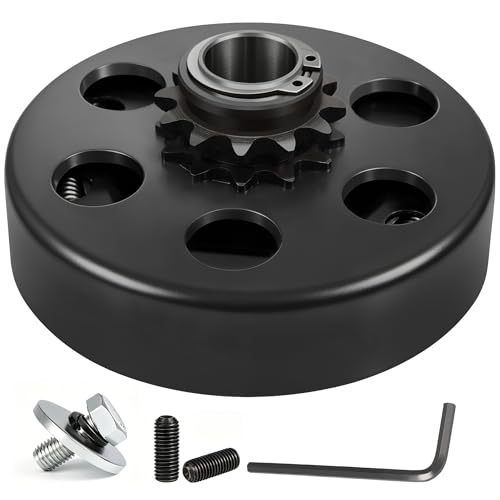
12-tooth clutch for #35 chain, engineered for 2–6.5 HP engines with engagement near 2300 RPM. Built from steel for robust wear resistance and reliable performance in go-kart and minibike drive systems. Suitable for Predator 212 and Honda clone engines with 3/4″ shaft and 3/16″ keyway.
Best for: straightforward upgrade on 12T, 3/4″ bore systems using #35 chain.
Limitations: verify chain compatibility and ensure the 3/4″ bore matches your shaft and keyway.
Buying Guide: Key Factors To Consider
- Engine compatibility: Match bore size (3/4″) and chain pitch (#35, #40, or #420) to your engine and chain drive.
- Engagement RPM: Most go-kart clutches engage near 2300 RPM; confirm if your engine’s idle and peak RPM fit this range for smooth operation.
- Chain and hardware: Some kits include a chain and connecting link; others do not. Plan for additional hardware if missing.
- Material and durability: Steel/iron clutches offer wear resistance and heat dissipation; check for high‑quality construction for longer life on demanding drives.
- Keyway compatibility: Ensure the keyway width and position match your crank shaft; some variants require 3/16″ keyways.
- Installation notes: Some listings caution about bore size precision (0.75″ vs. 0.787″). Measure your shaft to avoid mismatch.
- Application scope: If you run a variety of small engines, choose a clutch family with broader compatibility across Tecumseh, Briggs & Stratton, and Honda clone engines.
Frequently Asked Questions
- What bore size do most go kart clutches use?
Most common clutches use a 3/4″ bore. Verify your shaft diameter and keyway width before purchasing.
- Do these clutches come with chains?
Some listings include a chain; others do not. Check product details and be prepared to buy the correct chain pitch separately.
- Which clutch is best for Predator 212 engines?
Clutches rated for 3/4″ bore and compatible with 212cc engines (often 12T) are a good starting point. Confirm the specific engine model and shaft specs.
- Is 10T or 12T better for go-kart use?
12T provides more torque at engagement and can be preferable for heavier karts or lower-end torque; 10T can engage quicker and suit lighter setups. Match to your engine performance and gearing.
- Can I mix chain brands with these clutches?
Yes, provided the pitch matches (#35, #40, or #420). Using mismatched chains can cause poor engagement or derailment.