Answering the most common buyer question: which small-engine clutch fits your 3/4″ shaft and 10–12 tooth setup for go-karts, minibikes, and lawn equipment? This guide showcases five reliable options, highlighting who benefits most from each and why they’re chosen. Ideal for DIY builders, weekend racers, or those upgrading a small engine drive system, these clutches cover Predator 212, Honda GC/GX series engines, and similar clones. A quick comparison table follows to help you decide at a glance.
| Product | Best For | Notes |
|---|---|---|
| GYMMEDS 12T 3/4″ Bore Clutch | Go Kart builds needing 12T with #35 chain | Wide compatibility, robust steel |
| ILONPA 10T 3/4 Bore Clutch | 2–6.5 HP Hondas and clones | Engagement at ~2300 RPM; 12.7mm chain pitch |
| FDJ 10T 3/4 Bore Clutch Set | Mini bikes and DIY go-karts | Includes chain kit; durable chrome iron |
| GYMMEDS 10T 3/4 Bore Clutch | Go Karts with #40/41/420 chains | Lightweight, heat-dissipating |
| FDJ 10T 212cc Predator Clutch | Predator engines and universal small engines | Bolt and washer kit included |
GYMMEDS Go Kart Clutch 12T 3/4″ Bore

The 12-tooth centrifugal clutch is designed for 3/4″ crank shafts with a 3/16″ key way. It fits Predator 212 engines and a range of Honda GC/GX models, plus other engines in the same shaft spec. Best for go-karts, minibikes, and small tractors that run on 3/4″ axles. It’s made from high-impact, wear-resistant steel for torque and heat dissipation. Choose this if you need a robust, mid-teeth option for 12T applications. Caution: verify chain compatibility (#35 chain) before ordering.
VASHLY 10T 3/4″ Bore Clutch

This 10-tooth clutch fits #40/41/420 chain and is suitable for single-wheel-drive go-karts, minibikes, and similar setups up to 6.5 HP at around 2300 RPM. It suits engines from Predator 212 and Honda clones, as well as Briggs and Tecumseh brands with 3/4″ shafts. It’s a lightweight, durable option designed for easy power engagement. Best for small-kart builds where a compact 10T clutch is preferred. Limitation: chain size must match #40/41/420; not ideal for larger tires exceeding 15″ tall.
ILONPA Centrifugal Clutch 10T

Designed for 3/4″ bore and 10 teeth with #40/41/420 chain, this clutch supports engines up to 6.5 HP and is compatible with common Honda clone variants like GC160, GC190, GX120, GX140, GX160, and GX200. It’s a practical choice for Go Karts, minibikes, Baja MB165/MB200, and similar DIY projects. Engagement speed targets around 2300 RPM. Best for hobbyists seeking a reliable, affordable option; avoid if your engine uses a different chain pitch or shaft size.
FDJ Go Kart Clutch 3/4 Bore 10 Tooth with 40 Chain Kit
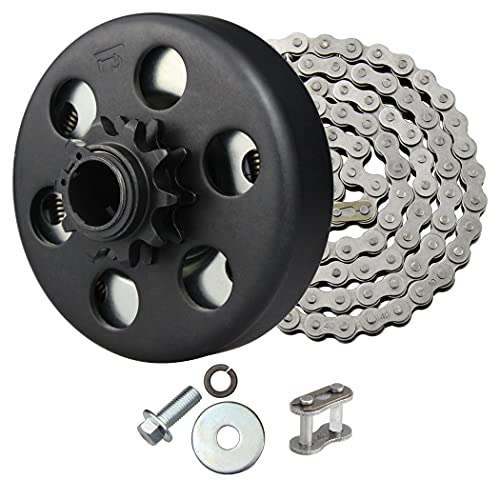
This item includes a 10-tooth clutch and a 40-chain kit, making it a versatile fit for Predator 212cc and several Honda/Tecumseh/Briggs small engines with 3/4″ shafts. It is suitable for mini bikes, go-karts, and lawn equipment up to 6.5 HP. Best for DIY mechanics seeking an all-in-one clutch and chain kit. A potential limitation is the need to confirm compatibility with your specific rear sprocket and chain count before installation.
GYMMEDS 10T 3/4 Bore Clutch With #40/41/420 Chain

This 10-tooth clutch is built for 3/4″ bore and supports #40/41/420 chain needs, designed for single-wheel-drive go-karts and minibikes with tires up to 15″ tall. It’s compatible with Predator 212 and Honda clone engines (GC160, GC190, GX120, GX140, GX160, GX200) as well as other brands with 3/4″ shafts. Best for riders who want a mid-range engagement clutch with flexible chain options. Caution: confirm chain pitch and chain compatibility prior to purchase.
KRGUOD 10T Clutch for 3/4 Bore

3/4″ bore, 10-tooth clutch for #40/41/420 chain; designed for engines up to 6.6 HP. Works with Predator 212, Honda clones (GC160, GC190, GX120, GX140, GX160, GX200), Briggs & Stratton, Tecumseh, and other 2–6.5 HP engines with 3/4″ shaft. Best for Go Kart or Mini Bike builds where a compact 10T clutch is needed. Limitation: ensure the engine’s shaft and keyway match 3/16″ requirements.
Buying Guide
Key considerations when selecting a clutch for a small engine:
- Engine compatibility: Confirm bore size (3/4″), chain pitch (#35, #40, #41, or #420), and keyway (3/16″) for your specific engine model.
- Horsepower range: Choose a clutch rated for 2–6.5 HP or the engine class you own to ensure reliable grip and acceleration.
- Engagement speed: Look for clutches with a target engagement around 2300 RPM for predictable performance.
- Chain compatibility: Match the drive chain to the clutch (35 vs 40/41/420) to avoid mismatches and wear.
- Durability and material: High-impact steel and heat-dissipating designs reduce wear and extend life under harsh use.
- Assembly and compatibility: Some kits include chains; others require separate purchase. Check if hardware is included (bolts, washers) and whether it fits your go-kart or minibike frame.
FAQ
- What engines can these clutches fit? They fit many 3/4″ shaft engines, including Predator 212, Honda GC/GX series, Briggs & Stratton, and Tecumseh clones up to about 6.5 HP.
- Do these come with chains? Some listings include chains (40, 41, or 420), while others are sold separately. Check the product description for chain kit details.
- What tire size should I use with these clutches? Most are designed for tires not taller than about 15 inches; larger tires can affect engagement and gearing.
- What should I verify before buying? Ensure the bore, tooth count, chain pitch, and keyway match your engine and drive system. Confirm compatibility with your rear sprocket and frame.
- Is a maintenance kit needed? Regular inspection for wear and lubrication of moving parts improves longevity, especially in DIY go-kart setups.
- Can I use a 10T or 12T clutch interchangeably? Not always; tooth count affects gear ratio and engagement speed. Choose based on engine power, desired acceleration, and chain pitch.