Answering the search intent for affordable, reliable OBD1 code readers, this guide highlights five practical options that work with Ford, Lincoln, Mercury, and GM models from 1981–1995. These tools help you read ECM/ABS codes, KOEO/KOER tests, and other essential diagnostics without guesswork. Ideal buyers include DIY mechanics restoring vintage vehicles, hobbyists tracking down check-engine issues on older cars, and collectors who want quick, code-based insight rather than manual code counting. The table below compares key traits of each recommended reader.
| Product | Best For | Key Benefit |
|---|---|---|
| INNOVA 3145 Ford Digital OBD1 Code Reader | Ford-Lincoln-M Mercury owners | Clear digital trouble codes for 1982–1995 ECUs |
| INNOVA 3123 GM OBD1 Code Reader | GM car and truck owners | ECM/ABS code access for 1982–1995 GM vehicles |
| JOPLAY OBD1 2-in-1 Digital Scanner | Ford-Lincoln-Mercury enthusiasts | Instant code definitions on a 2.4″ LCD |
| JOPLAY OBD1 Scanner For GM 1982–1995 | GM model fans | KOEO/KOER/CM tests with built-in definitions |
| ELFREE OBD1 Scanner For Ford/Lincoln/Mercury 1981–1995 | Classic Ford-family vehicles | LCD code and definition display with KOEO/KOER/CM |
INNOVA 3145 Ford Digital OBD1 Code Reader
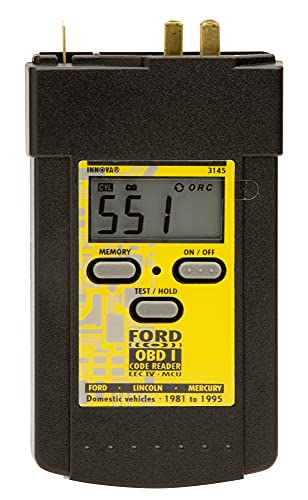
The INNOVA 3145 presents a numeric, easy-to-read display that shows trouble codes directly, removing the need to count LED flashes. Best for Ford, Lincoln, and Mercury vehicles built 1982–1995, it supports MCU and EEC-IV systems. This reader is a straightforward option for owners who want quick code retrieval and a simple interface. A potential limitation is that it is tailored to Ford-family ECUs and may not cover non-Ford brands.
Who it is best for: Classic Ford enthusiasts who want fast, legible results on older Ford-era ECUs. Why it was selected: It directly targets Ford/Mercury/Lincoln models and provides a clean digital readout, prioritizing ease of use over broader compatibility.
Caution: Not designed for ABS or GM/EEC-IV systems outside Ford-family vehicles.
INNOVA 3123 GM OBD1 Code Reader, Windows XP
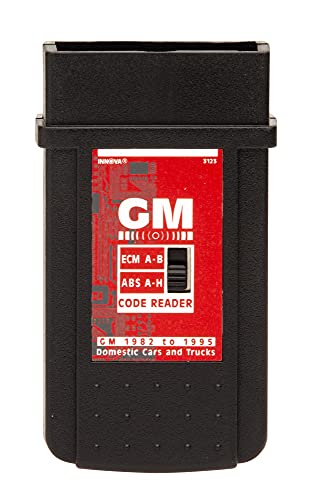
This reader is designed for GM domestics from 1982–1995, enabling safe access to ECM and ABS codes. It connects to the vehicle’s self-test connector to retrieve information. It’s best for GM owners who need a dedicated OBD1 tool that supports the EEC-IV-based control strategies common in that era. A possible limitation is its focus on GM vehicles, which could reduce value for non-GM owners.
Who it is best for: GM car and truck owners needing straightforward OBD1 code retrieval. Why it was selected: It supports ECM and ABS codes across GM’s 1982–1995 lineup and uses the vehicle’s own self-test connector for access.
Caution: Limited to GM vehicles; not ideal for Ford/AMC/other brands.
JOPLAY OBD1 2-in-1 Digital Scanner For Ford (Gray)

This JOPLAY unit offers broad Ford-Lincoln-Mercury compatibility (1981–1995) with a 2.4″ LCD that displays code numbers and definitions instantly. It supports KOEO, CM, and KOER self-tests, and provides a safer alternative to DIY jumper wires. It does not support ABS codes. This model is best for users who want quick code definitions on the screen and reliable Ford-specific diagnostics in one compact package.
Who it is best for: Ford/Lincoln/Mercury owners who want instant on-screen code definitions. Why it was selected: It pairs a simple display with professional diagnostic modes for classic Ford-era vehicles.
Caution: Not suitable for vehicles requiring ABS code reads.
JOPLAY OBD1 GM 2-in-1 Digital Scanner
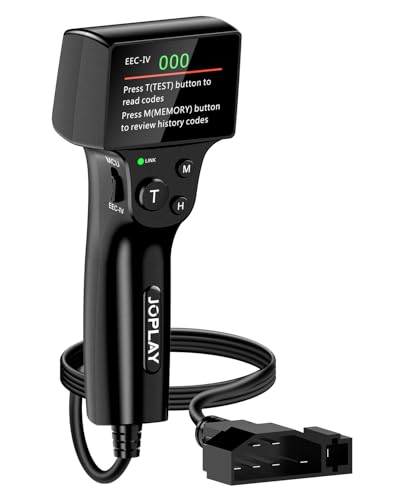
Another JOPLAY GM-focused option, this reader covers 1981–1995 GM models and interfaces with EEC-IV and MCU systems. It features a 2.4″ LCD for code definitions and supports KOEO/CM/KOER self-tests. It’s ideal for GM devotees who want consistent, screen-based definition displays. A limitation is similar to other OBD1 tools: narrow brand scope that excludes non-GM vehicles.
Who it is best for: GM fans who want quick code identification with built-in self-tests. Why it was selected: It provides a compact, screen-friendly approach to classic GM diagnostics.
Caution: Limited to GM vehicles; not useful for Ford or other brands.
ELFREE OBD1 Scanner For Ford/Lincoln/Mercury

This Ford-centered OBD1 scanner covers 1981–1995 models with KOEO/KOER/CM testing and a 2.4″ LCD that shows fault codes with definitions. It emphasizes a plug-and-play approach and a reinforced-pins design for durability. It’s best for enthusiasts who want a straightforward tool with clear on-device feedback in classic Ford families. A potential limitation is its focus on Ford-brand vehicles, which may reduce cross-brand versatility.
Who it is best for: Ford/Lincoln/Mercury owners seeking an all-in-one diagnostic tool for classic models. Why it was selected: It provides a reliable, easy-to-read LCD display and full KOEO/KOER/CM coverage for 1981–1995 Ford-era ECUs.
Buying Guide: Key Purchase Considerations
- Vehicle coverage: Confirm target model years and brands (Ford-Lincoln-Mercury vs. GM) to ensure the tool supports your ECU type (MCU vs. EEC-IV).
- Display and definitions: A device with a clear LCD and built-in code definitions saves time versus counting blinks or consulting manuals.
- Diagnostic modes: Look for KOEO, KOER, and Continuous Memory (CM) tests if you want comprehensive checks beyond simple code retrieval.
- Build quality: For older, frequently used scanners, reinforced pins and durable cables reduce wear and breakage in tight engine bays.
- Ease of use: Straightforward interfaces with self-test connectors minimize setup steps and misreads on older vehicles.
- Limitations to watch for: Some readers exclude ABS codes or do not support cross-brand usage; verify compatibility before purchase.
FAQ
- What is OBD1 and which vehicles use it?
OBD1 refers to the early onboard diagnostic systems used by many 1980s and early 1990s vehicles, notably Ford, GM, and Mercury models. These systems often require specific OBD1 tools designed for the era’s ECU formats.
- Can an OBD1 reader work on multiple brands?
Most OBD1 readers are brand-specific (Ford or GM). Some 2-in-1 tools attempt broader coverage, but always verify model-year compatibility for your vehicle.
- Do OBD1 tools read ABS codes?
Many OBD1 readers focus on engine/ECU codes and do not read ABS trouble codes. Check product specifications for ABS support if needed.
- What tests are KOEO and KOER?
KOEO stands for Key On Engine Off, and KOER stands for Key On Engine Running. These self-tests help assess whether the engine and sensors are communicating correctly with the ECU.
- Why choose a 2-in-1 OBD1 scanner?
A 2-in-1 design can offer broader coverage and quicker access to code definitions on the screen, reducing manual lookups during diagnostics.