Answering the common buyer question: which trailer coupler lock best protects your investment? This guide highlights five reliable options, explained for different trailer sizes and usage scenarios. The top picks are suitable for RVs, boats, horse trailers, and utility trailers, with varying fits and security features. Use this to choose a lock that matches your coupler size, climate, and theft-risk level.
| Product | Best For |
|---|---|
| Master Lock Black Universal Size Trailer Hitch Lock (379ATPY) | Versatile 1-7/8″, 2″, and 2-5/16″ couplers; general-purpose trailer security |
| RETRUE Heavy-Duty Universal Coupler Lock | 11 locking positions; broad compatibility across common sizes |
| Rhino USA Trailer Hitch Lock Kit | Heavy-duty, American-owned option with robust corrosion resistance |
| METOWARE Trailer Coupler Lock | Visible yellow deterrent color; universal fit and easy use |
| RETRUE Universal Coupler Lock (Yellow) | Compact, high visibility, 11-position adjustability |
Master Lock Black Universal Trailer Hitch Lock
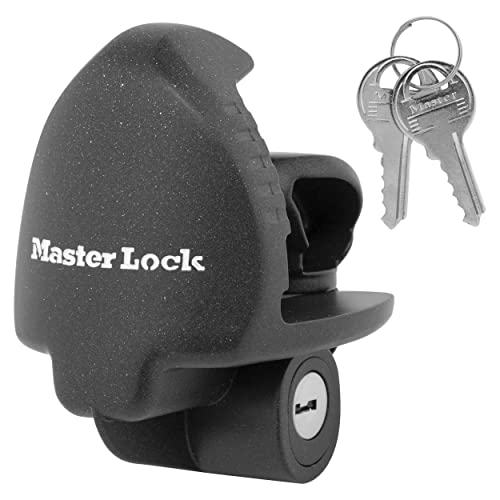
The lock fits 1-7/8 in. (48mm), 2 in. (51mm), and most 2-5/16 in. (59mm) couplers. It is designed for vehicles, trailers, and RVs and uses an advanced locking mechanism to resist picking and prying. Best for general trailer security where a standard universal fit is needed. Suitable for owners seeking a readily available, widely compatible solution. Caution: verify your coupler size before purchase to ensure compatibility.
RETRUE Trailer Tongue Coupler Lock

Features include a universal fit with a 1/4-inch pin and padlock-style design, and a maximum span of up to 3/4 inches. Made from high-strength zinc alloy with corrosion-protected finish, it aims for reliable long-term use. Best for compact couplers or lighter-duty trailers where a slim, simple pin lock is preferred. Caution: verify the span requirement, as some larger couplers may exceed this lock’s capacity.
Rhino USA Trailer Hitch Lock Kit

American-owned, heavy-duty powder-coated finish provides rust and corrosion resistance. Compatible with select 50×50, 50×60 couplers and 2″ A-Frame couplers. Not compatible with several unusual coupler types. Best for owners seeking a robust, USA-based option with strong protective coatings. Caution: check your exact coupler size to ensure compatibility, as some models fall outside the listed fits.
METOWARE Trailer Coupler Lock

In bright yellow, this lock emphasizes visibility while offering universal compatibility with 1-7/8″, 2″, and 2-5/16″ couplers and 11 locking positions. It uses a durable all-metal construction with a robust build to deter theft. Best for high visibility deterrence and versatile use across multiple trailer types. Caution: color may attract attention in some environments, which can be a nuisance depending on location.
RETRUE Universal Coupler Lock (Yellow)

Designed with 11 locking positions and fits 1-7/8”, 2”, and 2-5/16″ couplers. The aluminum body with high-strength steel provides robust cut and shear resistance. Bright yellow finish enhances visibility and deterrence against theft. Best for users needing adjustable security and a compact form. Caution: ensure the lock’s length and pin diameter match your specific coupler requirements.
Buying Guide
What coupler size does my trailer use?
Check your trailer’s coupler size (1-7/8″, 2″, or 2-5/16″). Choose a lock that explicitly lists compatibility with your size to avoid insecure gaps or loose fits.
Is visibility important?
Bright colors (like yellow) improve deterrence by making the lock obvious to would-be thieves. If aesthetics matter, weigh color against concealment needs for your trailer location.
What’s the trade-off between universal fit and specialized locks?
Universal-fit models maximize compatibility but may be bulkier. Specialized locks can be sleeker and lighter but require exact matches. Decide based on how many different trailers you own or park at.
How durable should the lock be?
Look for materials like high-strength steel, aluminum bodies, and corrosion-resistant finishes. Weatherproofing and powder-coated coatings extend life in outdoor environments.
How easy is installation and removal?
Locking mechanisms described as padlock-style or with simple twisting/turning actions tend to install quickly. Consider whether you need everyday quick access or occasional use.
Security features to expect
Common features include pick-prick resistance, steel construction, and reinforced shanks. Some models offer more locking positions to reduce leverage opportunities for thieves.
Maintenance considerations
Wipe away moisture, apply light lubrication sparingly, and store in a dry place when not in use. Regular inspection helps identify wear or corrosion before failure.
Multiple trailer setups
If you own more than one trailer, a single universal model may simplify security. Otherwise, have a few size-specific locks on hand to cover all equipment without gaps.
FAQ
- What size coupler should I buy a lock for if I’m unsure? Check the trailer’s user manual or inspect the coupler directly to measure the tongue and latch dimensions. If in doubt, choose a universal fit with clear compatibility notes.
- Are all coupler locks theft-resistant? Most locks resist picking and prying, but no lock is unbreakable. Favor models with hardened steel, robust shanks, and weatherproof coatings for better protection.
- Can I use a coupler lock on 5th-wheel trailers? Most standard coupler locks target bumper-pull trailers (1-7/8″, 2″, 2-5/16″). Check your specific hitch type and ensure the lock design matches the coupling mechanism.
- Do colored locks attract thieves? Bright colors increase visibility, which can deter casual theft but may draw attention in some environments. Choose color based on location and security needs.
- How should I maintain a trailer coupler lock? Wipe off dirt and moisture, apply light lubrication to moving parts, and store in a dry location when not in use. Inspect for rust or wear regularly.
- Is a combination lock better than a keyed lock? Both have pros and cons. Keyed locks offer simplicity and lower risk of misplacing codes; combination locks avoid carrying keys but require code management.