If you’re repairing auto body panels or smoothing primer, a DA (dual-action) sander is essential for fast, swirl-free finishes. This guide highlights five top pneumatic random orbital sanders well-suited for auto body work. The selections favor lightweight designs, adjustable speeds, and reliable dust handling. Best for beginners, shop setups, or pros needing efficient material removal with minimal fatigue.
Chosen products at a glance:
| Product | Brand | Best For | Why It Stands Out |
|---|---|---|---|
| Low noise 5/6 Inch DA Sander for Auto Body | RYCUBRE | Long sessions, detailed finishing | Lightweight, ergonomic, 12,000–13,000 RPM, noise-reduction design |
| ZFE Random Orbital Sander 5″ & 6″ | ZFE | Deburring and paint prep | All-steel components, speed control to 10,000 RPM, included dust handling |
| Ingersoll Rand 311A Dual-Action | Ingersoll Rand | Professional body work | Silenced operation, 12,000 RPM, balanced build |
| Professional Air Random Orbital Palm Sander | Gedu | Low vibration sessions | Lightweight, low vibration, balanced sanding pad |
| SKIL 5” Random Orbital Sander | Skil | Versatile shop use | 13,000 OPM, cyclonic dust box, adjustable speed |
Low Noise 5/6 Inch DA Sander for Auto Body
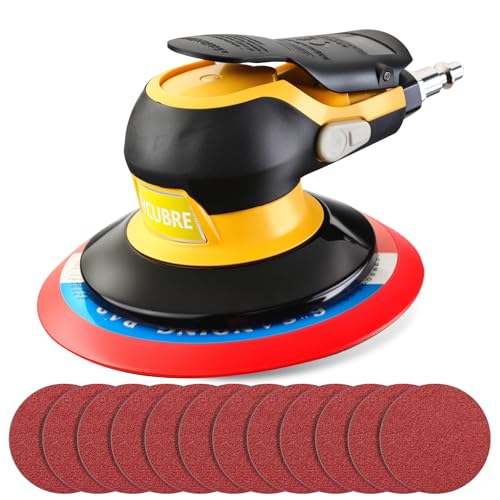
RYCUBRE’s sander integrates a lightweight, ergonomic frame with a high unloaded speed of 12000–13000 RPM at 0.8 MPa. Best for technicians who need quick material removal with reduced operator fatigue. The speed-adjustable control helps tailor performance to different coatings and substrates. Consider this option if you prioritize comfort during extended sanding sessions, especially on large panels. A potential limitation is that it relies on a compatible air supply to maintain peak performance.
ZFE Random Orbital Sander 5″/6″ With Backing Plate

ZFE offers a professional pneumatic sander with a robust all-steel movement and a regulated speed of up to 10,000 RPM. It ships with a 5″ backer plate and dust-suction compatibility, making it well-suited for sustained auto body prep and metal finishing. Best for users who want strong durability and a straightforward control system. The integrated regulator supports consistent speeds, but long sessions may require regular maintenance to prevent wear in the regulator.
Ingersoll Rand 311A Dual-Action Sander

This dual-action sander from Ingersoll Rand emphasizes a quiet operation with a built-in silencer and a 6″ pad for swirl-free finishes. It provides positive speed control via an adjustable regulator, making it ideal for body filler preparation and precise finish work in tighter spaces. Best for professionals who need reliable, low-noise performance. A note: access to tight areas can be challenging due to overall size, depending on the workspace configuration.
Professional Air Random Orbital Palm Sander

Gedu’s 6-inch palm sander is designed for low vibration and a well-balanced pad, aiming to minimize hand fatigue during extended auto body prep. It’s suitable for both body filler removal and paint prep, offering a straightforward regulator for speed adjustment. Choose this if you value a light footprint with reduced vibration, but be mindful of air supply requirements and potential heat build-up in longer sessions.
SKIL 5” Random Orbital Sander

SKIL’s sander features 13,000 OPM and a cyclonic dust box for easier dust disposal, making it practical for auto body prep and topcoat finishing. The variable speed control supports diverse materials, from primers to sealants, providing adaptable performance. Best for DIYers and professional shops that want a versatile sander with straightforward maintenance. A limitation is that the dust container is external and may require more frequent emptying in dusty environments.
Buying Guide
What to consider when choosing a DA sander for auto body work:
- Orbits per minute (OPM) and speed control: Higher speeds remove material faster, but you may want lower speeds for delicate finishes and coatings.
- Weight and ergonomics: Lighter tools reduce fatigue, especially during long jobs or overhead sanding.
- Dust management: Dust bags, collection containers, or cyclone systems help maintain visibility and cleanliness in the shop.
- Pad size and compatibility: 5″ or 6″ pads suit different panel sizes and edge work; ensure the backing plate is compatible with standard sheets.
- Noise and vibration: Quieter tools with balanced design improve comfort and accuracy.
- Regulator and airflow requirements: Ensure your air compressor provides adequate CFM at the necessary PSI for consistent performance.
Frequently Asked Questions
- What is a DA sander best used for in auto body work? – It is ideal for finishing, blending edges, and swirl-free finishes across primers, body filler, and paint surfaces.
- Should I choose a 5-inch or 6-inch sander? – A 6-inch sander covers larger areas efficiently; a 5-inch sander offers better access to tight spots and curved panels.
- Why is speed control important? – Different materials and coatings respond best at specific speeds, enabling smoother finishes and reduced heat buildup.
- Is dust collection essential for auto body sanding? – Yes, it improves visibility, reduces airborne dust, and helps protect your lungs and work surface.
- What maintenance is needed for pneumatic sanders? – Regularly check hoses, inspect the regulator, clean air filters, and replace worn pads or backings as needed.
- Can all these sanders run on standard shop air? – Most listed models are designed for common pneumatic systems, but confirm CFM at PSI to ensure compatibility with your compressor.