Discover the best dash cameras for cars that blend reliable video quality, wide-angle coverage, and smart features like parking mode and Wi‑Fi access. This guide highlights five top options, each tailored to different drivers—commuters, rideshare drivers, road-trippers, and tech enthusiasts. Use the quick comparison table below to spot the right fit at a glance, then read detailed product sections to understand what makes each model stand out.
| Product | Front Video | Rear Video | Best For | Key Feature |
|---|---|---|---|---|
| ROVE R2-4K DUAL | 4K | 1080P | All‑round evidence | STARVIS 2 sensor |
| REDTIGER F7N TOUCH | 4K | 1080P | Voice control lovers | Touch screen |
| 70mai A810 Lite | 4K | 1080P | Remote access | 5G Wi‑Fi |
| WANLIPO A13 | 4K | 2.5K | Budget dual‑cam users | GPS included |
| FAIMEE 4K+2K | 4K | 2K | All‑round daily driving | 24/7 parking |
ROVE R2-4K Dual Dash Cam Front And Rear
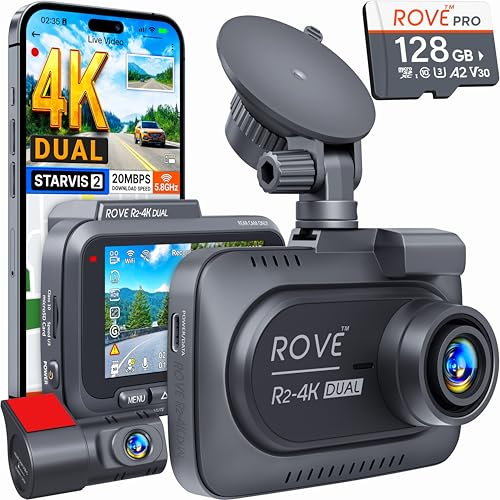
The ROVE R2-4K Dual Dash Cam records in 4K front and 1080P rear, with a 150° front and 140° rear field of view. It uses a Sony STARVIS 2 sensor to boost low-light performance, aided by a fast F1.5 front aperture and F1.8 rear. Best for drivers who want crisp front‑and‑back evidence and strong nighttime clarity. A potential limitation is reliance on Wi‑Fi for easy transfer, which may be slower in crowded areas. Parking mode supports extended protection when parked.
Dash Cam Front And Rear 4K+2.5K Dual, 5GHz WiFi

The WANLIPO A13 records front at 4K and rear at 2.5K with a wide 170° front lens and 120° rear. It features 5GHz Wi‑Fi plus built‑in GPS for route and speed data. Best for those who want high‑resolution front footage with clearer rear clips and GPS proof. Note that some advanced features may require a separate membership within the Viidure ecosystem, which could limit cloud options for certain users.
REDTIGER F7NP 4K Dash Cam Front Rear

REDTIGER F7NP pairs a 4K front with 1080P rear, using STARVIS 2 for improved low‑light footage. It offers WDR/NDR, 170° front, and 140° rear wide angles, with built‑in 5.8GHz Wi‑Fi for quick downloads and sharing. Best for drivers who want strong night performance and a straightforward app experience. A potential limitation is reliance on the app for full feature access; some advanced controls may require the main device interface.
FAIMEE Dash Cam Front And Rear 4K+2K

FAIMEE delivers 4K front and 2K rear with 170° front and 165° rear wide angles and a 3.16″ IPS display. It enhances night visibility with WDR and supports 24/7 parking monitoring with event‑driven locking. Best for users needing triple‑channel coverage and a built‑in display for quick checks. Limitation includes the requirement for a separate hardwiring kit for continuous parking monitoring, which adds setup steps.
Buying Guide
What should you look for when choosing a dash camera? Prioritize front camera resolution (4K or higher) for crisp license plates and signs, and consider whether you want a rear camera for added evidence. Look for wide angles (140°–170° or more) to minimize blind spots. Wireless features help with quick video transfers, but ensure the app ecosystem is reliable and updates are available. If parking surveillance matters, confirm parking mode functionality, battery/backup power, and loop recording. GPS is helpful for speed and location data, but not all models include it.
Key Purchase Considerations
- Video resolution and frame rate: 4K front improves detail; 1080P rear suffices for most events.
- Sensor quality: STARVIS 2 sensors boost low-light clarity.
- Field of view: 140°–170° front angles reduce blind spots.
- Connectivity: 5GHz/2.4GHz Wi‑Fi speeds access and download efficiency vary by model.
- Parking features: 24H monitoring and event locking protect evidence when parked.
- Storage: included cards vs. expandability up to 128–256GB or more; consider endurance cards for long sessions.
- GPS and speed data: helpful for reconstruction after incidents and for proof during trips.
FAQ
- What is the benefit of a 4K front camera?
It provides sharper license plate and sign details for clearer evidence. - Is GPS necessary in a dash cam?
GPS adds speed and route data that can assist in incident reconstruction and location tracking. - Do all dash cams require Wi‑Fi?
No, but Wi‑Fi enables quick video transfer and app control; some models rely on microSD for playback locally. - Can I use a dash cam while parked overnight?
Many models offer parking mode with event locking; check the need for a hardwire kit or external power. - What’s the difference between front and dual‑cam systems?
Dual cameras provide front and rear coverage, reducing blind spots and improving incident evidence.