If you’re searching for a reliable mobility scooter to support daily routines, this guide helps you compare top options. Each recommended model is suited for different needs—from longer ranges and higher weight capacity to compact, travel-friendly designs. Use this article to match the best scooter to a user’s riding environment, whether indoors, outdoors, or while traveling. The top picks below are organized by features, with clear advantages and potential limitations for quick decision-making.
| Product | Estimated Range | Weight Capacity | Foldability / Portability | Best For |
|---|---|---|---|---|
| Hoverfly T4 Blue | Up to 12.4 miles | 330 lbs | Removable battery; quick fold | Seniors needing long-range daily use |
| AXADA 4-Wheel Scooter | Up to 15 miles | 300 lbs | Compact, easy operation | Indoor/outdoor versatility |
| Sugogo Lightweight 43 lb | Up to 12.4 miles | 300 lbs | Very light and foldable | Travel and airport friendly |
| Loyliawa 4-Wheel | Up to 16 miles | 265 lbs | Foldable with detachable battery | Daily errands with longer range |
| Havenland 3-Wheel | Up to 12.4 miles | 330 lbs | 3-wheel design, compact trims | Budget-friendly all-terrain option |
Note: All models accommodate adults with mobility needs, each offering distinct advantages like range, weight capacity, or portability. Review your typical riding environment to pick the best fit.
Hoverfly T4 Mobility Scooter Blue

The Hoverfly T4 combines long-range capability with a user-friendly design. It uses a 12Ah lead-acid battery that is removable without tools, weighing 21 lbs for easy charging away from the scooter. A 250W motor supports riders up to 330 lbs and handles up to 10° inclines, with solid 9″ tires for stability. The seat is extra-wide (17.2″ x 13.7″) and rotates 360° for easier boarding. The 3-position seat height (20″–22″) and collapsible armrests add flexibility, making it a strong choice for seniors or mobility-impaired users who value comfort and range. Caution: If you need the lightest possible mobility option, this model’s lead-acid battery adds weight when carried as a spare.
Best for: Adults who prioritize longer travel distance and stable ride, with a focus on comfort and easy battery removal.
AXADA Four-Wheel Mobility Scooter

This four-wheel scooter is built for versatility, offering a 300W motor and a 24V, 12Ah deep-cycle battery that yields up to 15 miles per charge. It’s designed for both indoor and outdoor use with an adjustable, 360° swivel seat and height/width-adjustable armrests. A simple LED dashboard and one-touch start help users of all ages operate it with minimal effort. Best for: Users needing straightforward operation and reliable range for daily errands or neighborhood outings. Limitation: The design prioritizes practicality over ultra-lightweight features, so it may be heavier to lift than travel-focused models.
Sugogo Lightweight Foldable Scooter
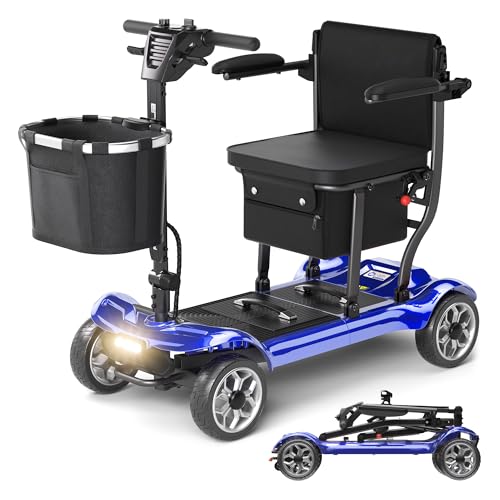
The Sugogo model emphasizes travel ease with a removable lithium battery and a compact foldable frame. It uses a 270W motor and climbs slopes up to 15°, supporting up to 300 lbs. The scooter folds in three steps and weighs around 43 lbs total, making airport-friendly portability feasible. Best for: Travelers and daily commuters who need a lightweight, airline-friendly option. Caution: Battery availability and replacement costs should be considered for long trips.
LoLyliawa 4-Wheel Mobility Scooter

This four-wheel design emphasizes range and stability with a 250W motor and up to 16 miles per charge, plus a 265 lb weight capacity. It features an adjustable, comfortable seat and intuitive controls for easy day-to-day use. Best for: Those who want a balance of range, stability, and a straightforward user experience. Limitation: Slightly lower weight capacity than some premium models, which may matter for heavier riders or those carrying cargo.
Havenland Three-Wheel Mobility Scooter
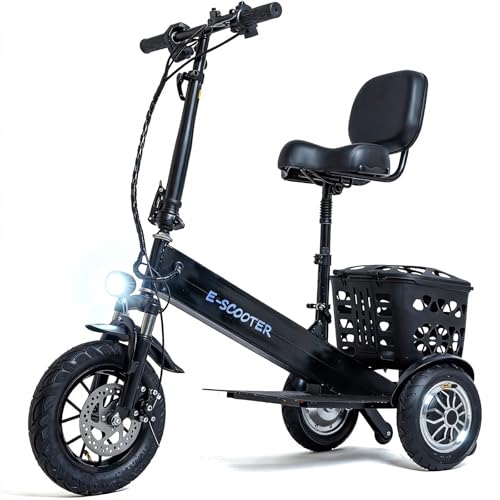
The Havenland three-wheel model pairs strong torque with all-terrain capability. Dual 500W motors deliver robust acceleration and torque, supporting riders up to 330 lbs and conquering hills up to 30°. The 12″ front and 10″ rear wheels help navigate rough surfaces more confidently, while three speed modes offer versatile cruising options. Best for: Users seeking higher torque and better performance on uneven surfaces. Limitation: Three-wheel configurations can sometimes feel less stable on very uneven ground compared with a four-wheel design.
Buying Guide: Key Considerations For Selecting A Disabled Scooter
- Range and battery type: Decide between lead-acid vs lithium. Lithium batteries are lighter and often airline-friendly, but replacement cost and availability matter for longer trips.
- Weight capacity and rider size: Choose a model that comfortably supports the rider’s weight plus any daily gear. Higher weight capacity provides greater stability and safety.
- Portability vs. comfort: If travel is frequent, prioritize foldable designs and removable batteries. For home use, a larger seat and sturdy frame may improve comfort over long sessions.
- Wheel type and terrain: Puncture-proof tires and wheel size affect stability on uneven surfaces. Four-wheel designs tend to be more stable; three-wheel models can be more maneuverable indoors.
- Ease of operation: Look for intuitive dashboards, simple start controls, and adjustable seating. A swiveling seat and foldable armrests can aid boarding and transfers.
- Maintenance and support: Consider model availability of replacement parts, ease of battery replacement, and local service options.
Frequently Asked Questions
- What should I consider when choosing a mobility scooter for daily use? Answer: Assess range, weight capacity, seat comfort, and how often you’ll travel outside the home. A model with easy battery removal and simple controls often reduces daily hassle.
- Are lithium batteries better for travel? Answer: Yes, lithium batteries are typically lighter and flight-friendly, but verify airline and transit rules, and plan for spare battery charging options.
- Is a four-wheel scooter safer than a three-wheel model? Answer: Generally, four-wheel scooters offer greater stability on uneven surfaces, while three-wheel designs can be more maneuverable in tight spaces.
- Can mobility scooters be disassembled for transport? Answer: Many models offer quick disassembly into lightweight sections. Check if your preferred model supports this and the heaviest piece’s weight.
- What maintenance is needed for long-term use? Answer: Regular checks of tires, brakes, battery health, and frame integrity are important. Follow the manufacturer’s guidance for charging schedules and storage.
- How do I verify fit for a user with mobility challenges? Answer: Test seat width, seat height, and ease of boarding. A swiveling seat and adjustable armrests can reduce back and hip strain.