Looking for reliable, heavy-duty disposable gloves for automotive, shop, or home repair tasks? These nitrile options offer strong puncture resistance, textured grips, and powder-free comfort. They’re best for mechanics, technicians, and DIYers who handle grease, oils, and solvents. Below, five top picks are highlighted with clear fits, so you can choose the best glove for your specific tasks.
| Product | Thickness | Best For |
|---|---|---|
| NEOTRIL 8 Mil Heavy Duty Disposable Nitrile Gloves | 8 mil | Auto repair, heavy grease and chemical exposure |
| Inspire Black Nitrile Gloves Heavy Duty 6 Mil | 6 mil | Medical and industrial tasks, healthcare and labs |
| SUPER+ Heavy Duty Nitrile Gloves 8 Mil Diamond Texture | 8 mil | Demanding automotive and heavy-duty environments |
| TitanFlex 6 Mil Heavy Duty Industrial Black Nitrile Gloves | 6 mil | Mechanics, cleaning, food prep |
| TitanFlex 8 Mil Heavy Duty Industrial Orange Nitrile Gloves | 8 mil | High-visibility, oily or greasy handling |
NEOTRIL 8 Mil Heavy Duty Disposable Nitrile Gloves

These gloves use an 8 mil thickness for heavy-duty protection against punctures, grease, gasoline, and petroleum-based chemicals. The raised diamond texture improves grip for handling tools and parts, including use with touchscreens. They are latex-free and powder-free, reducing skin irritation and dust in the workspace. Best for: automotive tasks, heavy cleaning, and environments where sharp edges or oils are common. Caution: bulkier gloves may reduce tactile sensitivity for very fine work.
Inspire Black Nitrile Gloves Heavy Duty 6 Mil

Inspire gloves are designed for both medical and industrial use. With a 6-mil thickness, they balance strength and dexterity, offering rip- and puncture-resistance while maintaining flexibility. They are latex-free and powder-free, making them suitable for sensitive skin and sanitary tasks. Best for: healthcare-adjacent shop tasks, laboratories, and garage work where reliable protection is needed without sacrificing tactile control. Caution: 6 mil may be thinner than some heavy-duty automotive tasks requiring extra protection.
SUPER+ Heavy Duty Nitrile Gloves 8 Mil Diamond Texture

SUPER+ Diamond Texture gloves use an 8 mil thickness for demanding environments, with a raised diamond pattern to maximize grip in wet, oily, or greasy conditions. They are chemical- and oil-resistant, making them suitable for automotive, heavy cleaning, and mechanical tasks. Best for: auto shops and garages where grip and protection are priorities. Caution: very thick gloves may feel stiffer for delicate tasks.
TitanFlex Heavy Duty Black Nitrile Gloves 6 Mil

TitanFlex 6 mil gloves deliver sturdy protection with full texture and powder-free design for optimal grip and sensitivity. They are latex-free, making them a solid choice for latex-sensitive users. Best for: mechanics and cleaners who need reliable hand protection with good tactility. Caution: 6 mil thickness is lighter than 8 mil options for high-risk chemical exposure.
TitanFlex 8 Mil Heavy Duty Industrial Orange Nitrile Gloves
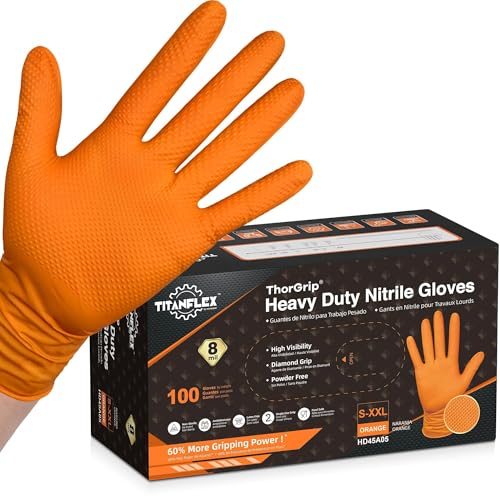
These gloves are 8 mil thick for maximum puncture resistance and chemical protection, with a textured diamond grip that helps maintain control in wet or greasy conditions. The high-visibility orange color improves safety by making hands and glove damage easier to spot. Best for: demanding automotive and industrial tasks in low-light or busy environments. Caution: orange color can show some stains more noticeably than black gloves.
Buying Guide
Key purchase considerations for disposable gloves used in mechanics and automotive work:
- Thickness and protection: 6–8 mil gloves balance protection with tactile sensitivity; choose 8 mil for heavy-duty tasks, 6 mil for precision handling.
- Texture and grip: diamond texture or fully textured palms improve grip on oily tools and small parts. Consider raised textures for better control.
- Material and skin sensitivity: nitrile is latex-free and generally better for sensitive skin and chemical resistance than latex. Powder-free reduces dust contamination.
- Chemical resistance: select gloves rated for oils, greases, solvents, and petroleum-based chemicals when relevant to your tasks.
- Visibility and color: high-visibility colors (like orange) help safety in busy shops; black gloves often conceal stains but may be less visible in dim areas.
- Size and fit: ensure the glove size matches your hand for comfort and dexterity; ill-fitting gloves can hinder precision work.
When choosing, align glove features with typical tasks: routine maintenance and cleaning benefit from good grip and puncture resistance, while precision manual tasks may require thinner profiles with strong tactile feedback. For shop environments handling oils and solvents, consider 8 mil options for maximum protection, or 6–7 mil for tasks needing greater sensitivity.
FAQ
- Q: Are nitrile gloves latex-free? A: Yes, most nitrile gloves—including the models listed—are latex-free, reducing allergy risk.
- Q: Which glove thickness is best for automotive work? A: 8 mil gloves provide superior protection against punctures and chemicals; 6 mil gloves offer better dexterity for small parts handling.
- Q: Do textured gloves improve grip in oily conditions? A: Yes, raised diamond texture and full texture help maintain grip on wet or greasy surfaces.
- Q: Are powder-free gloves better for debris-heavy work? A: Powder-free gloves reduce particulates in the workspace and are generally cleaner for most tasks.
- Q: Can I use these gloves for medical tasks? A: Some gloves are designed for medical and industrial use; verify the product description for suitable certifications and intended use.
- Q: How should I dispose of used disposable gloves? A: Follow local guidelines for chemical and hazardous waste; seal them in a bag and dispose of with regular trash if permitted.