Answering the most common buyer question: which trailer safety chains provide reliable, heavy-duty connection for towing? This guide highlights five top options, tailored to different trailer types and hitch configurations. Best for heavy-duty towing, mid-size utility trailers, or boat trailers are covered. Each pick includes who it’s best for and why, plus practical cautions to consider before buying.
| Product | Brand | Length | Break Strength | Best For |
|---|---|---|---|---|
| YATOINTO 2-Pack Grade 80 35 Inch | YATOINTO | 35″ | 21,000 lbs | Heavy-duty trailers, hard-tow demands |
| CURT 48-Inch Trailer Safety Chain | CURT | 48″ | 2,000 lbs | Light-to-moderate load trailers |
| Tnyeobae 27″ Safety Chain Kit | Tnyeobae | 27″ | 7,000 lbs | RV, boat, or utility trailers |
| YATOINTO 2-Pack Grade 80 36 Inch | YATOINTO | 36″ | 13,200 lbs | Medium to heavy-duty towing |
| BaVekHak 2 PCS 1/4″ Safety Chain | BaVekHak | 1/4″ | 5,000 lbs | Boat and utility trailers |
YATOINTO Grade 80 35 Inch Safety Chain

Product features indicate a heavy-duty Grade 80 chain, heat-treated alloy, and a 5/16″ chain with a clevis snap hook and chain retainer. Best for users needing a higher safe working load than standard chains but without additional bulk. The chain retainer is designed for easy installation and replacement. Suitable for trailer-to-vehicle connections where maximum strength and secure attachment are required.
Who it’s best for: owners of mid-to-large trailers requiring high strength and durability for frequent towing. Why selected: among the top-strength options in this list, it provides robust performance and a compatible 5/16″ size with a removable pin/cotter for maintenance.
Caution: ensure correct alignment and two-chain setup as recommended; avoid using single chains for severe towing scenarios where both sides are not engaged.
CURT 48-Inch Trailer Safety Chain

This 48-inch chain is designed to resist complete vehicle-trailer separation during towing. It carries a 2,000 lbs minimum break force and comes with two pre-attached S-hooks for fast, secure coupling. It utilizes a Grade-30 rating to meet common trailer weight needs. The setup is ready to couple straight out of the box.
Best for: drivers needing reliable, straightforward safety chains for standard trailer loads. Why selected: dependable, easy-to-install, and with pre-attached hooks that simplify setup. Caution: ensure both chains meet or exceed the gross trailer weight and follow safety guidelines for two-chain use.
Tnyeobae 27″ Safety Chain Kit

Engineered for high-strength performance, this Grade 30 chain provides a 7,000 lbs break strength with 5/16″ hooks and a secure spring latch design. Zinc-plated finish offers rust resistance for saltwater or harsh weather conditions. Includes two chains for balanced towing setup.
Best for: RVs, boats, and utility trailers that navigate varied weather and road conditions. Why selected: strong break strength, corrosion resistance, and spring-loaded hooks reduce unhooking risk during turns or abrupt stops. Caution: ensure correct length to avoid excessive slack or tension during turns.
YATOINTO 36 Inch Grade 80 Safety Chain
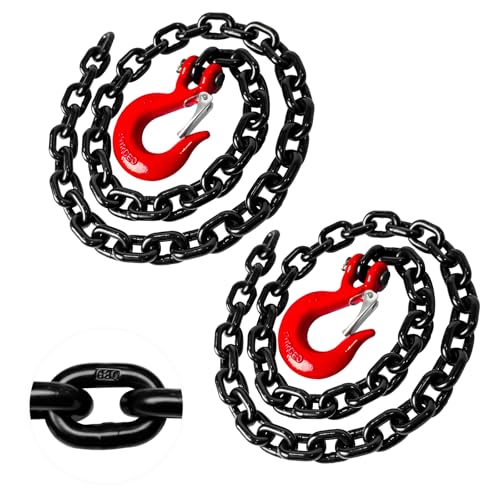
This 36-inch Grade 80 chain features a 1/4″ red clevis hook and a black electrophoresis finish for corrosion resistance and a clean look. It is heat-treated for durability and designed to connect trailer-to-vehicle, with two chains recommended for safety.
Best for: owners needing a longer 36-inch chain with robust Grade 80 strength and a visible, corrosion-resistant finish. Why selected: higher break strength (13,200 lbs) relative to standard Grade 30 chains, with a protective coating. Caution: check hook clearance to avoid interference with vehicle components during towing.
BaVekHak 1/4″ Safety Chain Kit

This kit includes two 1/4″ chains rated up to 5,000 lbs with zinc plating for rust resistance in marine and road environments. S-hooks are included for quick attachment, and chains are designed for Class I towing scenarios with a solid all-weather design.
Best for: boat trailers and light commercial trailers that require sturdy, corrosion-resistant chains. Why selected: reliable 5,000 lbs class I capacity and included hooks simplify setup. Caution: not the highest break strength among options; match to trailer weight and road use.
Buying Guide: Key Purchase Considerations
- Strength vs. trailer weight: Match chain break strength to your gross trailer weight. Use two chains with combined capacity that comfortably exceeds the trailer’s total weight.
- Length and clearance: Longer chains offer more slack but can drag. Choose lengths appropriate for your hitch separation and turning radius.
- Material and finish: Grade 30 vs Grade 80, and coatings like zinc plating or electrophoresis (EP) finishes affect durability and corrosion resistance in saltwater or winter conditions.
- Hooks and hardware: Spring-loaded or safety latch hooks reduce unhooking risk. Verify that hooks fit your clevis or shackle type and that attachments are secure.
- Compatibility: Ensure chain size (e.g., 1/4″ vs 5/16″) matches your trailer’s safety chain receptacles and hitch hardware.
- Regulatory and safety practices: Many regions require two safety chains. Confirm that the chosen chains meet relevant local towing guidelines and class ratings.
Frequently Asked Questions
- What is the difference between Grade 30 and Grade 80 trailer chains?
- How long should trailer safety chains be?
- Why use two safety chains?
- Are coated chains better for rust resistance?
- What should I consider when choosing hooks?
Grade 80 chains are heat-treated and stronger than Grade 30 chains of the same size, offering higher safe working loads for heavier trailers.
Chain length depends on hitch type and vehicle-trailer separation. Common lengths range from 27″ to 48″; choose a length that prevents drag while allowing enough slack for turning.
Two chains provide redundancy and help maintain trailer control if one chain disconnects, reducing the risk of detachment.
Coatings like zinc plating or electrophoresis coatings improve corrosion resistance in wet or salty environments, extending chain life.
Look for spring-loaded safety hooks that resist unhooking during turns or sudden stops, and ensure hooks fit your trailer’s receiver and clevis styles.