Answering the common buyer question: which drop hitch best suits a weight distribution system? This guide highlights five top Amazon picks, explains who each is best for, and notes any limitations. These options cover different receiver sizes, drops, and rises to help you level a tow setup with a weight distribution hitch. Use the table below for quick comparison, then dive into each product’s details to find the right match for your trailer and truck.
| Product | Receiver Size | Drop / Rise | Best For |
|---|---|---|---|
| Curt 17123 Adj Hitch Bar | 2-1/2″ | 9″ Drop / 10-1/2″ Rise | Big lifts, heavy trailers, standard CURT hitches |
| Curt 17132 Weight Distribution Hitch Replacement Shank | 2-1/2″ | 8″ Drop | Simple replacement, mid-range drop |
| Curt 17131 Replacement Shank | 2-1/2″ | 2″ Drop / 6″ Rise | Smaller drop with balanced rise |
| REYSUN Weight Distribution Hitch Shank (2-Inch) | 2″ | 7″ Drop / 10-1/2″ Rise | Flexible drop/rise, solid steel, multi-fit |
| CURT 17124 Replacement Shank | 2-1/2″ | 8-3/4″ Drop | High drop for lifted setups |
Curt 17123 Adj Hitch Bar 9 in X 7 in with 10 1/2 in Rise

Features: Provides an adjustable mount for any CURT weight distribution hitch; rated for 15,000 lbs gross trailer weight and 1,500 lbs tongue weight; features multiple holes for adjustable head height.
Best for: Trailers and trucks already using CURT weight distribution systems needing a high-rise alternative. Why selected: High rise helps level tall rigs with heavy trailers. Caution: Ensure your hitch head height aligns with the available hole spacing to avoid improper alignment.
Curt 17132 Weight Distribution Hitch Replacement Shank

Features: Adjustable mount for CURT weight distribution hitches; rated for 15,000 lbs gross trailer weight and 1,500 lbs tongue weight; multiple holes for adjustable head height.
Best for: Upgrading or replacing a shank in a CURT weight distribution system. Why selected: Consistent CURT engineering supports reliable alignment. Caution: Only use with compatible CURT hitches and hardware.
Curt 17131 Replacement Weight Distribution Shank

Features: Adjustable mount for CURT weight distribution hitches; rated for 15,000 lbs gross trailer weight and 1,500 lbs tongue weight; multiple holes for adjustable head height.
Best for: Users with two-and-a-half inch receivers needing moderate drop and rise. Why selected: Balanced drop and rise options help achieve level towing on varied terrains. Caution: Compatibility with your specific CURT head is required for optimal performance.
REYSUN Weight Distribution Hitch Shank, 2-Inch

Features: Fits 2-inch x 2-inch hitch receivers with 5/8-inch hitch pin hole; maximum drop 7 inches and rise 10-1/2 inches; three pin holes on the shank; 3/4-inch diameter holes spaced for adjustable height.
Best for: Trucks needing substantial rise with a moderate drop, or mixed-terrain towing. Why selected: Strong rise capacity complements lifted vehicles. Caution: Confirm clearance when used with tall ball mounts or tall hitch heads.
Curt 17124 Replacement Shank, 2-Inch Receiver
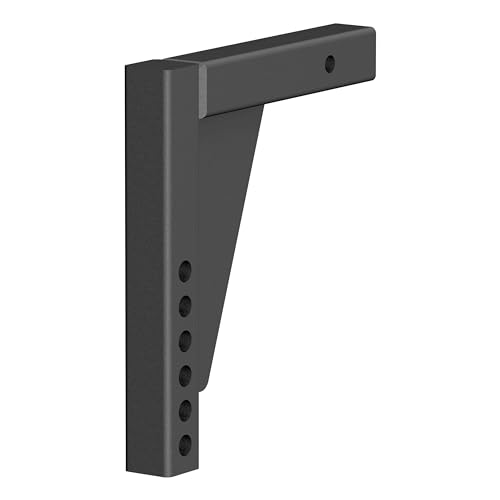
Features: Provides an adjustable mount for any CURT weight distribution hitch; rated for 15,000 lbs gross trailer weight and 1,500 lbs tongue weight; multiple holes for adjustable head height.
Best for: Replacing an aging or damaged shank in a CURT system with reliable compatibility. Why selected: Accessible drop options align with many CURT hitch heads. Caution: Verify compatibility with your current CURT hitch model and head height requirement.
Curt 17125 Replacement Shank, 2-Inch Receiver

Features: Fits 2-inch x 2-inch receiver tube openings with 5/8-inch hitch pin hole; compatible with CURT weight distribution hitches; maximum drop of 14-1/2 inches (not designed for rise).
Best for: Extremely low or very tall setups requiring a large drop, with a CURT hitch. Why selected: Very high drop enables level towing on dramatically adjusted trailers. Caution: Not suitable for rise-only configurations; ensure you need a drop-centric solution.
Buying Guide
- Receiver size compatibility: Most hitches in this list use 2-1/2″ or 2″ receivers. Confirm your vehicle’s hitch size before selecting a shank.
- Drop vs rise requirements: If your trailer is significantly higher than the hitch, prefer shanks with higher drop or rise. If you mostly tow level, choose balanced drops like 2″ to 7″ rises.
- Compatibility with weight distribution systems: CURT shanks pair best with CURT Hitches. REYSUN offers multi-fit options that work across brands if your system isn’t CURT.
- Hole spacing and adjustability: Look for multiple holes and 1-1/4 inch spacing to fine-tune head height for precise weight distribution alignment.
- Material and strength: Solid steel shanks provide reliable strength for maximum gross trailer weights listed (commonly up to 15,000 lbs).
- Lifted or lowered tow setups: Deep drops (8-14 inches) suit lifted trucks; ensure there is adequate clearance for the exhaust, spare tire, and suspension components.
FAQ
- Q: What is a weight distribution hitch shank used for? A: It adjusts head height to align the tow vehicle and trailer for proper weight distribution and level towing.
- Q: Can I mix brands for a shank and hitch head? A: It’s possible if the receiver size and bolt hole patterns match, but for best performance compatibility with load ratings, prefer matching brands when feasible.
- Q: How do I know which drop I need? A: Measure the height from the ground to the top of your hitch receiver, compare to the trailer tongue height, and select a shank that achieves a level stance when connected.
- Q: Are there safety concerns with high-drop shanks? A: Yes. Very large drops can reduce ground clearance and affect steering geometry; ensure there’s clearance for maneuvering and turning.
- Q: Do these shanks affect tongue weight capacity? A: The shank itself does not increase tongue weight capacity beyond the hitch’s rating; use within the rated limits.
- Q: Do I need professional installation? A: Basic installation can be straightforward, but for optimal alignment and safety, consider professional assistance if you’re unsure about measurements and alignment.