Answering the need for a clean, long-lasting lubricant for window tracks, this guide highlights five top dry-lubricant options. These products are best for homeowners, DIYers, and maintenance pros who want to reduce friction, prevent sticking, and keep windows opening smoothly without attracting dirt. The top picks cover various materials and environments, from household vinyl tracks to workshop tool windows. Below is a quick table of the chosen products to compare at a glance.
| Product | Best For | Key Benefit |
|---|---|---|
| WD-40 Specialist Silicone Dry Lubricant | Home and workshop windows | Clear, clean finish; builds protection without mess |
| WD-40 Specialist Dry Lube (Smart Straw) | Industrial-grade windows and tools | High-temperature tolerance; reduced wear |
| 3-IN-ONE RVcare Window & Track Dry Lube | Vinyl and plastic track systems | Quick-drying film; corrosion protection |
| DuPont Non-Stick Dry-Film Lubricant Aerosol | Metal-to-metal or mixed-material windows | Long-lasting micro-thin, dirt-resistant coating |
| DuPont Silicone Surface Safe Lubricant | All surfaces including rubber, vinyl, and wood | Nano-ceramic protection; broad compatibility |
WD-40 Specialist Silicone Dry Lubricant
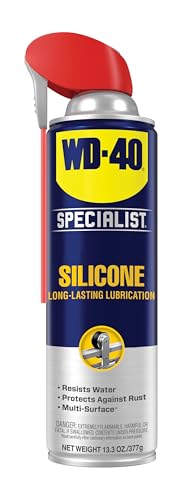
Best for: homeowners and hobbyists needing a versatile silicone lube for window tracks, cables, and pulleys. This product offers reliable lubrication without attracting dirt or leaving a sticky residue. It is safe for metal, vinyl, and plastic surfaces, except certain polycarbonate or polystyrene materials. Use this when you want a clean finish and broad surface compatibility. Caution: avoid clear polycarbonate and polystyrene in some cases; test on a small area first if unsure.
WD-40 Specialist Dry Lube with Smart Straw

This option is best for: industrial settings and tools with multiple moving parts, including window tracks, slides, and hinges. The PTFE formula reduces friction and wear, dries to a clear film, and is safe across a wide temperature range. It won’t attract dust, making it suitable for dusty environments. Best choice for: machinery and window applications where cleanliness and durable protection matter. Limitation: the product data notes a broad use range, but verify compatibility with the exact plastic types in your window assembly.
3-IN-ONE RVcare Window & Track Dry Lube

Best for: vinyl and plastic window tracks requiring quick-drying, clear lubrication. The formula forms a protective film that reduces friction and offers long-lasting corrosion protection against the elements. It’s safe for most materials, with the exception of certain plastics. Choose this if you need a simple, spray-on solution with reliable track performance in variable weather. Caution: avoid polycarbonate and polystyrene in some cases; always test on a small area first.
DuPont Non-Stick Dry-Film Lubricant Aerosol

Best for: metal-to-metal windows and hardware where a durable, dirt-resistant dry film is advantageous. The unique 100% dry-film coating resists dirt and remains effective across a wide temperature range (-100F to 500F). It’s suitable for tight tolerances in metal applications and can handle high-friction environments. Limitation: may require surface preparation for certain plastics; test before broad use.
DuPont Silicone – Surface Safe Lubricant

Best for: a wide range of surfaces including rubber, vinyl, plastic, leather, metal, and wood. It uses Nano-Ceramic Boron Nitride particles to enhance waterproofing and protection. This makes it suitable for windows with mixed materials and outdoor exposure. Caution: check material compatibility with very soft plastics; perform a spot test if uncertain.
Buying Guide: Key Considerations For Window Dry Lubricants
- Material compatibility: Check if the lubricant is safe on vinyl, plastic, rubber, wood, or metal used in your window tracks.
- Film type and cleanliness: Prefer dry-film formulations that leave a clear, non-greasy coating to resist dirt accumulation.
- Application method: Aerosols with smart straw or precision spray help direct lubrication to track channels without overspray.
- Temperature range and environment: Select a product matching your climate and exposure (indoors vs. outdoors).
- Longevity and maintenance: Consider how often you’ll reapply and whether a long-lasting film is available.
- Safety and residue: Look for non-sticky finishes and formulations that won’t attract dust or leave sticky residues.
FAQ
- Q: Can I use any dry lubricant on window tracks? A: Not always. Check material compatibility and avoid products that may damage specific plastics or coatings used in your windows.
- Q: How often should I reapply? A: Reapplication depends on traffic and weather; in dry climates, a light application every few months is common, but follow product guidance.
- Q: Is a silicone-based lubricant better than graphite for windows? A: Silicone generally provides broad compatibility and a clean finish; graphite excels where dry-film protection is needed on metal parts.
- Q: Will these products attract dust? A: High-quality dry films are designed to resist dirt buildup, but occasional cleaning of tracks can extend lubrication effectiveness.
- Q: Are there safety concerns for indoor use? A: Use in well-ventilated areas and follow label directions; avoid inhalation of aerosols and keep away from flames.