Upgrading a conventional bicycle into a capable electric ride can improve commuting, enable hill climbs, and extend weekend adventures. This guide highlights five reliable e-bike motor kits that balance power, reliability, and ease of installation. Each entry includes a clickable Amazon link, a quick visual, and core features to help you compare options at a glance.
| Product | Brand | Motor Power | Wheel Size | Drive Type |
|---|---|---|---|---|
| VEVOR 1000W Front Wheel Kit | VEVOR | 1000W | 26″ | Front Hub |
| AW 1000W Front Wheel Kit | AW | 1000W | 26″ | Front Hub |
| VEVOR 2000W Motor Kit | VEVOR | 2000W | Various | Front/Rear Hub |
| Helrgelrn 1000W Rear Wheel Kit | Helrgelrn | 1000W | 26″ | Rear Hub |
| SZWEDI 2000W Fat Bike Kit | SZWEDI | 2000W | 26×4.0″ | Rear Hub |
Note: When selecting a kit, consider riding style, terrain, and compatibility with your bike’s dropout width, brake type, and wheel size. This list emphasizes kits with robust motors, integrated controllers, and clear installation guidance to help you upgrade with confidence.
VEVOR 1000W Front Wheel Kit

The 1000W VEVOR front hub motor kit delivers a strong 420rpm output with at least 50 N.m torque and a 0° – 12° climbing angle. It supports 26″ wheels and includes an upgraded speed controller, throttle grip, and LCD display for real-time ride data. The 100% copper core motor offers improved heat resistance and low noise operation, making it suitable for varied weather conditions while preserving performance on hills and urban inclines. This kit aims for a balanced blend of power, reliability, and ride quality.
AW 1000W Front Wheel Kit
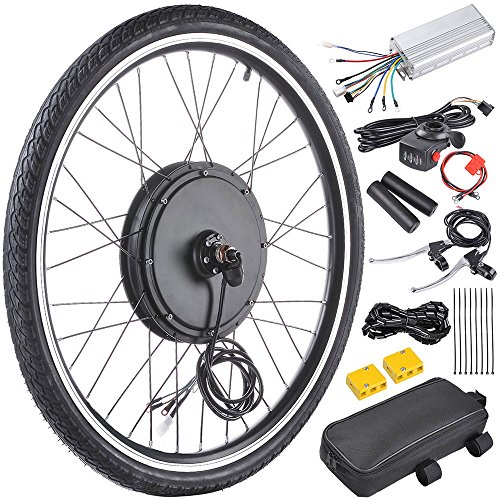
AW’s 48V 1000W front-hub kit provides a noiseless, brushless experience with a maximum speed around 27.95 mph (45 km/h). The aluminum alloy frame enhances durability and load capacity up to 220 lbs. It features a thumb throttle with battery status indicators to help avoid unexpected power loss and supports universal disc and V-brakes, ensuring compatibility with many 26″ bikes. This kit emphasizes ease of installation, stable power delivery, and practical braking compatibility.
VEVOR 2000W Front/Rear Motor Kit

This high-power 2000W motor kit from VEVOR targets serious DIY builds for faster speeds and robust torque. It offers an efficient 4300rpm motor with an upgraded speed controller and throttle grip kit tailored for go-karts, bikes, and other DIY electric projects. The design emphasizes heat resistance, low noise (~70 dB), and dual-direction control (CW/CCW) for versatility in tight spaces, making it suitable for enthusiasts seeking top-end performance and flexible configurations.
Helrgelrn 1000W Rear Wheel Kit

Helrgelrn’s rear-wheel kit pairs a 1000W brushless, toothless motor with a robust 26″ setup. It delivers a 440rpm drive with up to 53 km/h top speed and 45 N.m torque, aided by a high-efficiency controller. The kit includes practical features like a power-off brake handle for emergency stops and a sturdy spoke design to improve wind resistance and durability. It is designed for ease of installation on standard 26″ bikes and supports reliable daily use in varied conditions.
SZWEDI 2000W Fat Bike Kit

The SZWEDI fat-bike kit features a 2000W rear-drive motor designed for 26×4.0″ fat tires. It includes a color TFT display and a waterproof controller, offering a broad operating range with up to 55 km/h (34 mph) capable performance. The kit is built for rugged winter conditions and tricky terrains, delivering substantial torque and a durable build suitable for heavy-duty riding on fat bikes.
Buying Guide
Key considerations when choosing an e-bike motor kit include compatibility, power needs, and install complexity. Power level (1000W vs 2000W) affects top speed and torque but may impact legality in some regions and frame strain. Front hub kits are typically simpler to install and preserve the drivetrain, while rear hub kits can offer better weight distribution and pedal-assist integration.
Wheel compatibility, dropout spacing, and brake type (disc vs rim) determine fit. Controllers and displays influence your ride analytics and throttle response; systems with integrated PAS (pedal assist sensor) provide smoother assistance across gears. Heat management and noise levels matter for long rides and discreet operation, especially in shared urban spaces.
Installation effort varies by kit. Some come with comprehensive mounting hardware, step-by-step manuals, and compatible throttles or displays. If you are upgrading an older bike, verify compatibility with your frame, fork, and wheel width. Battery weight and range are also critical; ensure your chosen kit aligns with a battery you can safely mount and recharge.
Environmental conditions and usage context matter. Kits rated for water resistance and stable performance in cold climates can extend reliability for year-round commuting. Compare warranty terms and supplier support to minimize downtime after installation or during maintenance.
For best results, match the kit to your riding goals—daily commuting, weekend mountain rides, or recreational touring—and consider whether you prefer front-hub simplicity or rear-hub performance. Always respect local regulations regarding motor power and top speed to ensure a compliant and safe riding experience.