If you want to convert a regular mountain bike into an electric-assisted ride, this guide highlights five reliable conversion kits. These kits fit common mountain-bike frames, offer varying power levels, and come with different accessory options. Best for riders seeking cost-effective upgrades, mid-drive options for torque, and rear-hub solutions for simple swaps. This roundup helps buyers match their riding style to a suitable kit.
Summary table of chosen products:
| Product | Power / Class | Best For |
|---|---|---|
| LYNICESHOP 350W Hub Kit | 350W | Budget-friendly, simple rear-wheel upgrade |
| BAFANG BBS02B / BBS-HD Mid-Drive Kit | 500W / 750W / 1000W | Powerful torque, versatile mounting on many frames |
| DDYOOK 1000W Rear Hub Kit | 1000W | High-speed pedal-assist with LCD display |
| CUBELLIN 2000W Rear Hub Kit | 2000W | High-performance mountain biking and steep terrains |
| Helrgelrn 1000W Rear Hub Kit | 1000W | Reliable PAS with 1000W power and clear display |
LYNICESHOP 350W Hub Kit For Common Bike

Best for cost-conscious riders who want a straightforward rear-wheel upgrade. This kit fits hub diameters under 36mm and does not include a battery or charger, making it a modular addition to an existing setup. Its wheel-spoke mounting design keeps installation simple on many standard bikes, including some mountain bikes with compatible hubs. Suitable for riders who prioritize a light footprint and an easy upgrade path rather than all-in-one systems.
Who it’s best for: casual riders or commuters seeking an entry-level electric assist without a full kit overhaul. Why chosen: affordability, simple installation, and compatibility with common wheel designs. Limitation: no battery or charger included, so you must source compatible power separately.
BAFANG BBS02B / BBS-HD Mid-Drive Kit (68-73mm)

Best for riders seeking strong torque and versatile frame fit. The BAFANG mid-drive kit supports 68-73mm bottom brackets and other lengths, with 33.5-36mm inner diameters, making it adaptable to many mountain bikes. It supports throttle, pedal-assist, and standard cycling modes, and can power up to 45 km/h in some configurations. Best for capable DIY enthusiasts who want a high-tlex and customizable ride. Limitation: requires attention to mounting dimensions and included hardware; some screws are not included.
DDYOOK 1000W Rear Hub Kit

Better for riders who want a robust rear-hub upgrade with a clear, feature-rich display. The 1000W motor paired with a dual-mode controller and an LCD display offers real-time metrics, 5-speed adjustment, and cruise control. Best for longer commutes or rides that demand higher sustained power. Caution: data notes indicate a high-speed setup; ensure your bike and local laws permit higher-speed e-bikes and that you can handle the added weight.
CUBELLIN 2000W Rear Hub Kit
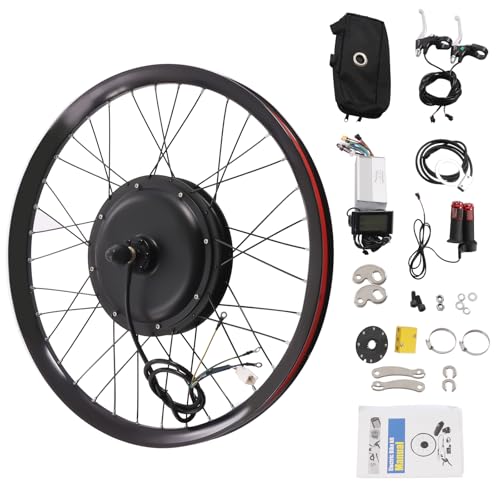
Best for riders who demand peak performance on steep terrain and aggressive riding. The 2000W rear hub motor delivers high torque and strong acceleration, with 9 speeds and an LCD. Choose this for demanding mountain trails or when needing more power for steep climbs. Limitation: high power means heavier components and potential electrical considerations; verify compatibility with your wheel and frame before purchasing.
Helrgelrn 1000W Rear Hub Kit

This 1000W rear hub kit suits riders who want a balance of performance and ease of installation. It uses a pedal-assist sensor to adjust output in real time, supporting efficient energy use and smoother acceleration. Best for daily riders and weekend warriors seeking reliable all-around capability. Caution: verify brake compatibility—system supports disc or V-brake configurations, but precise compatibility depends on wheel and dropout specs.
Buying Guide: How To Choose The Right E-Bike Conversion Kit For Mountain Bikes
- Power needs: For hilly terrain and aggressive riding, mid-drive kits (like BAFANG BBS models) provide strong torque and efficient use of your existing gears. For simple upgrades, a rear-hub kit is easier to install but may be less efficient on steep climbs.
- Frame compatibility: Check bottom bracket width and height, hub diameter, dropout spacing, and brake type. Mid-drive kits require correct bottom-bracket compatibility, while hub kits depend on wheel hub dimensions.
- Display and controls: An LCD or OLED display helps monitor speed, assist level, and battery status. Consider whether you want cruise control, multiple assist modes, or throttle control, depending on your typical riding scenario.
- Battery considerations: Some kits come with an optional battery. If not included, source a compatible battery with appropriate voltage (36V, 48V, etc.) and capacity for your planned range.
- Installation effort: Hub kits are generally easier to install, while mid-drive systems require more mechanical work, including bottom-bracket adaptation and possible chainring changes.
- Legal and safety: Ensure your mountain bike build complies with local e-bike regulations in your area, particularly for speeds over 20 mph (32 km/h) if applicable. Confirm motor torque and wheel strength for safety on rough trails.
- Maintenance: Brushless hub motors and mid-drive units differ in maintenance needs. Consider ease of servicing, availability of spare parts, and warranty terms from the seller.
FAQ
- Can I install an e-bike kit on any mountain bike? Some kits require specific bottom-bracket dimensions or wheel hub sizes. Verify frame compatibility before purchase.
- What is the difference between hub motor and mid-drive kits? Hub motors power the rear wheel directly and are easier to install; mid-drive motors drive the crankset, offering better torque and hill climbing, but require more installation effort.
- Do I need to replace my bike’s battery? Some kits include a battery option; others require sourcing a compatible battery separately. Match voltage and capacity to your goals.
- Will installing a kit affect bike handling? A higher-power kit can alter weight distribution and braking demands. Ensure your frame and brakes are rated for the added weight and power.
- Are these kits legal on public roads? Regulations vary by jurisdiction. Check local laws regarding e-bike power, speed limits, and classification before riding on streets or trails.
- What maintenance is required after installation? Regular checks on wiring, brake performance, and motor heat are important. Follow the kit’s maintenance guidelines and inspect connections after exposure to rain or dust.