The top picks below are designed to convert a mountain bike into a capable electric ride. This guide highlights kits that fit common MTB frames, with emphasis on mid-drive systems for torque and trail performance, rear-hub options for simplicity, and complete accessory bundles to minimize setup effort. Ideal buyers include DIY enthusiasts, riders seeking more hill-climbing power, and anyone replacing a worn drivetrain with an ebike upgrade.
| Product | Motor Type | Power Range | Best For | Notes |
|---|---|---|---|---|
| BAFANG Mid Drive Kit 750W/1000W BBS02B/BBS-HD | Mid-drive | 500W/750W/1000W | Trail riders; versatile MTBs | Includes many accessories; DH-ready potential |
| BAFANG Mid Drive Kit 1000W BBS-HD | Mid-drive | 1000W | Aggressive hills; heavy riders | High torque; universal fit |
| BAFANG Mid Drive Kit 500W/750W/1000W (BBS02B/BBSHD) with Battery Options | Mid-drive | 500W/750W/1000W | All-around MTB use | Flexible power; broad compatibility |
| Orudauy 26″ Ebike Wheel Kit, 48V Rear Wheel | Rear hub | 48V | Easy upgrade; rear-wheel only | High load rating; LCD display option |
| DDYOOK 48V 1000W Rear Wheel Kit | Rear hub | 1000W | Powerful, straightforward swap | Includes LCD display option; dual-mode |
BAFANG Mid Drive Kit 750W/1000W BBS02B/BBS-HD

This kit supports 500W, 750W, or 1000W BBS02B/BBS-HD motors, enabling a wide range of MTB applications. It includes brake levers, chainwheel, thumb throttle, speed sensor, headlight, and more, with optional battery and LCD display. Best for riders who want strong torque for steep climbs and versatile performance on mixed terrain. Choose this if you ride aggressive terrain and need configurable power; avoid if your frame requires unusual bottom-bracket dimensions or if you prefer a simple wheel upgrade.
BAFANG Mid Drive Kit 1000W BBS-HD
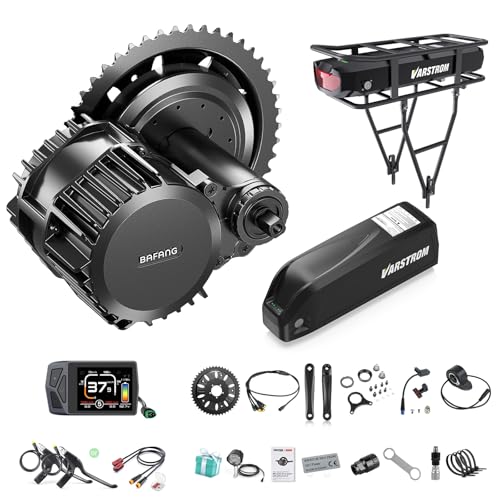
Designed for high-performance mountain riding, this 1000W mid-drive kit delivers up to 160 N·m torque and speeds to 45 KMH. It comes with essential accessories and supports MTBs, city cycles, and recumbent trikes with disc or V-brake systems. Best for riders seeking maximum hill-climbing capability; better for heavier riders or steep, technical terrain. Caution: check frame clearance and rear gear blocking before installation.
DDYOOK 48V 1000W Rear Wheel Kit

This rear-hub kit provides 1000W of rear-wheel power with a dual-mode controller and an LCD display option. It is easy to install on compatible frames and is better for riders who want a simpler conversion without a mid-drive’s front-chain complexity. Choose this if you prefer rear-wheel power; avoid if you require high-torque management on very steep climbs or you’re working with a non-disc brake setup.
Orudauy 26″ Ebike Wheel Kit, 48V Rear Wheel

This rear-wheel motor kit supports up to 308.65 lbs and includes an LCD display for ride data such as speed and battery status. Best for riders who want a straightforward upgrade with reliable performance and a clear digital readout. It is a good fit for riders who need a simple, effective trail-focused upgrade; note that installation may require compatible brake systems.
Buying Guide: Key Considerations For Mountain Bike Ebike Kits
- Motor type and torque: Mid-drive kits deliver torque at the crank, ideal for steep climbs and technical terrain. Rear-hub kits are simpler to install and can be lighter, but torque is applied at the wheel.
- Frame compatibility: Check bottom-bracket width (68-73 mm is common), crankset, disc brake availability, and rear dropout spacing. Ensure the kit’s motor and hardware fit your bike’s frame without interference.
- Power level and use case: 500W is suitable for casual riders; 750W–1000W suits aggressive riding and heavy riders. Consider local regulations on power output and top speed.
- Battery and range: Battery capacity affects range. Some kits offer battery as an option; verify compatibility with your frame and weight considerations.
- Accessories and completeness: Look for kits that include necessary parts (display, throttle, sensors, brake levers) to minimize additional purchases.
- Installation and maintenance: Mid-drive systems require careful alignment and chainring compatibility. Rear-hub kits are typically simpler to install but may affect wheel availability or innertube clearance.
Frequently Asked Questions
- Do these kits require special tools? Some kits need standard bike tools and basic wrenching. Mid-drive installation often requires careful torque and bottom-bracket alignment.
- Can I install a mid-drive kit on any mountain bike? Not every frame; confirm bottom-bracket width, crankset, and rear clearance. Some frames are incompatible with certain bottom brackets or motor sizes.
- Will installing an ebike kit void my bike warranty? It can, depending on the manufacturer and warranty terms. Check with the bike and kit manufacturers before modifying.
- Is a rear-hub kit easier to install than a mid-drive kit? Yes, generally. Rear-hub kits require fewer frame modifications, while mid-drive kits require careful alignment and compatibility checks.
- What maintenance is needed after installation? Regular checks of chain tension, sprockets, brake performance, and motor mounting are advised. Battery health should be monitored per standard lithium-ion guidance.
- Are there legal limits to ebike power? Some regions limit pedal-assist or motor power. Verify local regulations before choosing a kit to ensure compliant use.