When winter hits, you want reliable heat faster, easier defrosting, and less strain on starting engines. This guide highlights five top engine warmers and related accessories that are well suited for cold-weather drivers, boat owners, and fleet operators. Each option is chosen for clear warmth benefits, practical installation, and better cold-weather reliability. Read on to see which product fits your vehicle type and climate best.
Quick comparison of selected products
| Product | Best For | Key Benefit |
|---|---|---|
| Design Engineering Heater Hotter | Speeds cabin heat up to 50% faster; better defrosting | |
| HOTSTART TPS101GT10-000 Engine Heater | Thermosiphon heating without a pump; maintains warm-up range | |
| VVKB Titan-P5 Engine Block Heater | Built-in pump, dual thermostats, protects oil flow | |
| POENVFPO Engine Block Heater (Silicone Pad) | Adhesive pad for uniform heat on oil pans and reservoirs | |
| Haoguo Boat Engine Compartment Heater | Self-regulating PTC heating for compact spaces |
The following sections provide in-depth details for each product, focusing on who benefits most, why it was selected, and practical considerations to help you choose.
Design Engineering Heater Hotter

The Design Engineering Heater Hotter is designed to accelerate heat transfer from the engine to the antifreeze, delivering warmer air up to 50% faster in sub-zero winter temperatures. It also helps defrost windows more quickly by delivering warm air to the dash and windshield. Best for: drivers who want faster cabin warm-up and quicker defrosting in very cold climates. Caution: data shows acceleration of heat transfer, but installation should follow vehicle-specific guidelines to avoid leaks or improper fit.
HOTSTART TPS101GT10-000 Engine Heater

The HOTSTART TPS101GT10-000 provides a no-pump solution using thermosiphon heating to keep engine coolant warm. It is suitable for diesel and gas engines in industrial settings, large vehicles, and equipment operating in cold environments. Best for: applications where a pump is not desirable or feasible. Limitation: designed for specific temperature ranges (ON 100°F, OFF 120°F) and may require compatible mounting and electrical connections.
VVKB Titan-P5 Engine Block Heater

The Titan-P5 is a 1000W 110V engine block heater with a built-in pump and two thermostats. It warms the engine block and oil, helping engines turn over more easily in cold starts. Best for: vehicles where fast, consistent warm-up with oil flow improvement is critical. Benefit: the dual thermostats prevent overheating and minimize electricity waste. Limitation: requires a 110V supply and appropriate mounting space in the engine bay.
POENVFPO Engine Block Heater (Silicone Pad)

The POENVFPO heating pad uses a silicone adhesive pad to deliver uniform heat across metal surfaces such as oil pans and reservoirs. It includes a long power cord for flexible placement. Best for: smaller engines or areas where direct surface heating is preferred. Caution: ensure pad adhesion is compatible with engine components and heat tolerance to avoid insulation failure or poor contact.
Haoguo Boat Engine Compartment Heater
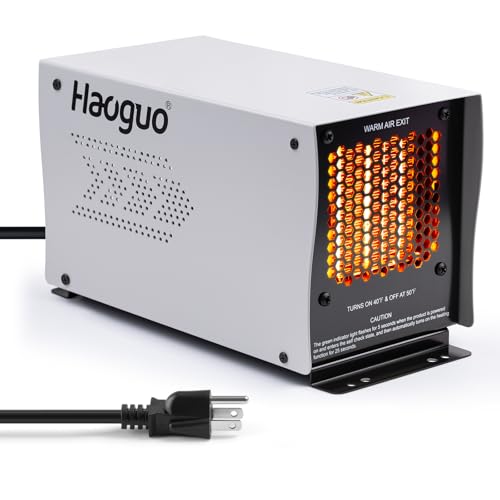
The Haoguo 650W bilge heater is designed for boat engine compartments, offering self-regulating PTC heating (turns on at 40°F, off at 50°F) for safe, stable heating of spaces up to 500 cubic feet. Best for: marine winter storage and preventing freezing of bilge pumps, engines, and batteries. Caution: marine-grade protection and mounting must align with boat layout to avoid water exposure risks.
Buying Guide
What to consider when choosing an engine warmer for winter
- Engine type and space: Choose a heater that fits your engine bay, oil pan, or block area. Some options are better for cars, others for boats or heavy equipment.
- Heat delivery method: PTC-based self-regulating heaters help prevent overheating. Pumps move coolant for faster and more uniform warming, while thermosiphon designs require no pump.
- Electrical requirements: Verify voltage and amperage requirements (110V vs 12V/24V) and whether you have access to a power source. Some require compatible wiring and mounting hardware.
- Installation complexity: Adhesive silicone pads offer quick installation but ensure proper surface preparation. Larger block heaters may require professional mounting.
- Safety and protections: Look for built-in overcurrent protection, temperature control ranges, and weather- or marine-grade housings when used in harsh environments.
- Applications: Cars, trucks, boats, RVs, and industrial equipment each have distinct heat demands and space constraints. Choose a product aligned with your use case.
Frequently Asked Questions
- What is the main purpose of an engine warmer in winter?
- Do all engines need a warmer with a built-in pump?
- Can engine warmers be used on boats?
- Are silicone pad heaters reliable for oil pans?
- What safety features should I look for?
- How do I know which heater is best for my vehicle?
To raise engine temperature and reduce cold-start wear by ensuring better lubrication and faster cabin or component heating.
No. Some engines benefit from pump-assisted heaters for faster and more even heating, while thermosiphon (no pump) designs can suffice in certain setups.
Yes. Marine-compatible heaters prevent freezing of bilge pumps, engines, and batteries during winter storage.
Silicone pad heaters provide direct, uniform heat on metal surfaces and are easy to install, but surface compatibility and adhesion quality are important for efficacy.
Overcurrent protection, thermostat control, and weatherproof or marine-grade housings are important for reliable and safe operation in cold or wet environments.
Consider engine size, available electrical supply, mounting space, and whether you need rapid warm-up for cabin comfort, oil flow, or both.