Answering the common buyer question “which epoxy primer is best for cars?” this guide highlights five strong options designed for automotive projects. These primers prioritize rust resistance, adhesion, and a solid base for topcoats. They’re suited for DIY restorations, professional bodywork, and fleet maintenance. The top picks balance performance, ease of use, and suitability for metal surfaces like steel and aluminum. Below, compare each product’s strengths, ideal user, and any notable limitations to help you choose the right primer for your car project.
| Product | Best For | Key Benefit |
|---|---|---|
| SprayMax 2K Epoxy Primer Gray | DIYers and restorations | Excellent adhesion and corrosion protection |
| Speedokote Automotive High Build 2K Urethane Primer/Sealer | High-build, multi-layer jobs | Great adhesion, fast dry |
| Eastwood 2K Epoxy Gray Primer | Professional-quality aerosol base | Durable, wide spray pattern |
| SprayMax 2K Epoxy Primer Black | Dark-toned base for topcoats | Strong corrosion resistance and 2K bonding |
| Rust-Oleum 260510 Stops Rust 2-in-1 Filler & Sandable Primer | Budget-friendly filler/primer combo | Fills and sands for convenient prep |
SprayMax 2K Epoxy Primer Gray — 12.5 oz

Best for: DIY restorations and amateur bodywork. This epoxy primer provides superior corrosion protection for steel, aluminum, and galvanized metal, creating a solid foundation for topcoats. It’s particularly useful for projects where a compressor-free spray system is preferred.
- 2K epoxy technology delivers strong bonding and long pot life.
- Variable nozzle allows precise control for even coverage.
- Fast-drying with durable corrosion resistance once cured.
Caution: Ensure proper ventilation and use in a well-ventilated area to manage overspray and solvent exposure. Not ideal for extremely thin, intricate panels without careful masking.
Speedokote Automotive High Build 2K Urethane Primer/Sealer — Gray Gallon Kit
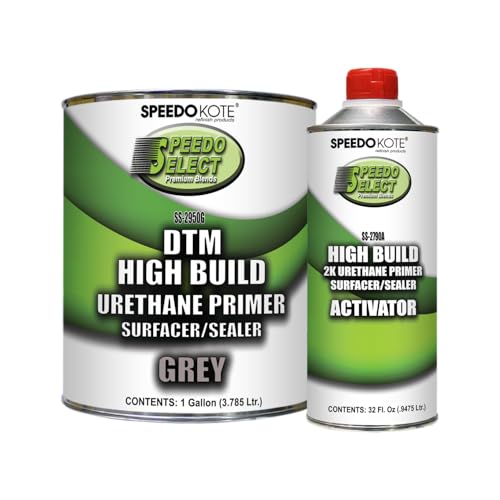
Best for: Projects needing a heavy build before topcoating, such as full panels or body filler stages. This primer/sealer blend offers robust adhesion and rapid dry times, supporting efficient workflows in shops and serious hobby projects alike.
- High-build urethane provides thick, smooth foundation.
- Good adhesion to steel, aluminum, fiberglass, and fillers.
- Fast dry helps speed up multi-coat cycles.
Limitation: As a urethane-based product, it requires correct mixing and proper ventilation. Confirm compatibility with your topcoat system to avoid compatibility issues.
Eastwood 2K Epoxy Gray Primer — AeroSpray

Best for: Professional-grade automotive refinishing where a durable, metal-ready shell is needed. This 2K epoxy uses AeroSpray catalysis for reliable coverage across car bodies and filler work, with long-term rust prevention.
- 2-component epoxy ensures durable, direct-to-metal performance.
- Special nozzle design offers an even wide spray pattern for efficiency.
- Three-year shelf life with 48-hour pot life after activation.
Caution: The German-engineered nozzle and 2K activation require precise mixing; follow product instructions to avoid premature cure or non-uniform films.
SprayMax 2K Epoxy Primer Black — 12.5 oz
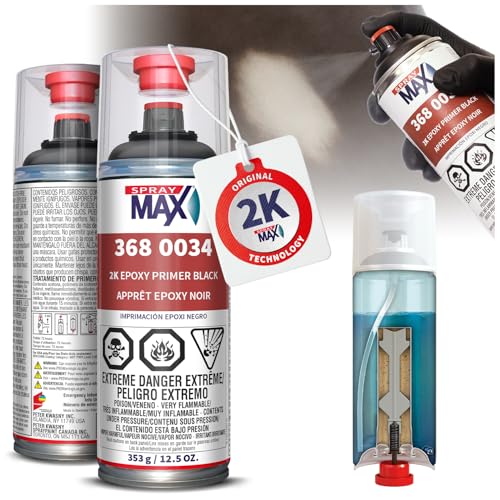
Best for: Situations requiring a dark base layer that improves hide and color depth for darker topcoats. This 2K epoxy primer mirrors the gray variant’s corrosion resistance and adhesion, offering strong foundation capabilities.
- 2K epoxy chemistry for robust bonding and rust protection.
- Fast-drying and high adhesion suitable for metal surfaces.
- Variable nozzle for controlled, even application.
Limitation: Like other 2K primers, ensure proper ventilation and skin/eye protection during application and curing.
Rust-Oleum 260510 Stops Rust 2-in-1 Filler & Sandable Primer

Best for: Budget-conscious projects needing both primer and filler/sandable properties. This product streamlines prep for cars, trucks, and other vehicles by combining rust resistance with surface leveling.
- Oil-based, 2-in-1 formula saves prep steps.
- Filler and sandable properties help smooth irregular surfaces.
- Covers substantial area and dries quickly to touch.
Limitation: May have stronger odor and longer cure times compared to some waterborne options; ensure appropriate ventilation and curing conditions.
Buying Guide: Key Considerations For Automotive Epoxy Primers
- Surface compatibility: Most epoxy primers bond best to steel, aluminum, and galvanized metal. Consider if your car body uses mixed materials such as fiberglass or composites, and choose a primer compatible with those substrates or plan for surface conditioning.
- 2K vs. single-component: Two-component (2K) primers require mixing with a hardener and typically offer stronger adhesion and corrosion resistance, but demand careful handling and proper ventilation. Single-component primers are easier to use but may not provide the same long-term durability.
- Build and coverage: For large panels, high-build primers can reduce the need for heavy filler work. If you’re restoring a classic with many imperfections, a high-build product helps achieve a smooth final topcoat more efficiently.
- Drying time and pot life: Fast-drying primers accelerate workflows, but pot life matters after mixing. Plan your spray sequence to avoid skinning or premature curing.
- Ventilation and safety: Exposure to solvents and isocyanates is a safety concern with many automotive primers. Use appropriate PPE, work in a well-ventilated area, and follow local regulations for spray finishes.
- Topcoat compatibility: Ensure the primer’s chemistry matches your intended topcoat (urethane, enamel, or water-based systems). Incompatibilities can affect adhesion and finish quality.
- Storage and shelf life: Some primers offer long shelf life when unopened, while activated mixtures have shorter pot life. Check manufacturer guidance for storage conditions and activation timing.
Frequently Asked Questions
- What is the primary purpose of an epoxy primer for cars?
To seal metal, prevent rust, and provide a strong base for subsequent topcoats, improving adhesion and overall durability.
- Are 2K epoxy primers safer to use with proper ventilation?
Yes, but they require careful handling due to solvent and isocyanate exposure; use a respirator and work in a ventilated space.
- Can I use epoxy primer over existing paint?
Generally, yes if the surface is clean, dry, and properly abraded to promote adhesion. Some older paints may require detergent and compatible surface prep.
- Is filler and sandable primer better than regular primer for cars?
It can be convenient for smoothing irregular surfaces before topcoats, reducing filler work, but it may not provide the same corrosion protection as dedicated epoxy primers.
- Should I choose gray or black epoxy primer?
Gray or black mainly affects topcoat visibility and hiding power. Gray is common for light and mid-tone paints, while black can help improve hide for dark topcoats.
- Do all these primers require blending into a finished color?
Primers are typically covered by a topcoat; blending considerations depend on the paint system and panel coverage, especially on a full repaint.