The buyer intent is to find durable epoxy primer paints suitable for metal surfaces. This guide picks five top epoxy primer products that deliver strong adhesion, corrosion protection, and compatibility with metal substrates like steel, aluminum, and galvanized surfaces. Ideal for car restorations, motorcycles, and other metal projects. Each pick is evaluated for ease of application, durability, and coverage. The following summary helps compare key points at a glance.
| Product | Best For | Format | Notes |
|---|---|---|---|
| SprayMax 2K Epoxy Primer Gray | Automotive finishes on steel and aluminum | Spray Can | 2K technology; high adhesion |
| NADAMOO All Surface Primer Spray Gray | Multi-surface adhesion; cost-effective | Spray Can (2 cans) | Modified epoxy resins; thicker for coverage |
| SprayMax 2K Epoxy Primer Black | Dark-primer base for topcoat | Spray Can | 2K; strong rust protection |
| NADAMOO All Surface Primer Spray Matte Gray | Multi-surface adhesion; larger kits | Spray Can (4 cans) | Thicker, good coverage; durable finish |
| Eastwood 2K Epoxy Gray Primer | Direct-to-metal automotive use | Aerosol | 2K with activator; long pot life |
Note: The table reflects product type, application style, and general suitability. Always follow labeled instructions for surface prep and curing times to maximize adhesion and corrosion protection.
SprayMax 2K Epoxy Primer Gray

Best for: Car restorations and metal projects needing strong adhesion on steel, aluminum, or galvanized surfaces. Why chosen: 2K epoxy primer with professional bonding strength and long pot life supports a solid foundation for topcoats. The spray format provides precise control via a variable nozzle, which helps achieve even coverage on complex panels.
Caution: Use with proper ventilation and eye protection; 2K formulations require careful mixing and curing conditions. Best avoided on curved surfaces without testing adhesion first.
NADAMOO All Surface Primer Gray (2 Cans)

Best for: Surfaces requiring enhanced adhesion across multiple materials (porcelain, glass, metal, plastic, wood). Why chosen: The primer uses modified epoxy resins to boost corrosion resistance and adhesion, enabling durable topcoats on demanding substrates.
Caution: Higher viscosity can require careful spray technique to avoid runs; thicker coats may be needed for full coverage on dark colors.
SprayMax 2K Epoxy Primer Black
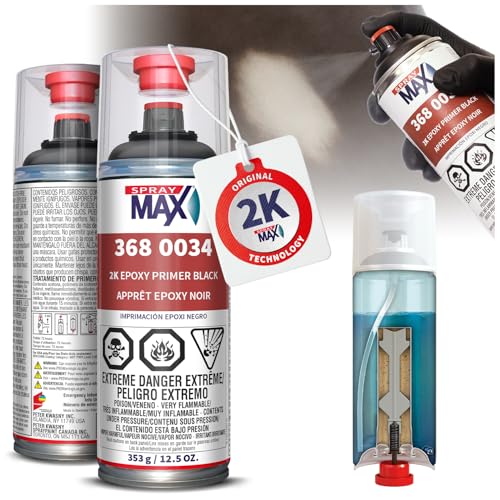
Best for: Pro grades where a dark primer base is helpful for concealment and even color under lighter topcoats. Why chosen: 2K epoxy formula provides corrosion resistance and strong adhesion, mirrored by the gray variant for consistent performance.
Caution: Ensure adequate ventilation and use protective gear; avoid applying too thick a coat in one pass to prevent ridging.
NADAMOO All Surface Primer Gray (4 Cans)

Best for: Larger multi-surface projects needing bulk primer. Why chosen: Combines good coverage with corrosion resistance via modified epoxy resins and a thicker formula for fewer coats on large areas.
Caution: Confirm substrate compatibility across all materials involved to avoid adhesion issues on non-traditional surfaces.
Eastwood 2K Epoxy Gray Primer

Best for: Direct-to-metal automotive priming with a professional nozzle design for a wide spray pattern. Why chosen: The 2K formula and dedicated nozzle assist in achieving a uniform coat with extended pot life after activation, suited for car body panels and metal fittings.
Caution: Activated mix requires careful timing; plan application workflow to avoid premature curing before full coverage.
Buying Guide: Epoxy Primer For Metal
Key factors for selecting epoxy primer for metal include substrate compatibility, 2K versus single-component formulations, adhesion and corrosion resistance, coverage and thickness, and ease of application. The following questions help tailor choices to your project.
What substrate are you priming?
Direct-to-metal surfaces like steel and aluminum benefit from 2K epoxy primers with strong adhesion. If you work across multiple materials (metal, plastic, wood), consider primers designed for multi-surface adhesion to minimize coating layers.
Do you need quick topcoat readiness or longer pot life?
2K primers typically offer longer pot life but require mixing. If you need rapid project turnaround, a ready-to-use one-part epoxy may be more convenient, though it might have shorter cure windows.
What coverage do you require?
Higher-viscosity formulas often provide better fill and fewer coats on large areas, but may need careful spraying technique. For small parts, a standard spray can primer is usually sufficient.
Are you working under temperature or humidity constraints?
Low humidity and moderate temperatures improve cure and adhesion. Shielding from moisture and dust during curing reduces the chance of defects and prolongs finish life.
What is your topcoat plan?
Choose a primer with compatibility for your intended topcoat. Some 2K primers are designed to seal and provide a uniform base for automotive paints, while others emphasize multi-surface adhesion for non-metal substrates.
What safety considerations apply?
Work in well-ventilated areas, wear protective gear, and follow label instructions for mixing ratios, flash-off times, and storage. Epoxy systems can emit fumes during curing; proper containment reduces exposure.
Durability and finish expectations
For long-lasting rust protection, prioritize corrosion resistance and precise application control. If ease of use is paramount, opt for aerosols with reliable spray patterns and predictable coverage.
FAQ
- Q: Is a 2K epoxy primer necessary for metal projects?
A: 2K primers offer strong adhesion and corrosion resistance, making them a common choice for automotive and metal restorations. They do require mixing and proper ventilation. - Q: Can these primers be applied over previously painted surfaces?
A: Yes, but surface preparation is key. Lightly sand and clean to improve adhesion before priming over existing coatings. - Q: Are spray can primers as effective as spray guns?
A: For many DIY applications, aerosol primers provide solid adhesion and coverage. Professional workflows may prefer spray guns for large areas and uniform coats. - Q: How long should I wait before applying a topcoat?
A: Curing times vary by product; follow the label for flash-off and tack-free times. Inadequate curing can affect topcoat adhesion. - Q: What surfaces benefit most from epoxy primers?
A: Steel, aluminum, and galvanized metal typically benefit most due to corrosion protection and durable adhesion. - Q: Can epoxy primers be used on plastic or glass?
A: Some products advertise multi-surface adhesion, but test on a small area first as performance varies by formulation.