The best exhaust upgrades for four-wheelers, ATVs, dirt bikes, and pit bikes improve airflow, torque, and engine tone. This guide compares five top options, helping you pick the right fit for your engine size and riding style. Suitable buyers range from casual riders seeking quieter operation to performance-minded enthusiasts chasing better low-end power. A quick summary table follows to help you compare at a glance.
| Product | Best For | Engine Range | Notes |
|---|---|---|---|
| EOPOAYI 1.1 Inch Slip-On | Budget build-ups, beginners | 50cc–125cc | Wide compatibility; simple install |
| ICONSPORTSS 38mm Exhaust | Mid-size quads and dirt bikes | 125cc–250cc vertical engines | Improved torque and tone |
| Kemblawolf Exhaust Pipe Muffler Assembly | Flexible setups, custom configs | GY6 125cc–150cc | Two-piece design for install options |
| ICONSPORTSS 32mm Exhaust Pipe | Compact builds, budget upgrades | 50cc–125cc | Liteweight, durable |
| HARIFOGER 1.26″ Muffler | Direct replacements | 90cc–160cc | Includes clamp, easy swap |
EOPOAYI 1.1 Inch Motorcycle Slip On Muffler

The EOPOAYI slip-on muffler is designed for a broad range of 50cc–125cc 4-stroke engines, including popular pit bike and mini quad platforms. Best for riders seeking a low-cost, drop-in exhaust upgrade that fits many Chinese-made engines and common OHV clones. Its universal fit covers dirt bikes, ATVs, go-karts, and small lawn equipment, making it a practical starter upgrade for mixed-use machines.
Best for: beginners and budget-conscious riders who want a simple, compatible upgrade without extensive customization. The wide compatibility reduces the need for multiple parts or adapters.
Caution: Some models may require minor adapter work to seal gaps on non-standard exhaust manifolds. Verify your engine size and pipe diameter (1.1 inch) before purchase.
ICONSPORTSS 38mm ATV Exhaust Muffler Pipe System
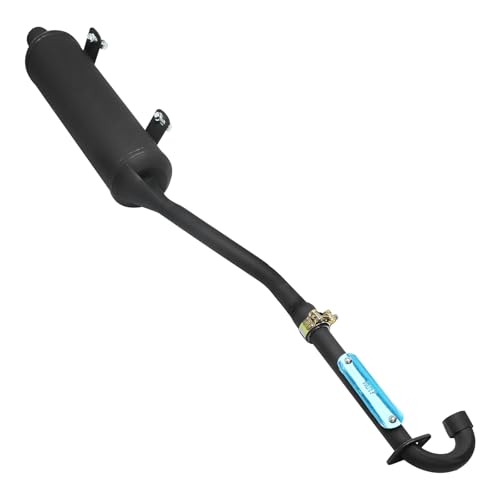
This 38mm exhaust system targets vertical engines in 125cc–250cc ATVs, dirt bikes, go-karts, and buggies. It aims to deliver improved airflow, better exhaust tone, and a modest boost to low-end torque. The design prioritizes compatibility with standard exhaust setups, making it a practical choice for riders who want a noticeable sound and performance increase without extensive fabrication.
Best for: riders with vertical-engine machines that use standard 38mm inlets, seeking a balance of performance and ease of installation.
Limitation: Intended for vertical engines in the specified range; check your intake diameter and engine orientation before ordering.
Kemblawolf Exhaust Pipe Muffler Assembly

The Kemblawolf system offers a two-piece design with a 710mm mid pipe and a 420mm end pipe muffler, enabling flexible installation for various quad, go-kart, and dirt-bike configurations. Built with durable metals, it is intended for GY6-based engines (125cc–150cc) and is well-suited for dune buggies, ATVs, and off-road motorcycles. The split design facilitates field adjustments for different chassis layouts.
Best for: riders who value installation flexibility and a robust build for mixed-use platforms like ATVs and go-karts.
Limitation: The longer mid-pipe length may require layout adjustments on tighter chassis or smaller frames.
ICONSPORTSS 32mm Exhaust Pipe Assembly

This 32mm exhaust is a compact option for 50cc–125cc engines, including Taotao and SunL models. It emphasizes durability and improved airflow to enhance performance across light-duty ATVs and quad bikes. The thinner piping reduces weight while maintaining structural integrity, making it a sensible upgrade for budget builds.
Best for: riders with compact frames and smaller engines who want a straightforward, durable upgrade that won’t overwhelm the vehicle’s balance.
Limitation: Not ideal for larger 125cc–150cc engines that demand higher-flow designs for noticeable gains.
HARIFOGER 1.26″ Muffler With Clamp

The HARIFOGER muffler is designed as an aftermarket replacement for a direct fit and easy swap on many 90cc–160cc machines. It includes a clamp for quick installation and aims to improve exhaust flow and tone for a broad range of 4-wheelers, dirt bikes, and scooters. Installation is straightforward for most DIY enthusiasts.
Best for: riders seeking an affordable direct-replacement option with uncomplicated setup and broad compatibility.
Limitation: Compatibility varies by model; confirm the muffler diameter and mounting points align with your exhaust system.
Buying Guide: Key Considerations For Your Exhaust Upgrade
- Engine size and type: Match the exhaust inlet diameter and intended engine type (vertical vs. inline, 125cc–250cc) to ensure proper fit and performance gains.
- Fitment and mounting: Check dimensions (mid-pipe length, end-pipe diameter), mounting brackets, and clamp availability to avoid fitment issues on tight frames.
- Intended use: Decide between better low-end torque for trail riding or a louder tone and higher top-end for track days. Some systems prioritize sound over pure flow, and vice versa.
- Durability and materials: Look for metal construction that withstands heat, vibrations, and wet conditions. Durable builds reduce maintenance needs in rough riding environments.
- Installation complexity: Some systems are plug-and-play replacements; others require aftermarket adapters or welding. Consider your comfort level with installation before purchase.
- Noise and legality: Check local noise limits and ATV/motorcycle regulations. Some exhausts produce louder tones that may require quiet adapters or compliance considerations.
- Budget vs. performance: Balance cost with expected gains. Higher-priced systems often offer better airflow and sound quality, but the most meaningful gains depend on engine pairing and exhaust design.
Frequently Asked Questions
- What is the typical benefit of upgrading an exhaust on a small-engine ATV or pit bike?
Upgrades can improve airflow, potentially increasing low-end torque and altering exhaust tones, depending on the design and engine pairing. - Do I need professional installation for these exhausts?
Most plug-and-play mufflers require basic mechanical skills. Some setups may need adapters or minor fabrication; consult product specs and local shop options if unsure. - Will a louder exhaust affect reliability?
Properly designed systems aim to improve flow without stressing the engine. Extreme setups or poorly matched parts can affect backpressure and engine behavior. - Can I mix brands or use mismatched exhaust components?
Compatibility is engine and frame dependent. Stick to components designed for your engine size and mounting style to avoid fitment and performance issues. - How do I know which exhaust is best for my vehicle?
Consider engine displacement, mounting geometry, and intended use. A system that improves low-end torque for pit bikes might not suit a large 4-wheeler focused on top-end performance. - Are universal exhausts reliable for all models?
Universal designs offer broad compatibility but may require adapters. Confirm engine size, inlet diameter, and mounting points before purchase.