Looking for a flexible body filler that handles bumper covers and plastic trims without cracking? This guide highlights five top options that stay flexible after curing, sand easily, and are tailored for plastic substrates. The best pick depends on your project: quick fixes, professional-grade repairs, or ease of use for DIY tasks. Read on to compare suitability, application notes, and potential limitations for each product.
| Product | Best For | Key Benefit |
|---|---|---|
| Polyvance Flex Filler 2 | DIY quick repairs and flexible substrates | Fast curing and sandable in about 15 minutes |
| Carworx Flex Filler | Professional bumper and body panel work | Minimizes micro-pinholing for smoother finishes |
| Eastwood Contour Premium | Plastic bumpers and trims | Maintains flexibility to resist cracking |
| 3M EZ Sand Multi Purpose Repair Material | Automotive plastic panel repairs | Two-part epoxy, easy to sand |
| U-Pol Stronghold | Plastic bumpers repair on the go | No need for a separate spray gun |
Polyvance Flex Filler 2 (Tubes) — Flexible, Quick Sanding

Best for quick, flexible repairs on OEM and aftermarket plastic substrates. The filler remains flexible after curing and sands in about 15 minutes, enabling rapid progress on bumpers and other flexible parts. The squeeze-tube format eliminates the need for mixer tips or dispensing guns, simplifying DIY use. This product is ideal for hobbyists and light-to-moderate repairs where staying flexible helps prevent re-cracking after minor impacts. A potential limitation is that performance may vary with very large repairs or unusual substrates; test a small area first.
J-B Weld 50139 Plastic Bonder Body Panel Adhesive and Gap Filler Syringe
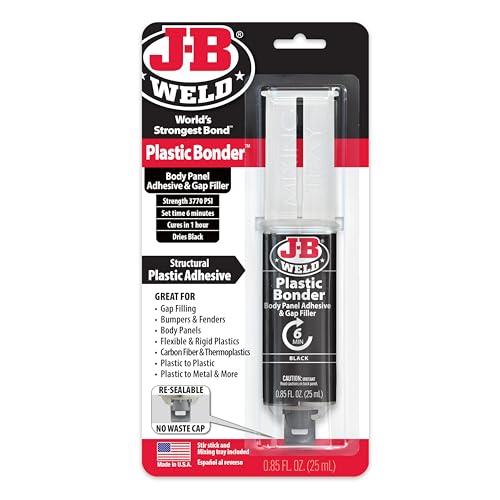
Best for: strong, quick-setting repairs on a variety of plastics and related substrates. It uses a 1:1 mixing ratio and cures to a hard bond in about 15 minutes, with sanding possible after 30 minutes. The 3770 psi tensile strength offers a durable bond for panel gaps and small bumper repairs. This is a solid choice when you need a strong adhesive plus filler capability. Caution: curing behavior depends on temperature; cooler environments may extend set times.
Carworx Flex Filler for Plastic Bumper & Body Panel Repair
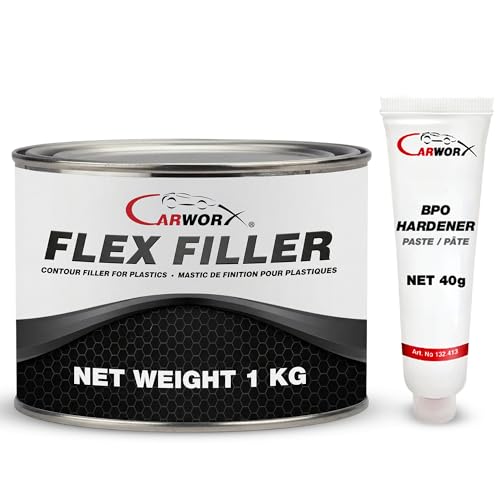
Best for: professional plastic bumper and body panel repairs. This two-component polyester filler minimizes surface voids to reduce rework and delivers a smoother substrate ready for primer and topcoat. The black-grey tint helps reveal surface defects, aiding precise feathering. Includes BPO hardener, providing a complete, ready-to-use system with no separate hardener sourcing required. Limitation: color may show through in very light finishes; plan for a base color match.
Eastwood Contour Premium Automotive Flexible Body Filler

Best for: repairs on automotive plastics, including bumpers and trims. This lightweight polyester filler is designed to stay flexible, reducing the risk of cracking under minor flexing. It works well on various plastics like PP/EPDM, ABS, PA, PUR, PC, and even some resins. Application is straightforward, with sandability enabling smooth finishes. Caution: cure times vary with temperature; higher heat accelerates curing while low temperatures slow it down.
3M EZ Sand Multi Purpose Repair Material
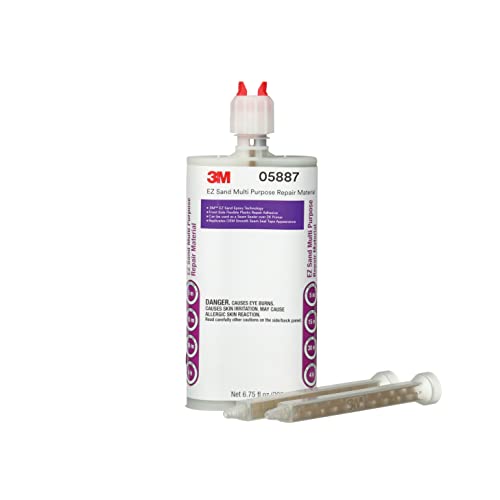
Best for: automotive plastic panel repairs needing a durable yet flexible epoxy, with easy sanding. The two-part epoxy is automatically metered for proper ratio, simplifying use. It sands readily for a smooth finish, reducing rework. A potential limitation is that working time is shorter under higher temperatures, so plan applications accordingly to avoid rush or incomplete cures.
U-Pol 7061 Stronghold Body Filler for Plastic
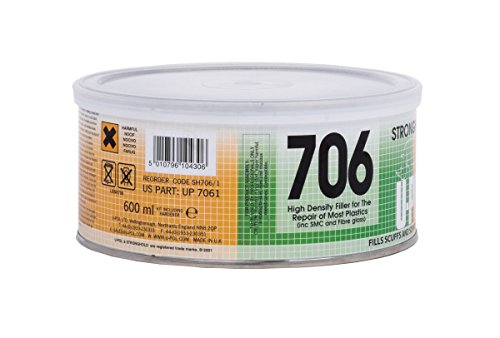
Best for: plastic bumper repairs where a gun is not required. This filler is designed for efficiency, fixing road rash and deep gouges on bumpers with a convenient 600 ml tin. It provides a solid option for quick, on-the-spot repairs without extra gun equipment. Limitation: may require careful color matching with light finishes; verify compatibility with your base coat.
Buying Guide: Key Considerations For Flexible Body Fillers
- Substrate compatibility: Ensure the filler is designed for plastic bumpers, trims, or composite substrates used on vehicles.
- Flexibility after cure: Prioritize products that remain flexible to resist cracking under minor flexing or impacts.
- Working time and cure speed: Consider your shop environment and project urgency; faster cures help high-volume jobs, but longer open times assist complex repairs.
- Ease of use: Look for squeeze tubes or dual-component systems with straightforward mixing ratios.
- Finishing and sanding: Favor fillers that sand smoothly and accept primer and paint without sinking or tackiness.
- Hardener and ratio requirements: Some products include hardeners; verify compatibility with your existing process and space.
- Color and visibility: Darker fillers can help reveal surface defects during feathering, but may require color matching for final finishes.
FAQ
- What is the main advantage of a flexible filler for bumpers?
It reduces chances of cracking when the bumper flexes or is subjected to minor impacts. - Do these fillers require special tools?
Most can be applied with simple putty knives or spreaders; some two-part systems include integrated mixing components. - Can these fillers be used on metal surfaces too?
Several are suitable for plastics and certain metals, but always verify substrate compatibility for best results. - Is sanding required before priming?
Yes, smooth sanding is recommended to achieve a uniform finish and proper adhesion. - Do all products come with hardeners?
Some include hardeners in the kit, while others require separate sourcing or are pre-mixed. - Which filler is best for DIY beginners?
Paste or squeeze-tube fillers with clear instructions and minimal mixing are typically easiest for beginners.