Choosing the right fuel line for an outboard motor is essential for safe operation and efficient performance. This guide highlights five proven options, detailing who each product is best for and why. Use these selections to compare compatibility, durability, and ease of use across common marine setups.
Summary table of chosen products:
| Product | Best For | Key Benefit | Note |
|---|---|---|---|
| Attwood 93806MUS7 Marine Fuel Line Kit | All-around safe connection, sprayless | Universal sprayless connector, high-output primer bulb | 6 ft, 3/8-Inch hose |
| Attwood 93806ELP7 Marine Fuel Line Kit | EPA/CARB-compliant builds | Low-permeation materials, ethanol-resistant | Tank-side fittings not included |
| iFJF 32-858104K08 Fuel Line Kit | Yamaha/Mercury compatibility on older models | Cross-reference fuel line with many models | 6 ft, 5/16 in line |
| YIENAKFUN 3/8″ 6FT Fuel Line with Primer Bulb | Higher flow needs, universal fit | 3/8″ internal diameter, nylon braided | Remark: check external diameter for fit |
| Treloxia 5/16″ ID 6FT Fuel Line with Primer Bulb | Ethanol-blended fuels, long runs | Low permeability, nylon/rubber blend | 6 ft length |
Attwood 93806MUS7 Marine Fuel Line Kit

Best for: Boat owners seeking a safe sprayless connection and strong flow. The kit includes Attwood’s sprayless connector to prevent fuel sprays during connections, plus a multi-layer low-permeation primer bulb that outputs more fuel than typical kits. The 3/8-Inch low-permeation hose resists kinking and hardening, and the assembly tolerates temperatures up to 100°C. Choose this for reliable performance in pressurized lines and easy maintenance.
Best-for clarity: This option is ideal for casual to mid-season boat owners who value safety during line connections and a robust hose that minimizes evaporation.
Caution: Ensure your engine’s fittings match the 3/8-Inch hose size and verify compatibility with your fuel type and tank setup.
Attwood 93806ELP7 Marine Fuel Line Kit

Best for: EPA/CARB-compliant builds that emphasize environmental considerations. This kit uses low-permeation materials designed to reduce fuel evaporation and odors. It’s ethanol-resistant, improving durability in engines that see ethanol-blended fuels. Tank-side fittings are not included, so plan compatibility for your setup.
Best-for clarity: Choose this if you prioritize environmental standards and durable materials in an outboard fuel line system.
Caution: Plan for separate tank fittings if your current system requires them; this kit does not include them.
iFJF 32-858104K08 Fuel Line Kit

Best for: Older Yamaha, Mercury, Johnson, and OMC outboards needing cross-reference compatibility. This kit includes a cross-reference list to help match models and ensure the right fit. It’s sized at 6 ft with a 5/16-inch inner diameter, balancing flexibility and flow for mid-range engines.
Better for: Owners of older models who want a straightforward replacement that aligns with widely used pre-2000s engines.
Caution: Some newer engines (60 hp and above) may not support external tanks, making this line unsuitable in those cases.
YIENAKFUN Universal 5/16″ 8mm Fuel Line Assembly

Best for: Universal fit with good durability for ethanol-blended fuels. The kit uses premium rubber and engineered low-permeation materials to reduce fuel evaporation. It’s a 6 ft line with 5/16 inch inner diameter and a 10 mm outer diameter, designed for flexible installation in varied setups.
Best-for clarity: Choose this when you need a broadly compatible solution across multiple boat brands and models.
Caution: Confirm the outer diameter fits your hose clamps and mounting space, as some boats have tight engine compartments.
Treloxia 5/16″ ID Fuel Line With Primer Bulb
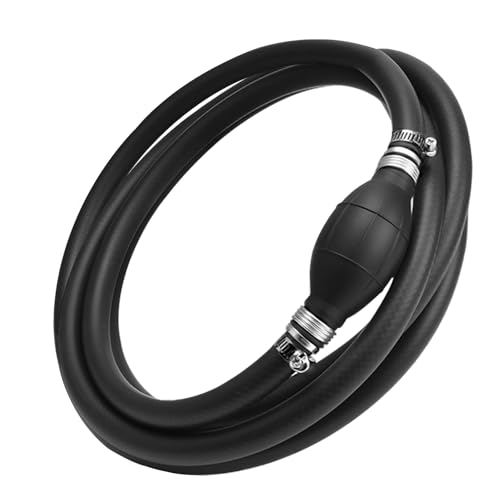
Best for: Budget-conscious buyers needing a good balance of durability and flexibility for 5/16″ ID applications. The 6 ft length and primer bulb help maintain steady fuel flow across runs, with a focus on low permeability to curb evaporation. It’s compatible with ethanol-blended fuels and gasoline/diesel.
Better for: Small-to-mid-sized outboards and lawn-tractor style installations requiring reasonably long fuel runs.
Caution: Verify the outer diameter and clamp compatibility; some installations require a tighter fit than this line provides.
BARTOO Fuel Line Assembly

Best for: Builders and owners needing universal compatibility with ethanol-blended fuels. It includes a premium rubber primer bulb and a 6 ft 3/8 in line with stainless steel hose clamps for secure connections. This kit is versatile for boats, RVs, tractors, caravans, and more.
Why selected: The kit emphasizes low permeation plus robust clamps, which supports stable performance in rough marine conditions.
Caution: It is a universal line without engine or tank fittings, so plan to source those fittings separately for your specific setup.
Buying Guide: How to Choose the Right Outboard Fuel Line
- Fuel type and compatibility: Confirm compatibility with ethanol blends, gasoline, or diesel used in your engine. Look for low-permeation materials to minimize evaporation and odors.
- Line diameter and length: Match the hose inner diameter to your engine’s fuel flow requirements (commonly 3/8″ or 5/16″) and ensure the length fits your mounting area without tension.
- Primer bulb and connectors: A durable primer bulb helps maintain fuel flow at startup and during use. A sprayless connector can reduce fuel spray risk when connecting lines.
- Fittings and clamps: Check if the kit includes tank- and engine-side fittings and stainless steel clamps. Many universal kits require additional fittings for a perfect fit.
- Environmental and EPA standards: EPA and CARB-compliant materials reduce evaporation and odors, important for marine environments and long-term use.
- Safety and maintenance: Look for ethanol-resistant materials and design features that prevent kinking, hardening, or delamination over time.
Frequently Asked Questions
- What is the best fuel line material for outboard motors? Low-permeation rubber or nylon-braded lines provide durability and reduced fuel evaporation, especially when using ethanol-blended fuels.
- Do fuel lines require specific fittings? Yes. Some kits include required fittings, while others are universal and require separate tank or engine fittings.
- What should I look for in a primer bulb? A bulb should maintain steady fuel flow and resist swelling or cracking under hot engine conditions.
- Can I use a longer fuel line than recommended? Extending beyond recommended length can impact fuel flow and pressure; verify your engine’s requirements before extending.
- Are sprayless connectors necessary? They improve safety by reducing fuel spray during connection and disconnection, especially with pressurized lines.
- Is EPA/CARB compliance important for marine fuel lines? It helps minimize fuel odors and emissions, contributing to a cleaner, safer boating environment.