If you’re shopping for a garage lift that handles cars, SUVs, and light trucks, you want a unit with solid lifting capacity, stable construction, and clear safety features. This guide highlights five top picks that balance power, ease of use, and value. Each product section explains who it’s best for, why it was selected, and a practical caveat to consider before purchasing.
Overview at a glance: the table below summarizes key points about the five chosen lifts to help you compare at a glance.
| Product | Lifting Capacity | Max Height | Best For |
|---|---|---|---|
| Albott 7000 LBS Portable Car Lift | 7000 lbs | 28 inches | Home garages needing high lift with portable design |
| WEIZE 11000lbs Two Post Lift | 11,000 lbs | 70.87 inches | Serious hobbyists and small shops requiring extra capacity |
| Albott 8000 LBS Portable Lift | 8000 lbs | 27.4 inches | Robust portable option for home garages |
| BILT HARD 8000 lb Lift | 8000 lbs | 22 inches | Versatile mid-rise with solid safety features |
| KATOOL 9500lbs Heavy Duty 4-Post Lift | 9,500 lbs | 79 inches | High capacity, tall clearance for larger vehicles |
Albott 7000 LBS Portable Car Lift

This portable lift supports up to 7000 lbs, making it suitable for most sedans, light trucks, and SUVs. It features multiple locking levers and an upgraded spring design for faster height recovery, plus a maximum height of 28 inches. The four height increments and two extension panels provide flexible access for undercarriage work. Best for: DIY enthusiasts and small shops needing a compact, mobile lift with solid lifting capacity. Caution: ensure a suitable floor and stable anchoring for heavy loads, and be mindful of the minimum load requirement to descend.
WEIZE 11000lbs Two Post Car Lift

This two-post lift delivers up to 11,000 lbs and is built from heavy-duty steel for professional-grade durability. It features a 110-inch drive-through width and a 70.87-inch maximum lifting height, enabling a wide range of vehicle sizes and service tasks. Best for: serious hobbyists or small shops that need high capacity and substantial vertical clearance. Limitation: larger footprint and installation requirements mean it’s best for dedicated garages with adequate space.
Albott 8000 LBS Portable Car Lift
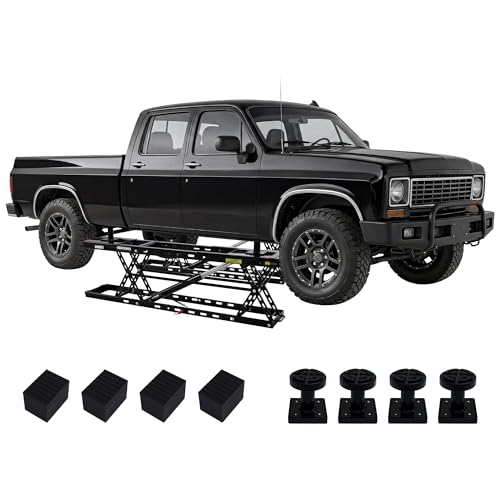
This lift supports up to 8000 lbs with dual safety locking pins and mechanical locks for stability. It uses Q355B steel and includes an 8.3″ extension plate for added length and stability, with 19.7″–27.4″ lifting range. Best for: garages that need a high-capacity portable option with strong frame materials. Caution: folding and extension require proper handling to avoid pinch points during setup.
BILT HARD 8000 lb Portable Car Lift
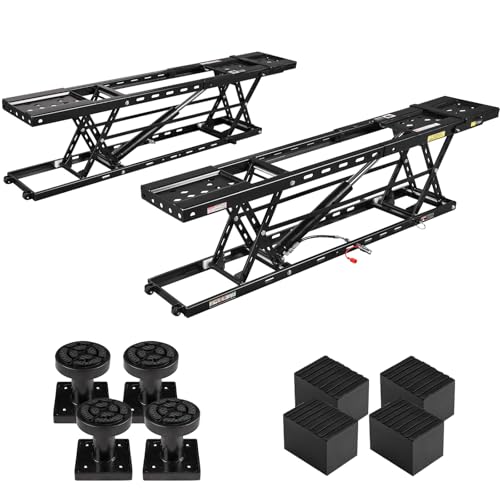
Engineered for heavy-duty use, this 8000 lb lift provides a 22″ total lift height with four lifting columns. It uses dual safety locking pins and mechanical safety locks for added security and stability. Best for: users needing steady, mid-rise access for tire work and maintenance on larger vehicles. Limitation: maximum height is slightly lower than some competitors, which may affect very tall vehicles.
KATOOL 9500lbs Heavy Duty Lift

With a 9,500 lb lifting capacity and a 79″ working height, this four-post lift is designed for larger vehicles and taller clearance needs. It includes an aluminum ramp and a complete package of accessories for mobility and workspace cleanliness. Best for: professional-style garages needing maximum capacity and tall access. Caution: setup and alignment require careful attention to ensure full engagement of locking mechanisms.
Buying Guide
Key questions to guide your decision:
- What is my vehicle weight range and typical use (maintenance, tire changes, undercarriage work)?
- How much floor space do I have, and what is the ceiling height and door clearance?
- Do I need portable, foldable units or fixed, tall-capacity lifts?
- What safety features are essential (dual locking pins, mechanical locks, anti-slip surfaces)?
- Is professional installation or shop-grade operation important, or is a DIY-ready unit sufficient?
Practical considerations to compare:
- Lifting capacity: match to the heaviest vehicle you service.
- Maximum lifting height: ensure enough clearance for oil changes, exhaust work, and frame access.
- Footprint and weight: heavier units may require a permanent installation; portable lifts offer flexibility but require strong floor support.
- Materials and construction: higher-grade steel (for example, Q355B) tends to offer greater durability and corrosion resistance.
- Safety mechanisms: look for dual locking pins, robust extension plates, and stable base design.
FAQ
- What lift is best for a small home garage?
- Do I need a two-post or four-post lift?
- How high should a garage lift raise a car?
- What maintenance steps are essential for a lift?
- Is professional installation required?
For small spaces, a portable lift with strong lifting capacity, like the Albott 7000 LBS or Albott 8000 LBS, offers a good balance of portability and performance while fitting into tighter spaces.
Two-post lifts provide easier access to the sides of vehicles and are typically more space-efficient. Four-post lifts offer greater stability and are often preferred for parking and heavier workloads, like tall, tall vehicles or frequent tire work.
Most common mid-range lifts reach 22–28 inches, enough for tire changes and basic maintenance. If you perform exhaust work or suspension tasks, a higher lift (near 70 inches in some models) can be beneficial for standing room underneath.
Regularly inspect locking pins, lubricate moving joints, check hydraulic lines for leaks, and keep the base area clear of debris. Follow the manufacturer’s maintenance guidelines specific to your model.
Some lifts are DIY-installable with proper floor preparation and space. Others may require professional installation, especially heavier units or systems with electrical or hydraulic integration. Always follow local codes and the manufacturer’s instructions.