When choosing gas cans for cars, reliability, spill control, and safe venting matter most. This guide highlights five top options that balance safety with practical features for refueling cars, lawn equipment, and small engines. Each pick targets a different use case, from heavy-duty storage to easy, no-spill pouring. Read on to discover which can best fits your needs, whether you’re a homeowner, a professional, or an enthusiast maintaining multiple tools.
| Product | Capacity | Best For |
|---|---|---|
| Midwest Can Company 5610 5 Gallon Gas Can | 5 gallons | Lawn equipment and general outdoor power tools |
| Scepter FR1G252 Fuel Container | 2 gallons | Precise pours for smaller refills |
| Scepter FSCG552 Fuel Container | 5 gallons | Big jobs with quick flow and spill control |
| Eagle 5 Gallon Type I Gas Can | 5 gallons | Flammable liquid storage with strict safety features |
| No-Spill 2-1/2 gal. Gas Can | 2.5 gallons | Small engines and tight spaces |
Midwest Can 5610: Durable 5-Gallon Fuel Container

Best for: Homeowners with multiple outdoor tools and lawn equipment. This 5-gallon can is built from durable HDPE with a vapor barrier and a FlameShield system, offering two layers of protection from sparking and accidental fires. The wide, stable design helps reduce tipping during refills, and the 5-gallon size minimizes frequent refills for heavy users.
Why selected: The combination of a vapor barrier and flame-arresting features makes it safer for garages and storage areas while providing ample fuel capacity for routine yard maintenance.
Caution: Large capacity adds weight when full; ensure stable storage to prevent tipping or accidental spills.
Scepter FR1G252 Fuel Container
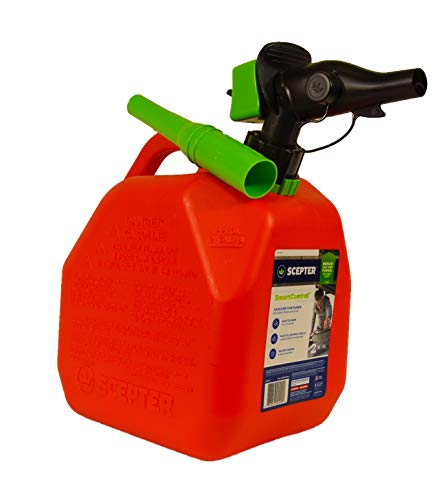
Best for: Quick refills and precise pours for smaller projects or limited storage spaces. The FR1G252 offers SmartControl controllable flow for measured pours and a bonus funnel with storage ring to simplify filling cars, ATVs, or yard tools.
Why selected: Its controllable flow minimizes spills, and the integrated vented spout accelerates pouring, making it ideal for frequent, small-volume refills.
Caution: The 2-gallon size may require more frequent top-ups for large equipment or high-use environments.
Scepter FSCG552 Fuel Container
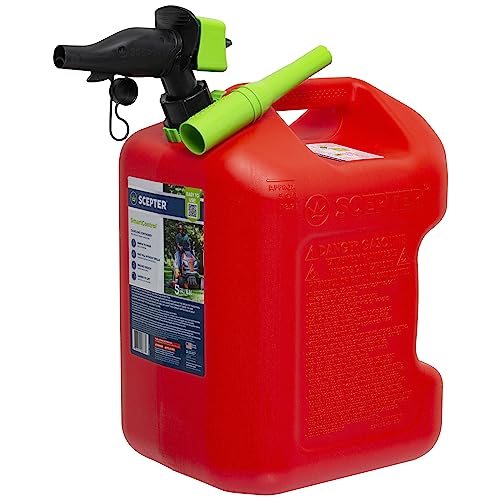
Best for: Large refueling jobs where quick flow and spill resistance are priorities. This Amazon-exclusive 5-gallon can features SmartControl flow and a Quick-Flow spout with a bonused funnel and storage ring for easy filling of cars and other equipment.
Why selected: The spill-resistance design and fast fill capability help reduce downtime during maintenance or field work, especially in garages or service bays.
Caution: As a premium 5-gallon option, ensure adequate space for handling and storage in smaller workspaces.
Eagle 5 Gallon Type I Gas Can

Best for: Those seeking classic safety features for gasoline storage. This galvanized steel can includes a flame arrester, self-closing lid, and a fixed handle, offering robust protection against leaks in high-risk environments.
Why selected: Type I safety features and a durable construction provide reliable use in workshops, farms, or mobile service setups where flammable liquids are moved frequently.
Caution: Steel cans can be heavier than plastic equivalents; consider handling ergonomics when planning long transfers or storage in tight spaces.
No-Spill 2-1/2 Gal. Gas Can
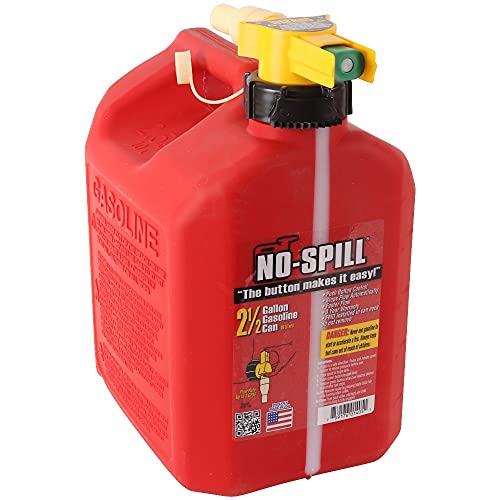
Best for: Small engine owners, tight spaces, and quick top-offs. The No-Spill design emphasizes precise pouring with a thumb button and a 7/8-inch funnel spout for even the smallest equipment, plus a dust cover to keep the spout clean.
Why selected: Its compact size and controlled pour mechanism help prevent accidental spills during delicate refills or in crowded garages.
Caution: Limited capacity may require more frequent replenishment for larger tools or higher fuel turnover tasks.
Buying Guide: Gas Cans For Cars And Equipment
What capacity do you need?
Choose capacity based on how often you refuel and how much fuel your tools use. 2–3 gallon canisters are convenient for small engines and tight spaces, while 5-gallon cans support fewer fills and are better for larger equipment like mowers orATVs.
What safety features matter?
Look for flame arrestors, vapor barriers, auto shut-off spouts, and spill-resistant designs. These features reduce fire risk and minimize spills when transferring fuel at home or on-site.
Material considerations
HDPE plastic cans are lightweight and corrosion-resistant, suitable for most households. Steel cans offer rugged durability but can be heavier and require careful handling.
Pouring control and venting
Spout design and built-in vents speed up filling while preventing overfill. Spill-proof spouts with adjustable flow help manage precise pours into car tanks or tool fuel fills.
Storage and compatibility
Ensure the can fits in your garage or trunk space and is compatible with the type of fuel you store. Some cans are specifically designed for gasoline and may not be appropriate for diesel or kerosene without checking the product details.
FAQ
- What is a FlameShield system? A FlameShield system provides an internal flame mitigation device and vapor locking spout to reduce ignition risk during fuel transfer.
- Why choose a spill-proof spout? Spill-proof spouts minimize overfilling and drips, protecting floors and reducing waste.
- Is a 2-gallon can enough for my car? For regular refueling of a small vehicle or lawn equipment, a 2-gallon can can be sufficient, but for longer sessions or larger engines, a 5-gallon option reduces frequent refills.
- Are metal cans safer than plastic? Both materials can be safe when used correctly. Metal cans are durable but heavier; plastic cans are lighter and resist corrosion.
- Do all gas cans require venting? Most cans include vents to prevent pressure buildup during pouring. Use cans with built-in vents to maintain smooth flow.
- How should I store gas cans safely? Store upright in a well-ventilated area away from heat sources and open flames. Keep caps closed when not in use and inspect for cracks or leaks periodically.