When choosing a gas motor kit for a bicycle, look for reliability, ease of installation, and the power you need for your riding goals. This guide highlights five well-rounded options suited for commuting, weekend rides, or hobbyist conversions. Best for fast setup are kits with CDI ignition and simple pedal-start systems, while heavier builds suit longer rides and higher loads.
| Product | Displacement | Best For | Notes |
|---|---|---|---|
| JAYGOVAN 80cc | 80cc | Daily commuters seeking a balance of power and economy | Two-stroke, pedal-start, lightweight |
| IMAYCC 80cc Silver | 80cc | First-time installers who want clear guidance | Complete kit with CDI; install guidance recommended |
| Upgraded 110cc Mahugde | 110cc | Riders needing higher speed and adaptability | Wide compatibility, 6000 rpm top end |
| AYLYOTOY 100cc | 100cc | Longer rides with larger fuel tank | 4-stroke option, 0.52 gal tank |
| JAYGOVAN 110cc | 110cc | High-performance builds requiring strong torque | 7000 rpm style performance, CDI ignition |
JAYGOVAN 80cc Bicycle Engine Kit

The JAYGOVAN 80cc kit uses a two-stroke, single-cylinder air-cooled engine with about 2.1 kW (2.58 hp) and up to 5000 RPM. It delivers practical acceleration for city commutes while keeping fuel use reasonable. It includes a CDI ignition for quick starts via pedal press and a manual clutch for controlled speed changes. Best for riders who want a compact, budget-friendly upgrade without sacrificing reliability.
Who this is best for: daily riders who value a balance of power and efficiency, and first-time motorized-bike enthusiasts. Limitations: performance depends on bike setup and proper maintenance; ensure compatibility with your frame and chainline.
IMAYCC Bike Motor Kit 80cc Silver
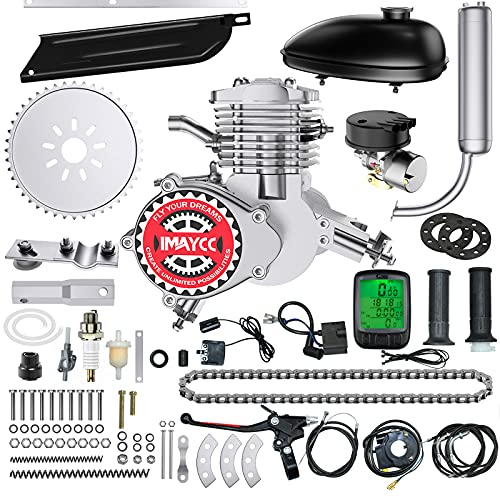
The IMAYCC 80cc kit is a complete package with a 2-stroke, air-cooled engine, wired digital computer, and CDI ignition. It emphasizes a relatively straightforward starting method via pedal, with a durable build intended for longer rides. Installation takes a few hours for those with basic mechanical skills, and the kit stresses careful setup for best performance.
Who this is best for: riders who want a full package and step-by-step guidance for installation. Limitation: first-time installers may benefit from online tutorials to avoid common setup issues.
Upgraded 110cc Bicycle Engine Kit
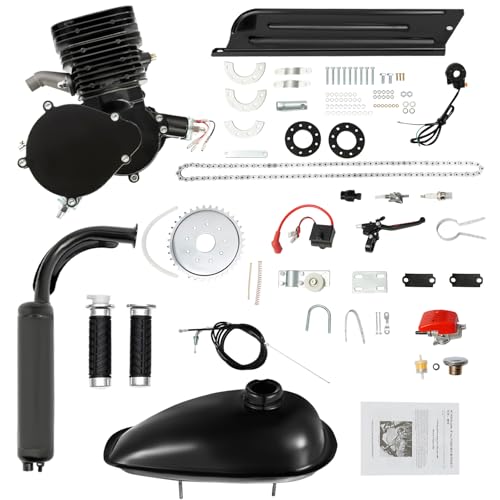
This 110cc kit targets riders seeking higher top speeds and stronger hill-climb capability. It supports most 26″ to 28″ bikes with a CDI ignition and a full conversion set. The kit aims at reliable performance with a 6000 RPM range and robust construction for longer rides. Best for experienced builders or those upgrading from smaller displacements.
Who this is best for: riders prioritizing higher speed and torque for longer routes. Caution: heavier engine requires frame and drivetrain checks for safe use.
AYLYOTOY 100cc Bicycle Engine Kit

The AYLYOTOY 100cc kit combines a robust 3.5 HP four-stroke engine with a sizable 0.52-gallon fuel tank for longer rides. It uses a durable aluminum shell and a steel chain, emphasizing longevity and a higher sustained power output. The kit claims a top speed around 31 mph, appealing to riders who want consistent performance over extended trips.
Who this is best for: commuters and weekend riders who want more fuel range and steadier power. Limitation: four-stroke configurations can be heavier and slightly more complex to maintain than two-stroke setups.
JAYGOVAN 110cc Bicycle Engine Kit

This 110cc kit from JAYGOVAN delivers a peak of about 6,000 rpm with a top speed near 34 mph. It features a CDI ignition system for quick starts with pedal input and emphasizes low noise and vibration for a smoother ride. The kit is designed as a complete conversion package, simplifying the installation process for experienced hobbyists.
Who this is best for: riders seeking high-performance conversion with quick-start reliability. Caution: higher power means more stress on the bicycle frame and drivetrain; inspect for compatibility and durability before upgrading.
Buying Guide
What to consider when choosing a gas motor kit for a bicycle
- Displacement and power: Higher cc generally means more speed and climbing power but increases weight and fuel use. Choose 80cc for budget-friendly city riding, 100cc for longer trips, and 110cc for higher performance.
- Engine type: Two-stroke kits are lighter and offer strong low-end torque but can be noisier and require more frequent oil mixing. Four-stroke kits provide steadier power and better efficiency but are heavier.
- Starting method: CDI ignition with pedal start simplifies activation, but ensure your bike’s crankset and frame can accommodate the extra load and weight.
- Fuel capacity: Larger tanks extend riding range. If you commute longer distances, prioritize kits with larger tanks and efficient fuel use.
- Installation difficulty: Some kits include thorough instructions and online setup guides; others may require prior mechanical experience or professional installation.
- Frame compatibility: Check wheel size (26″ vs 28″), frame styles, and chainline compatibility. Ensure adequate space for the engine and exhaust routing.
- Durability and maintenance: Look for rust-resistant materials and robust chains. Regular inspection of mounting points, fuel lines, and cooling paths helps prevent failures.
FAQs
- Do gas motor kits require a professional install? Answer: Many kits are designed for DIY installation, but some buyers prefer professional mounting for safety and optimal alignment.
- Will these kits fit all bicycles? Answer: Most kits target standard 26″ to 28″ bikes with compatible frame geometry, but checking compatibility with your specific frame is essential.
- How fast can a converted bike go? Answer: Top speeds typically range from 25 to 34 mph depending on displacement and tuning, rider weight, and gearing.
- What maintenance is needed? Answer: Regular checks on fuel lines, cooling, exhaust, and mounting hardware; periodic oil/fuel mixture (for two-strokes) and air filter upkeep are recommended.
- Is a larger cc always better? Answer: Not always. Higher cc offers more power but adds weight and complexity; choose based on riding needs and your bike’s frame strength.
- Are CDI ignitions common? Answer: Yes, CDI ignition is standard on many kits for reliable starts and smoother operation.