If you’re buying gas tanks for outboard motors, you want durable, travel-friendly options that prevent leaks and minimize fuel evaporation. This guide highlights five practical tanks that suit small-to-mid sized boats, deck boats, and fishing craft. Each option targets a specific buyer: portable travelers, space-conscious boaters, and those needing larger capacity for longer trips. The table below helps compare core specs at a glance.
| Product | Capacity | Key Benefit | Best For |
|---|---|---|---|
| PeakPursuit Marine Tank | 3 gal / 12 L | Ergonomic I-shaped handle and built-in filter | Compact, on-the-go refueling |
| VEVOR 12L Marine Transfer Tank | 3.17 gal / 12 L | Long hose, compatibility with Yamaha connectors | Small to mid-size boats, versatile use |
| VEVOR 24 L Portable Tank | 6.34 gal / 24 L | Gauge, separate inlet/outlet, sturdy HDPE | Higher capacity, reduced refills |
| AloneGoer 3 Gal Portable Tank | 3 gal / ~12 L | Multi-layer barrier, UV-stable | Salt spray, humid environments |
| Scepter 6 Gallon Portable Tank | 6 gal / ~23 L | Under-seat friendly, built-in gauge | Extended trips, stable under-seat storage |
PeakPursuit Marine Tank, 3 Gallon

The PeakPursuit 12-liter tank is designed for portability and reliability. Its premium construction resists aging, impacts, and deformation, making it a solid choice for boats that require a compact refueling option. The ergonomic I-shaped handle helps with everyday transport, and a fuel level indicator keeps you informed of remaining fuel. An integrated filter helps ensure cleaner fuel for smoother engine performance. This tank is best for small craft, dinghies, or as a spare tank on larger boats where space is limited. Note a compact capacity means more frequent refueling on longer trips.
VEVOR Boat Fuel Tank 3.17 Gal

The VEVOR 12-liter transfer tank provides a 9.8-foot hose and a gauge, with compatibility for Yamaha connectors. Its high-density polyethylene body resists aging and corrosion, maintaining shape and security over time. The molded top handle offers easy transport, and its compact form fits well under seats or in small storage areas. Best for sailors who need a lightweight option with reliable hose length and engine compatibility. A caution: avoid prolonged direct sunlight to slow aging and expansion risks.
VEVOR Marine Tank 24 L, 6.34 Gal

This larger VEVOR model holds 24 liters (6.34 gallons) and includes a gauge for easy tracking of fuel levels. Its separate inlet and outlet reduce spillage and enhance security during use. The tank is built from HDPE and resists aging and corrosion, designed to retain its shape under load. It is best for boaters who need more fuel on longer trips or for boats with higher fuel consumption. A limitation to consider: similar to other tanks, direct sun can age the plastic over time.
AloneGoer 3 Gal Portable Tank
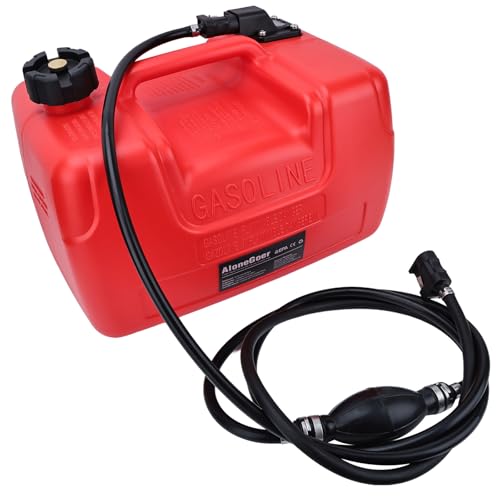
AloneGoer’s 12-liter 3-gallon tank uses a multi-layer barrier technology (HDPE-EVOH-HDPE) to minimize fuel permeation and evaporation by up to 98%. It is designed for outboard motors and inflatable boats, with UV stabilization and salt spray resistance for marine environments. Best for saltwater use and boats where fuel efficiency is a priority. A noted caution: ensure compatibility with your specific Yamaha or other outboard connectors before purchasing.
Scepter 6 Gallon Portable Tank

The Scepter 6-gallon tank is designed for under-seat storage with molded feet for ventilation and stability. It features a 2-way vented cap that allows air flow during refueling and automatically relieves pressure to reduce vapor buildup. A built-in gauge provides quick level checks, and the tank accepts standard marine fittings. This option is best for boaters who want a balance of moderate capacity and convenient storage. A possible limitation is the need to purchase the separate fuel line if you don’t already have one.
Buying Guide
What matters most when choosing a gas tank for an outboard motor? Consider capacity, portability, fuel compatibility, and how the tank handles evaporation and spillage. For frequent travelers or small boats, a smaller tank with an ergonomic handle and clear fuel gauge (like PeakPursuit or AloneGoer) can simplify refueling. For longer trips or larger craft, higher capacity tanks (like the VEVOR 24 L or Scepter 6 Gallon) reduce refueling stops but require more storage space. Always verify hose length, connector compatibility, and whether a vented cap is needed for your fuel type.
Important questions to ask during shopping:
- What is the maximum capacity I will need for my typical trips?
- Does the tank use a-compatible hose and fittings with my outboard motor?
- Is there a built-in gauge to monitor fuel levels easily?
- How does the tank handle evaporation and aging in sun exposure?
- Are there any storage considerations for my boat’s layout or under-seat space?
Key purchase considerations
- Material and durability: HDPE and multilayer barriers reduce permeation and wear.
- Vent and cap design: Vented caps reduce vapor buildup and improve safety.
- Transport and storage: Ergonomic handles and compact footprints ease handling.
- Fuel compatibility: Ensure the tank works with your engine’s connector and fuel type.
- Maintenance: Look for built-in filters or gauges that simplify monitoring.
FAQ
- What capacity is right for a small fishing boat? – A 3 to 6 gallon tank is typically suitable for short trips on smaller boats.
- Do all tanks fit under-seat storage? – Most compact designs fit under seats, but confirm dimensions for your vessel.
- Is a fuel gauge necessary? – It helps prevent unexpected refueling stops and keeps you informed during trips.
- Can I use diesel or ethanol-blended fuels in these tanks? – Many are designed for multiple fuel types; check the product specs for compatibility.
- Should I avoid sunlight on the tank? – Prolonged direct sun can accelerate aging and expansion; store in shade when possible.
- Do I need extra hoses or fittings? – Some tanks include hoses; others require separate purchases for your engine’s inlet.