If you store gasoline for long periods, use a dedicated stabilizer to prevent corrosion, varnish, and fuel system problems. This guide highlights top options ideal for seasonal vehicles, boats, and outdoor power equipment. Each product is evaluated for storage longevity, corrosion protection, and ease of starting engines after storage. The right choice depends on your storage duration, fuel type, and your equipment.
| Product | Best For | Storage Duration | Notes |
|---|---|---|---|
| STA-BIL Storage Fuel Stabilizer (16 oz) | Long-term storage up to 24 months | Up to 24 months | Treats large fuel volumes |
| STA-BIL Storage Fuel Stabilizer (8 oz, 12-pack) | Multiple small storage doses | Up to 24 months | Cost-effective pack |
| STA-BIL Storage Fuel Stabilizer (32 oz) | Heavy storage or high-volume tanks | Up to 24 months | Great for boats or generators |
| Star Tron Enzyme Fuel Treatment – Small Engine | Engines prone to ethanol issues | Months of inactivity | Enzyme-based, cleans and protects |
STA-BIL Storage Fuel Stabilizer, 16 oz

This stabilizer is designed for long-term storage, helping keep gasoline fresh for up to 24 months and protecting fuel against corrosion. Best for owners who store vehicles or equipment for extended periods and need a single, large-dose treatment.
Who it’s best for: Individuals storing a single large tank or multiple devices for winter or off-season use. Why selected: It treats a larger volume of fuel per bottle, facilitating easy storage planning and fewer dose calculations.
Caution: Ensure correct dosing for the total fuel volume to avoid over-treatment. Avoid using with non-storage circumstances unless directed.
STA-BIL Storage Fuel Stabilizer, 8 oz 12-Pack
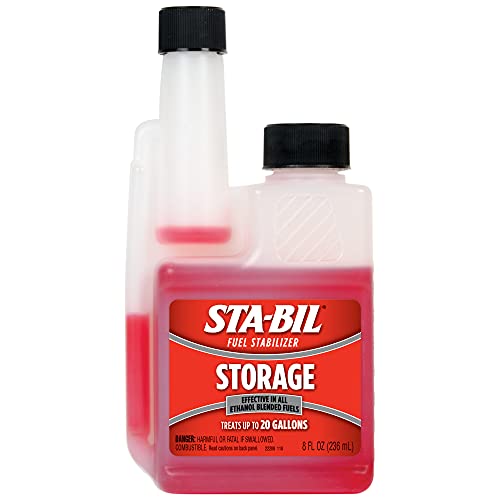
This option preserves fuel for up to 24 months and protects against corrosion from ethanol and non-ethanol blends. It also helps engines start reliably after storage by maintaining fuel system integrity. The 12-pack is convenient for multiple storage setups.
Best for: Users who need a reliable, scalable solution for several stored devices. Better for: Seasonal fleets or multi-vehicle storage scenarios. Caution: Stocking up should align with the number of stored vehicles to prevent waste from unused stabilizer.
STA-BIL Storage Fuel Stabilizer, 32 oz

Designed to treat about 80 gallons of fuel, this larger bottle is ideal for families with boats, ATVs, or generators that sit idle for extended periods. It aims to keep fuel fresh for up to 24 months while preventing corrosion.
Best for: Those who store higher volumes of fuel. Choose this if you need fewer, larger bottles to simplify inventory. Limitation: Large bottles may be heavier to handle and pour.
Star Tron Enzyme Fuel Treatment – Small Engine Formula

Star Tron uses enzyme technology to help engines start easily and run smoothly after storage, addressing common ethanol-related problems. It’s positioned as a versatile option for smaller engines and equipment at risk of ethanol damage.
Best for: Small engines near-term storage or frequent startup after inactivity. Better for: Equipment prone to ethanol-related issues. Caution: Effectiveness depends on proper dosing and maintenance; not a replacement for regular maintenance beyond storage.
Lucas Oil 10003 Fuel Treatment – 1 Quart

The Lucas Oil fuel treatment claims to be the world’s #1 fuel additive for gasoline and diesel engines, supporting cleaning and lubrication of the fuel system and potentially improving MPG. It’s marketed as both a fuel system cleaner and stabilizer when used as directed.
Best for: Users seeking a widely recognized fuel treatment with cleaning and lubrication benefits. Choose this if you want a versatile option that may aid older systems. Caution: Statements are broad; effectiveness can vary with engine type and fuel blend.
STAR BRITE Star Tron Enzyme Fuel Treatment – 32 Fl. Oz

Concentrated formula to treat up to 512 gallons, providing fuel stabilization and enzyme-based cleaning. It emphasizes ethanol-related problem prevention and improved fuel economy through cleaner fuel delivery systems.
Best for: Large storage needs or coastal/boat use where a concentrated dosing approach helps minimize bottle handling. Better for: Reducing varnish and gum buildup over long storage periods. Caution: Concentrated formulas require precise dosing per gallon; follow label directions.
STA-BIL 360 Protection Ethanol Treatment and Fuel Stabilizer

STA-BIL 360 Protection cleans the entire fuel system, prevents corrosion, and helps maintain ethanol-blended fuels for up to 12 months. It also claims to improve MPG by maintaining a clean, protected system.
Best for: Storage of ethanol-blended fuels with a focus on overall fuel-system cleanliness. Choose this if you want a comprehensive approach to both stabilization and cleaning. Caution: The 12-month window requires annual re-treatment for continued protection during long-term storage.
Star Tron Enzyme Fuel Treatment Concentrate

Concentrate form designed to stabilize gasoline and support ethanol performance with enzyme technology. It aims to prevent ethanol-related issues and improve overall engine operation during and after storage.
Best for: Users who prefer a concentrated enzyme solution for long-term storage and ethanol management. Caution: Concentrates require accurate dosing and proper storage practices to maintain effectiveness.
Buying Guide: How To Choose The Right Storage Fuel Additive
Long-term storage requires balancing fuel type, storage duration, and engine requirements. Consider these practical questions:
- What is my storage duration and tank size? Large-volume storage favors bigger bottles, while smaller tanks may be best with single-dose packs.
- Do I need corrosion protection for ethanol-blended fuels? If yes, choose products explicitly advertising ethanol protection and fuel-system cleaning.
- Will I store boats, generators, or lawn equipment? Some formulas target marine use or outdoor power equipment, with compatibility notes for gas types.
- Do I require enzyme-based cleaning or simple stabilization? Enzyme formulations can help keep deposits at bay, while stabilizers focus on fuel longevity.
- Am I sensitive to odor, handling weight, or dosing complexity? Consider packaging size and ease of use for your setup.
Key Purchase Considerations
- Stability window: Most products claim up to 12–24 months of fuel freshness. Choose based on your storage horizon.
- Fuel type compatibility: Some formulas are designed for ethanol blends; verify compatibility with your fuel supply.
- System cleanliness: If you’re concerned about gum and varnish, enzyme-based or cleaning-focused formulations can help.
- Ease of use: Single-bottle solutions reduce complexity, while multi-pack options can lower per-dose costs for multiple storages.
- Safety and handling: Follow label directions for dosing and storage to avoid over-treatment or spills.
FAQ
- How long does gasoline stay fresh with stabilizers? Most products claim up to 12–24 months when used as directed for stored fuel.
- Can I use stabilizers with all gasoline types? Many stabilizers work with ethanol and non-ethanol blends, but check the label for compatibility.
- Will stabilizers fix engine starting problems after storage? Stabilizers help preserve fuel quality and may improve starts, but other maintenance factors can affect performance.
- Is enzyme-based treatment better than standard stabilizers? Enzyme-based products target deposits and ethanol-related issues, offering a different benefit profile than stabilizers alone.
- Should I treat every tank or just the largest one? Treat according to total fuel volume and usage patterns; some users dose per tank to simplify dosing.
- Are there any storage restrictions I should know? Store away from heat, sunlight, and moisture; follow product directions for storage conditions.