Answering the need for portable, truck- or trailer-capable power, this guide highlights five reliable generators suited for enclosed trailer use. These units balance quiet operation, clean power, and portability. Ideal buyers include campers, RV owners, and emergency-prep shoppers who require safe, odor-controlled power inside or near an enclosed space. The table below compares core specs to help narrow choices quickly.
| Product | Brand | Key Strength | Best For |
|---|---|---|---|
| Westinghouse 4650 Peak Watt Portable Generator | Westinghouse | RV-ready outlets, CO sensor, solid runtime | RV users and campers needing multiple outlets |
| PowerSmart 3600-Watt Portable Inverter Generator | PowerSmart | Quiet technology, 30A RV-ready, 8h runtime | Quiet campsite power and light-duty RV use |
| WEN 6800-Watt Dual Fuel RV-Ready Inverter | WEN | Dual fuel, CO watchdog, EV-feasible charging | Backup power with fuel flexibility |
| Oxseryn Power Equipment 4400 Watts Inverter | Oxseryn | Four outlets, long runtime, ECO mode | Open-framed, open-trailer setups needing multiple ports |
| maXpeedingrods 3500 Watt Portable Inverter | maXpeedingrods | Compact, lightweight, multiple outlets | Travel trailers and small spaces |
Westinghouse 4650 Peak Watt Portable Generator
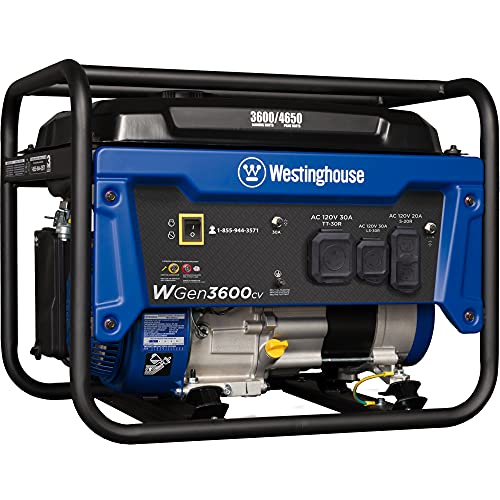
The Westinghouse model delivers 3600 running watts and 4650 peak watts, with a recoil start and a 4-gallon fuel tank. It includes two 5–20R 120V outlets, a TT-30R 30A RV outlet, and an L5-30R 30A outlet, all with rubber outlet covers for weather protection. An included oil, funnel, toolkit, and manual facilitate quick setup. Best for: RVs and campers who need a robust, all-outlet solution with built-in safety features. Limitation: recoil start may be harder in cold weather or for users who prefer electric start; ensure you have a pull-cord ready. Why selected: strong power output, RV-ready versatility, and safety-minded design fit enclosed-trailer scenarios where both portability and multiple connections matter.
PowerSmart 3600-Watt Portable Inverter Generator

This inverter offers 3600 starting watts and 3200 running watts from a 149cc engine, with a clean sine wave (<3% THD) for sensitive electronics. It has 26.7A output, suitable for RV air conditioners and home-use devices, and a fuel-tank designed for up to 8 hours at 25% load. Best for: campers and light-duty RVs needing quiet operation and reliable electronics protection. Limitation: 1.3-gallon tank may require more frequent refueling on heavy loads. Why selected: excellent balance of quiet operation, clean power, and practical runtime for enclosed trailer setups.
PowerSmart 4300-Watt Portable Generator with Inverter

This inverter delivers 4300 surge watts and 3500 rated watts from a 223cc engine, with pure sine wave (<3% THD) output. It can handle high-demand loads like 15,000 BTU RV air conditioners and pumps, making it suitable for home backup and camping. All-night reliability comes from a 1.98-gallon tank and Eco-Mode for fuel economy. Best for: users needing higher surge capacity and stable power for sensitive electronics. Limitation: heavier than smaller units, which could affect portability in tight trailer spaces. Why selected: strong surge capacity and clean power for demanding trailer appliances justify its place in this guide.
WEN 6800-Watt Dual Fuel RV-Ready Inverter

The WEN DF680iX runs on gasoline or propane, delivering 6800 surge watts and 5100 rated watts on gas, and 6000 surge watts and 4500 rated watts on propane. Its bonded-neutral 240V configuration supports Level 2 EV charging, while the CO watchdog enhances safety. Best for: users needing fuel flexibility and powered backup with added CO protection. Limitation: dual-fuel plumbing adds overall complexity and weight. Why selected: dual-fuel capability and CO safety system provide versatility for enclosed trailer environments where fuel choice and safety matter.
Oxseryn Power Equipment 4400 Watts Inverter

Offering 4400 peak watts and 3400 running watts, this inverter includes multiple outputs: two 120V outlets, one 12V DC port, and an RV outlet, with up to 14 hours of runtime at 25% load and a two-gallon tank with a fuel gauge. Best for: open-trailer setups needing multiple ports and long runtimes with ECO mode. Limitation: smaller fuel tank compared to larger units, which may require refueling on longer trips. Why selected: versatile port options and runtime make it practical for enclosed-trailer power without frequent stops.
MaXpeedingrods 3500 Watt Portable Inverter
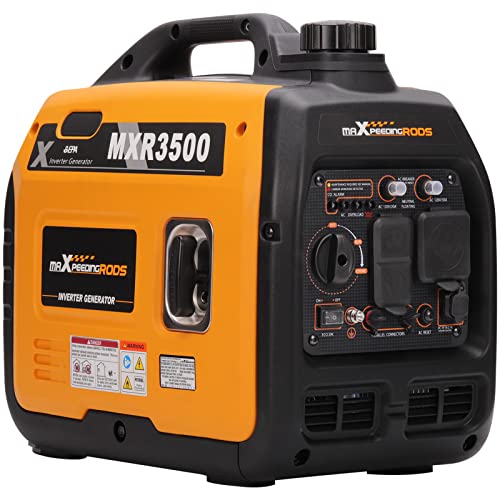
With 3500 peak watts and 3000 running watts, this compact unit weighs around 47 pounds and includes 1x 120V 30A RV outlet, 2x 120V 20A outlets, and 2x USB USB outlets. It offers Eco-mode for extended runtime and is designed for home backup and camping. Best for: travelers with limited space who still want RV-ready outlets. Limitation: lower surge wattage than larger units may struggle with some high-startup appliances. Why selected: its light weight and RV readiness suit small enclosed-trailer setups where space is at a premium.
Buying Guide: Key Purchase Considerations
- Power needs: List essential appliances (AC, fridge, lights) and sum their wattage. Choose a generator with surge watts above that total to cover startup spikes.
- Power type: Inverter models deliver clean power and are ideal for electronics; conventional generators offer higher peak watts but may be louder.
- Fuel type and tank size: Gas-powered units are common and easy to refuel; larger tanks extend runtime for overnight use.
- Portability: Consider weight and handle design for trailer storage and movement in tight spaces.
- Safety features: CO sensors, exchangeable fuel lines, and proper ventilation reduce risk when used near enclosed spaces.
- RV and trailer compatibility: Ensure outlets include RV-specific TT-30R and L5-30R or equivalent for direct trailer connections.
- Runtime and efficiency: Inverter units with Eco-mode generally run longer on less fuel, reducing the need for frequent refueling.
Frequently Asked Questions
- What size generator is best for an enclosed trailer?
– A mid-range inverter with at least 3000-3500 running watts and a couple of RV outlets typically covers most camping and light backup needs without excessive noise. - Are dual-fuel generators worth it for trailer use?
– Yes if you want fuel flexibility and extended run options, especially in remote locations where gas may be scarce or propane is more convenient. - Do I need a CO sensor on a trailer generator?
– A CO watchdog is highly recommended to automatically shut off the generator if dangerous CO levels are detected in enclosed spaces. - What is a good runtime for weekend trips?
– 6–8 hours at a moderate load is common; units with larger tanks or Eco-mode can extend that significantly. - Should I choose a loud generator for enclosed trailers?
– No. Prioritize inverter models with quiet operation to minimize noise disruption at campsites and reduce fatigue inside the trailer. - Can I power high-wattage devices from a generator inside an enclosed trailer?
– Use models with clean sine-wave power (<3% THD) to protect sensitive electronics and avoid startup surges harming devices.