For clear, streak-free car glass, choose cleaners that cut grease without residue. This guide highlights five top options suited to different needs—streak-free shine, tint-safety, interior and exterior glass, and convenience. Best for drivers who want quick, reliable results with minimal effort. Below, compare each pick and see who benefits most.
| Product | Best For | When To Choose |
|---|---|---|
| Invisible Glass 91164-2PK | Daily car interiors and exteriors | Regular upkeep with a two-pack for multiple cars or home use |
| Windex Automotive Car Window and Glass Cleaner | Tinted windows and interiors | Vehicles with tinted glass needing a safe, streak-free shine |
| Invisible Glass 91164-3PK | Multi-car households | Three-pack option for families or fleets |
| Invisible Glass 92164 | Large bottles, versatile surfaces | Extended use on cars, boats, RVs and offices |
| Rain-X Glass Cleaner | All-around heavy grime | Exterior and interior glass with bug residue and road grime |
Invisible Glass Premium Aerosol Glass Cleaner (2-Pack)
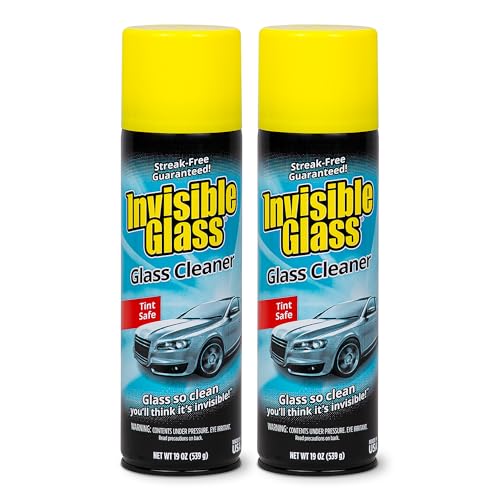
Best for: drivers who want a ready-to-use, residue-free shine on both interior and exterior glass. This cleaner uses a deep-cleansing foam to lift road grime and fingerprints, with a clear dry formula that leaves no streaks or residue.
Why selected: It’s a top automotive glass cleaner with heavy use history and a dedicated ammonia-free formula suitable for tinted windows. The foam penetrates grime without leaving a soap film, making it a reliable daily option.
Limitation: Some users may prefer a spray with a longer nozzle reach for hard-to-reach areas; foam consistency can be more susceptible to over-application if not used carefully.
Windex Automotive Car Window and Glass Cleaner

Best for: motorists needing a safe option for tinted windows and interior electronics. The formula is designed to be streak-free and suitable for glass both inside and outside the vehicle.
Why selected: Windex Auto Spray combines easy spray application with a clear finish that reduces smudges and keeps screens and electronics safe from moisture. It’s a convenient, all-around cleaner for interior dashboards and glass surfaces.
Limitation: It may not extend to some heavy exterior grime as effectively as heavy-duty dedicated automotive glass cleaners; use on very dirty windshields may require repeat sprays.
Invisible Glass 91164-3PK Premium Aerosol Glass Cleaner

Best for: households with multiple vehicles or a need for extra supply. This three-pack mirrors the 2-pack’s performance—streak-free shine and a residue-free finish—across several cars or storage spaces.
Why selected: It reinforces the same trusted formula as the two-pack, providing ample cleaner with the same tint-safe, ammonia-free characteristics. Great for fleets or family use.
Limitation: The larger pack may encourage more product usage; ensure you store it upright to avoid nozzle clogging in some climates.
Invisible Glass 92164 Premium Glass Cleaner

Best for: users seeking a larger spray bottle with a versatile, ammonia-free formula. Works well on cars, boats, RVs, and home windows.
Why selected: The 22-ounce trigger spray provides extended use with zero residue, making it easy to tackle extensive cleaning tasks beyond the car. It’s suitable for tinted glass thanks to the ammonia-free formulation.
Limitation: Larger bottle weight may be less convenient for pocket-size cleaning in tight car interiors; a separate mini-sprayer can help reach tight spots.
Rain-X Glass Cleaner Concentrate

Best for: drivers facing heavy grime, bug splatter, and road film. A concentrated formula can be diluted for different cleaning needs and surfaces.
Why selected: Rain-X is known for automotive-grade cleaning power that tackles exterior glass as well as interior smoke films. It provides a robust, streak-free finish with strong dirt-cutting capabilities.
Limitation: Concentrates require dilution and mixing, which adds a preparation step and potential for measurement errors if not followed precisely.
Buying Guide: Glass Cleaners For Cars
What to consider when choosing
- Streak resistance: Look for a clear dry or residue-free formula to avoid after-images on glass surfaces.
- Tint safety: If you drive with tinted glass, choose ammonia-free formulas designed for tint protection.
- Surface compatibility: Ensure the cleaner works on both interior and exterior glass and won’t harm electronics or coatings inside the vehicle.
- Packaging and ease of use: Aerosol sprays are quick, while concentrates may save cost per ounce but need dilution.
- Pack size: Single bottles, multi-packs, and bulk options suit different ownership levels—families and fleets benefit from larger packs.
How to use car glass cleaner effectively
- Shake well, spray lightly onto a microfiber cloth or directly onto glass, then wipe in a circular motion.
- Avoid cleaning in direct sunlight to prevent quick drying and streaks; use a shaded area or cool surface.
- For stubborn grime, use a second pass with a fresh microfiber to ensure no residue remains.
- Always test on a small area first if you have delicate coatings or aftermarket treatments.
FAQ
- Q: Are these cleaners safe for tinted windows?
- A: Yes, many listed formulas are ammonia-free and tint-safe, suitable for interior and exterior glass.
- Q: Can I use these on my car’s interior electronics screens?
- A: Some cleaners are safe for electronics, especially those labeled for interior use; always check product notes and test first.
- Q: Do these cleaners leave a film on glass?
- A: The products featured emphasize a residue-free, streak-free finish with clear dry formulas to minimize films.
- Q: Is one-pack better than multi-pack?
- A: Multi-packs are cost-efficient for households with multiple vehicles or shared spaces; singles suit occasional use.
- Q: Can I dilute concentrate cleaners for interior use?
- A: Yes, follow the product’s dilution guidelines to achieve the right strength for interior glass and mirrors.