Transitioning a golf cart to electric power can boost range, torque, and efficiency. This guide highlights five top conversion kits and compatible components that American buyers commonly choose for Club Car, Yamaha, EZGO, and other popular models. Each section explains performance highlights, installation considerations, and what to expect from the kit’s features.
| Product | Brand | Key Benefit | Controller/Motor |
|---|---|---|---|
| Navitas AC Conversion Kit for Club Car DS/Precedent/Tempo/Onward | Generic | Increased range, efficiency, torque, top speed | 440 Amp controller, 4KW motor |
| Navitas 4KW DC to AC Conversion Kit (G29/G29 Drive2) | MODZ | On-the-fly programming, Bluetooth control | AC Motor, 600A MOSFETs |
| OGRPHY 48V Lithium Conversion Kit | OGRPHY | Long cycle life, smart BMS, touch monitor | 200A BMS, LiFePO4 cells |
| OGRPHY 36V Lithium Conversion Kit | OGRPHY | Lower voltage option with strong BMS | 200A BMS, LiFePO4 cells |
| SISWAY 48V LiFePO4 Battery Kit | SISWAY | High peak power, Bluetooth & app support | 200A BMS, 10.24kW peak |
Navitas AC Conversion Kit for Club Car DS/Precedent/Tempo/Onward
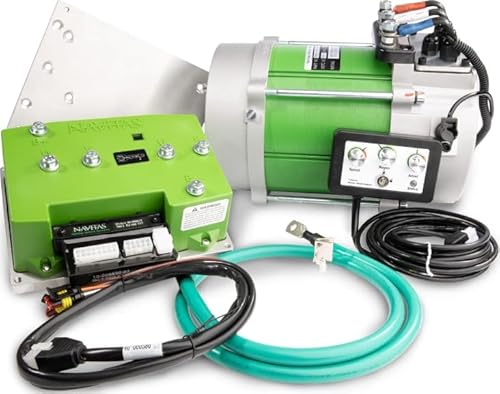
The Navitas AC Conversion Kit is designed for Club Car models including DS IQ, Precedent, Tempo, and Onward electric variants. It features a 4KW AC motor and a 440A TAC2 controller, packaged to improve range, efficiency, torque, top speed, and acceleration. This kit is appropriate for 48V systems and excludes Factory Lithium configurations. The on-board programming capabilities and performance tuning provide adaptable power delivery for varying terrains and rider demands.
Navitas 4KW DC to AC Conversion Kit (G29 Drive 2)

This Navitas kit converts DC to an AC drive for Yamaha G29 Drive and Drive 2 golf carts. It uses a 4KW AC motor paired with a 600A state‑of‑the-art MOSFET kit and an on‑the‑fly programmer. A MODZ® heavy duty solenoid and diode are included for robust switching. The Bluetooth programmable interface supports mobile app adjustments, enabling on-the-go tuning for improved performance and battery efficiency.
OGRPHY 48V Lithium Golf Cart Battery Conversion Kit

OGRPHY’s 48V lithium kit combines a 102Ah high‑capacity lithium battery with a built‑in 200A BMS and a touch monitor. It comes with a charger and retention strap, and emphasizes automatic voltage equalization to minimize capacity loss. The system supports direct Bluetooth monitoring of battery status and offers strong hill-climbing ability with high continuous and peak discharge margins, designed for extended range and reliability.
OGRPHY 36V Lithium Golf Cart Battery Kit

The 36V OGRPHY kit provides a compact lithium solution with a 102Ah LiFePO4 pack. A built‑in 200A BMS and touch monitor support remote monitoring, while the automatic voltage equalization feature helps maintain battery health over time. The kit includes a charger and retention strap for a straightforward, safer DIY conversion path and better hill performance than traditional lead-acid systems.
SISWAY 48V 100Ah LiFePO4 Battery Kit

The SISWAY 48V kit features a 100Ah LiFePO4 pack with a built‑in 200A BMS and a 10.24kW peak power capability. The package emphasizes a compact footprint and includes a Bluetooth app for battery monitoring. A 20A charger is part of the kit, making it a convenient complete solution for golfers seeking higher discharge capability, better cycle life, and safer operation.
Buying Guide
- Voltage and compatibility: Choose a kit that matches your cart’s voltage (e.g., 36V, 48V) and model compatibility (Club Car, EZGO, Yamaha). Some kits are model‑specific while others are universal with adapters.
- Motor type: DC to AC kits use AC motors for high efficiency and torque; pure DC kits can be simpler but may offer different performance characteristics. Consider your terrain and desired speed.
- Battery chemistry and life: Lithium packs (LiFePO4) offer longer cycle life and lighter weight but cost more upfront. Lead‑acid trays remain cheaper but heavier and with shorter cycles.
- Battery management and monitoring: Look for smart BMS with Bluetooth or app support for real‑time status, voltage balance, and safety protections.
- Installation and space: Some kits require platform-specific mounting and wiring. Check if you need professional installation or if the kit includes all necessary hardware.
- On‑board electronics: Programmable controllers and on‑the‑fly programming can optimize performance across hills and driving styles but may require a learning curve.
- Warranty and support: Review the manufacturer’s warranty length and the availability of customer support and replacement parts in the United States.
- Weight and maintenance: Lithium kits reduce weight and simplify maintenance but consider the total weight added to the cart and its impact on suspension and braking.
When evaluating kits, balance upfront cost with long‑term operating costs, expected mileage per charge, and the cart’s typical usage. For riders who navigate hills or need higher top speeds, a 4KW AC option with robust programming settings may offer the best performance. For fleets and frequent long trips, a lithium battery kit with reliable BMS and monitoring can improve uptime and reduce weight on the frame.