Looking for the most effective heat barrier for vehicles? This guide highlights five top car heat barrier options that shield against radiant heat and reduce engine bay temperatures. Best for performance-minded drivers, DIY enthusiasts, and anyone seeking interior comfort, each pick targets different needs—from heavy-duty under-hood shields to flexible peel-and-stick solutions. Below you’ll find clear comparisons, who each product suits best, and practical cautions to consider.
Summary of selected products
| Product | Best For | Key Benefit | Limitations |
|---|---|---|---|
| ALLWIN Car Heat Sound Deadening Insulation Mat | General protection and quiet cabins | High heat blocking, moisture resistant | Heavy, requires proper surface prep |
| Siless Liner 157 mil | Budget-friendly heat and sound blocking | Excellent value per sq ft | Thickness is lower than premium mats |
| FLASLD Aluminized Heat Shield 12 x 24 | Spot heat shields and panels | High heat resistance and reflectivity | Size limited; trim for fit |
| Second Skin Thermal Block 12” x 24” | Firewall and under-hood protection | OEM-grade materials with strong radiant heat reflection | Single sheet; may need multiple packs for large areas |
| SINNSIDELIN Exhaust Heat Shield 16” x 78.7” | Exhaust and chassis protection | Extended coverage and durable metal-backed shield | Requires cutting for fit |
ALLWIN Car Heat Sound Deadening Insulation Mat

The ALLWIN insulation mat serves as both a heat barrier and a sound deadener. Its nominal thickness is 0.394 inches, with a total coverage of 10.8 square feet in a 40×40 inch sheet. It claims to block about 98% of radiant heat transfer, helping to keep the engine bay cooler in hot weather and the cabin warmer in cold months. Its self-adhesive, waterproof, closed-cell foam formulation resists moisture and odor, which makes it suitable for hoods, engines, roofs, doors, and trunks. Best for car owners who want a single, versatile sheet for various under-hood and interior applications. A potential limitation is the need for clean, dry surfaces and careful surface prep to ensure adhesive longevity.
Siless Liner 157 mil (4 mm) 36 sqft

Siless Liner features a closed-cell polyethylene foam with an aluminum finish. It provides both heat blockade and vibration dampening, with an adhesive layer that claims 100% application efficiency. The product is lightweight, water-resistant, and flexible, making it easy to install with or without a roller. It offers strong heat reflection, closely approximating 98% radiant heat reduction in practical terms. Best for budget-conscious buyers who need broad coverage and easy installation. A notable limitation is that it’s thinner than some premium mats, which may affect long-term durability in aggressive under-hood environments.
FLASLD Aluminized Heat Shield 12 x 24
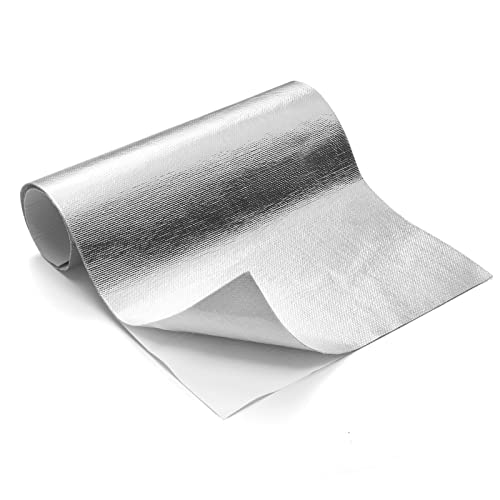
This FLASLD shield uses a durable aluminized surface backed by flexible silica fiber, designed to withstand extreme heat and reflect up to 95% of radiant heat. Available in multiple sizes, including 12×24, 12×40, and 24×40 inches, it’s suitable for various spots in the engine bay or around exhaust components. The material can be trimmed to fit, offering a practical approach for targeted protection. Best for occupants who need a robust shield for specific hot spots; avoid if large continuous areas require a seamless sheet without seams.
FLASLD Aluminized Heat Shield Sleeve 12” x 40”
This sleeve-style shield shares the same aluminized and reflective qualities as the 12×24 version but in a longer 12×40 inch format. It is ideal for wrap-style applications along exhaust pipes, hoods, and engine bays where continuous coverage is advantageous. It also tolerates high temperatures and reduces radiant heat effectively. Choose this if your project calls for a longer shield that can be trimmed to fit irregular shapes. A potential limitation is that sleeves may require careful alignment to ensure full coverage without gaps.
Exhaust Heat Shield Automotive 16″ x 78.7″

The SINNSIDELIN Exhaust Heat Shield is a long sheet (16″ x 78.7″) made from embossed aluminum, designed to protect mufflers, exhaust ducts, and adjacent components. It withstands high temperatures up to 1022°F and provides solid thermal insulation for under-hood areas. Best for users needing extended coverage along exhaust paths or wide panels. A caveat is that the shield is a sheet material, so cuts and fasteners are required to shape it for custom applications.
Buying Guide: Key Considerations When Choosing a Car Heat Barrier
- Heat resistance vs. coverage: Do you need ultra-high temperature tolerance or broad area coverage? Thin films and reflective foils offer flexibility, while thicker mats provide robust insulation.
- Application surface: Is the area flat, curved, or tight around exhaust components? Some products trim easily, while others are pre-sized blocks.
- Installation method: Adhesive-backed mats require clean surfaces; rigid shields may need fasteners or heat-resistant tape. Consider ease of installation and long-term durability.
- Moisture and odor considerations: Waterproof closed-cell foams resist moisture and odors better for under-hood use.
- Weight and space: Heavier mats add weight; long shields may affect clearance. Choose based on vehicle type and goal (noise reduction, heat shielding, or both).
Frequently Asked Questions
- What is a heat barrier for cars used for? It protects components from radiant heat, reduces under-hood temperatures, and can improve cabin comfort by limiting heat transfer from the engine bay.
- Do heat shields block 100% of radiant heat? Most barriers claim high percentages (e.g., 95–98%), but actual performance varies with installation and fit.
- Can I install heat shielding myself? Yes, many options are designed for DIY installation with adhesive backing or simple trimming; ensure surfaces are clean and dry.
- Which material lasts longest under hood heat? Aluminum-backed foams and aluminized shields tend to be durable, but longevity depends on exposure, vibration, and mounting.
- Do these products affect engine performance? Proper heat barriers help maintain engine efficiency by stabilizing temperatures, but improper installation can cause clearance issues.