Answering the common buyer intent: choose a heat wrap that safely insulates exhaust systems, reduces under-hood temperatures, and resists wear from vibration and oil exposure. The following selection highlights five top heat tape options suitable for motorcycles, cars, and trucks. Each option is evaluated for heat resistance, ease of installation, and best-use scenarios to help you decide which wrap fits your vehicle and climate. A quick buyer’s table summarizes the essentials for fast comparison.
| Product | Best For | Key Benefit | Max Temperature |
|---|---|---|---|
| Opvixi Exhaust Heat Wrap | Everyday riders and DIY tuners | Includes ties; odor during initial heating | 1100°F / 600°C |
| J-B Weld ExhaustWeld | Emergency repairs and reliable sealing | High-strength fiberglass with resin | 1100°F |
| SunplusTrade 2″ x 50′ | Long runs, turbo and high-heat needs | Wide roll with multiple ties | 1400°F direct / 2000°F radiant |
| LEDAUT Titanium Wrap 2″ x 50′ | Premium look and durability | Titanium wrap; long life | High heat (specific max not listed) |
| AMOGATO Fiberglass Tape 2″ | Strong repairs and sealing | Reinforced fiberglass mesh | 500°F |
Opvixi Exhaust Heat Wrap Roll

The Opvixi wrap comes as a 2″ by 16′ roll with six stainless ties. It’s designed to insulate exhaust pipes on motorcycles, cars, and trucks. The fiberglass construction withstands up to 1100°F (600°C), helping reduce engine compartment heat. The wrap is described as wear-resistant, oil-spill resistant, and able to handle high vibrations, which makes it suitable for bikes and other vehicles subject to engine movement. A noted dewaxing phenomenon may cause initial smoke and odor when first heated, which is normal. Best for: riders and builders looking for a ready-to-wrap solution with included securing ties. Limitation: initial odor when first heated may be off-putting.
Why choose this: It targets a broad audience with a straightforward kit and robust heat tolerance. The odor note is common in fiberglass wraps but does not affect performance after the cure period. It’s especially practical for those who want a complete package without sourcing separate ties.
J-B Weld ExhaustWeld Wrap

J-B Weld ExhaustWeld is a high-strength fiberglass wrap impregnated with a resin designed for high-temperature repairs. It resists up to 1100°F once fully cured. The wrap is positioned as usable with or without heat to cure, with a cure time of about 20 minutes when heat is applied, and 2 hours without heat. Best for: users seeking a repair-grade wrap that doubles as a temporary or semi-permanent fix for exhaust leaks or damaged sections. Limitation: the curing process varies with heat and time, which can affect project timelines.
What sets it apart: The resin-impregnated fiberglass offers a tough repair solution that can restore integrity to damaged exhaust sections and reduce heat transfer around repaired areas. Consider it when you need a fix alongside insulation rather than a simple wrap-only job.
SunplusTrade 2″ x 50′ Exhaust Heat Wrap
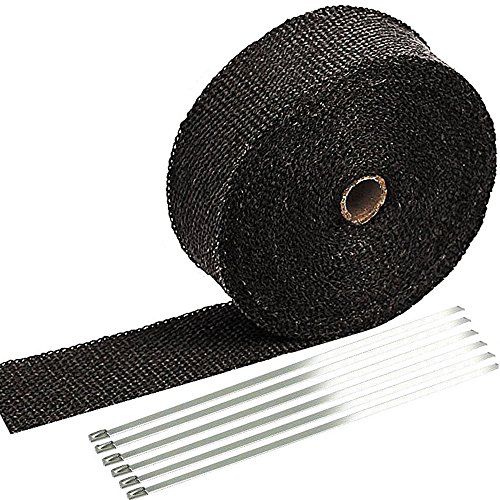
SunplusTrade offers a longer 50-foot roll with a 2-inch width and six stainless locking ties. It is rated to withstand up to 1400°F direct and 2000°F radiant heat, with strong resistance to abrasion, oil spills, and vibration. Best for: longer wrap projects and high-heat applications such as motorcycle headers or turbo lines. Limitation: longer rolls require careful handling to avoid kinks during winding.
Why pick this: For extensive installations or multi-radius pipes, the length provides fewer seams and better consistency. The included locking ties simplify securing, and the high heat rating supports demanding exhaust routes.
LEDAUT Titanium Exhaust Wrap
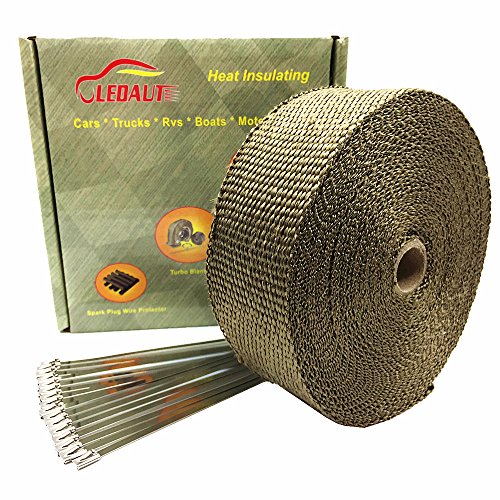
LEDAUT’s 2″ x 50′ Titanium wrap is paired with 16 stainless steel ties. The wrap requires soaking before installation to reduce fraying and itching from fiberglass, and it emphasizes careful wrapping with overlap. It touts high resistance to abrasions, oil spills, temperatures, and vibration, aiming for durable performance in rugged conditions. Best for: enthusiasts who want a premium look and dependable durability with a robust tie system. Limitation: explicit maximum temperature is not listed, so verify usage in extreme heat scenarios.
Why choose this: Titanium wraps often deliver a clean, high-end appearance and solid heat containment, suitable for riders and builders who prize longevity and a tidy install. The included gloves and measure tool support a smoother process.
AMOGATO Fiberglass Aluminum Foil Tape
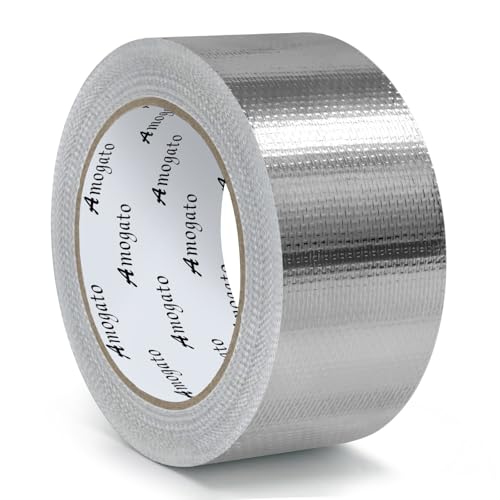
AMOGATO’s fiberglass aluminum foil tape is a 2-inch by 66-feet option with high heat resistance up to 500°F. It’s designed specifically for automotive exhaust repair and sealing, including mufflers and pipes. It’s reinforced with fiberglass mesh for added durability and a strong adhesive bond on vibrating surfaces. Best for: quick sealing, minor repairs, and heat management in automotive exhausts. Limitation: lower heat rating makes it less suitable for direct high-heat sections like headers or turbo manifolds.
This tape provides a reliable option for sealing leaks and addressing minor cracks while offering a straightforward application in constrained spaces. It complements wraps by sealing seams or gaps that wraps alone cannot fully cover.
Buying Guide: Key Purchase Considerations
What heat rating do you actually need? For most standard automotive and motorcycle exhausts, aim for wraps that endure at least 1100°F to 1400°F direct heat. Consider radiant heat as well since exhaust pipes emit heat that can affect surrounding components.
What material and lifespan matter? Fiberglass wraps provide solid insulation but may require soaking prior to installation and careful handling due to itching. Titanium wraps tend to offer a premium look and durability but may be more expensive. Adhesive tapes with fiberglass reinforcement help seal leaks and cracks, complementing wraps rather than replacing them.
How easy is installation? Look for rolls with included stainless ties and clear installation instructions. Some products include separate tooling or measures to facilitate a neat wrap. Note that certain wraps emit an odor during the initial heat cycle; this is normal for fiberglass products.
What is the best match for your vehicle type? Motorcycles benefit from narrower wraps and tighter fits around headers, while cars and trucks may require longer rolls or wider wraps to cover longer runs. For repairs, consider products marketed as repair wraps or repair tapes that emphasize bonding strength and heat resistance.
Safety and handling: Wear gloves when installing to avoid skin irritation from fiberglass fibers. Follow the manufacturer’s guidelines for curing time when resin-impregnated wraps are used. Ensure the exhaust is cool before handling and sealing for safety.
FAQ
- What temperature rating should I look for in exhaust wraps?
Choose wraps rated at least 1100°F direct heat for most exhaust systems; higher ratings (up to 1400°F or more) are better for turbo or high-performance setups.
- Can I install heat wrap on a hot engine?
Always allow the exhaust system to cool before wrapping. Some wraps require soaking and proper securing to prevent loosening during operation.
- Is it normal for fiberglass wraps to smoke initially?
Yes. A dewaxing or curing phase may produce smoke and odor as the material heats up for the first time.
- Should I pair wrap with tape for best results?
Yes. Use a high-heat tape to seal seams and cracks, and vent heat away from critical components. Ties and clips improve wrap stability on vibration-prone vehicles.
- How long does an exhaust wrap typically last?
Durability depends on installation quality, heat exposure, and vibration. High-quality wraps with proper securing tend to last longer in demanding conditions.