When selecting high temp engine paints, the best choices resist heat, oil, and chemicals while delivering a durable finish. This guide highlights five top picks suited for different engines and components. Choose based on maximum temperature tolerance, curing time, and whether you need a primer or ceramic-based coating. The buyers most often seeking these products are automotive hobbyists, professional mechanics, and restorers who want long-lasting coverage that’s easier to maintain.
| Product | Best For | Key Benefit |
|---|---|---|
| Rust-Oleum 248903 | Engine bays and exhaust areas | Withstands up to 2000°F for intermittent heat |
| Rust-Oleum 363567 | Automotive parts up to 600°F | Rust preventive, oil/gas resistant |
| Rust-Oleum 363574 | Engine blocks and components | Gloss blue finish, 600°F rated |
| Eastwood 2K Aerospray | High-performance engines | Ceramic, urethane-catalyzed, 650°F |
| VHT Engine Enamel Gloss | Headers, brackets, covers | 550°F, robust chemical resistance |
Rust-Oleum 248903 Automotive High Heat Spray Paint
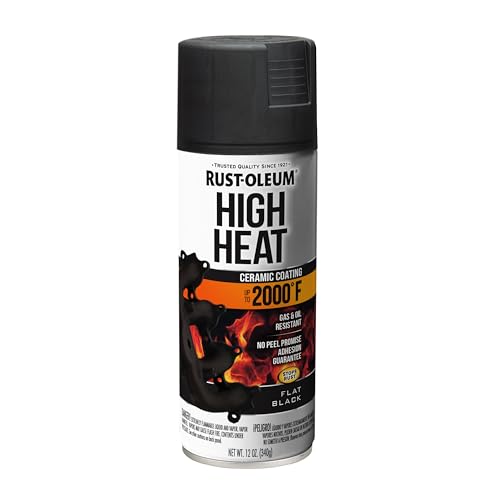
Best for: Surfaces intermittently exposed to extreme heat, such as exhaust manifolds or heat shields. This spray is formulated to resist temperatures up to 2000°F, making it suitable for high-heat engine components. The Stops Rust enamel offers corrosion protection, extending component life. Dries to touch in about 30 minutes and covers roughly 10 sq. ft. per can.
Why it’s selected: It combines high heat tolerance with rust prevention, which is essential for long-term durability in engines. The flat black finish helps conceal dirt and grime on hard-working parts.
Caution: Not ideal for continuous exposure at the highest heat zones or for equal color matching across distinct engine sections. Cure according to instructions for best adhesion.
Rust-Oleum 363567 Engine Enamel Spray Paint

Best for: Automotive parts exposed to intermittent temperatures up to 600°F. It provides a rust-resistant barrier and resists oil, gas, and environmental elements, including humidity and salt. It dries to touch in about 20 minutes and covers up to 12 sq. ft., with full cure per label directions.
Why it’s selected: The enamel helps prevent rust formation on engine components while remaining compatible with common automotive fluids. A practical choice for mid-range heat zones.
Caution: For best results, allow full curing time as instructed to ensure optimal hardness before exposure to heat or solvents.
Rust-Oleum 363574 Engine Enamel Spray Paint, Gloss Blue

Best for: Engine components needing a glossy blue finish with solid heat tolerance up to 600°F. It resists oil, gas, and road salt, helping to keep surfaces looking clean under hood. Dries to touch in 20 minutes and covers up to 12 sq. ft. Full cure per label is recommended.
Why it’s selected: The color option provides a distinct, professional look while maintaining performance against heat and contaminants. Suitable for cosmetic restoration or upgrading engine appearances.
Caution: Gloss finishes can highlight imperfections; surface prep improves final look and longevity.
Eastwood 2K Aerospray High Temp Ceramic Engine Gloss Black

Best for: High-performance engines needing durable, ceramic-enhanced protection up to 650°F. Uses a 2-component urethane-catalyzed technology that yields a tough, chemical-resistant finish. Suitable for engine blocks, headers, and brackets that require robust coating performance.
Why it’s selected: The 2K ceramic approach offers superior resistance to heat and chemicals, making it a strong choice for enthusiast builds or daily drivers in demanding environments. Application is cleaner with spray mechanisms designed for auto refinishing.
Caution: Requires proper mixing and curing; follow kit instructions precisely to ensure the two components react correctly for maximum durability.
VHT Black Engine Enamel Gloss

Best for: Engine components requiring high heat resistance up to 550°F with strong chemical and salt spray resistance. Suitable for headers, covers, and brackets where a durable black enamel finish is desired.
Why it’s selected: VHT blends urethane and ceramic resins to withstand tough automotive environments, including modern gasoline additives. It’s a reliable choice when a dark, uniform finish is important.
Caution: Drying times can be long in cooler environments; ensure adequate curing time for best finish quality.
Rust-Oleum 248932 Engine Enamel Spray Paint, Gloss Black

Best for: Engine surfaces needing up to 500°F heat resistance with a rust-resistant enamel finish. Good for parts subject to oil and fuel exposure, offering a simple glossy black look.
Why it’s selected: A cost-effective option for mid-range heat zones and maintenance-friendly gloss that is easy to touch up over time.
Caution: Not designed for continuous exposure above 500°F; plan for parts in cooler heat areas or alternative products for higher temps.
Buying Guide: How To Pick The Right High Temp Engine Paint
Temperature rating matters. Choose a paint that matches the maximum heat your engine components will experience. For exhaust areas or manifolds, higher ratings (up to 2000°F intermittently) provide a safety margin. For engine blocks and covers, ratings around 550–650°F are common and practical.
Finish matters. Gloss finishes look cleaner but may reveal surface imperfections; flat or satin hides minor flaws and is easier to maintain. Consider color options for visibility, branding, or restoration accuracy.
Durability and chemistry. Enamel-based paints offer rust resistance and oil/gas resistance, while ceramic or 2K urethane-catalyzed systems provide superior chemical resistance and longer life in extreme conditions.
Application and cure times. Some products dry to touch in 20–30 minutes, others need longer curing for full hardness. Plan workflow around your project timeline and curing requirements.
Surface prep. Proper cleaning and light sanding improve adhesion and longevity. Removing oil, grease, and rust helps coatings perform as intended.
FAQ
- What is the best high heat paint for engines? For extreme heat zones, paints rated up to 2000°F (intermittent) are strong options. For typical engine components, 550–650°F ratings are common.
- Do high temp engine paints need primer? Some products include a primer or are designed to work as a base coat with rust-preventive properties. Follow the label directions for topcoat compatibility.
- How long does curing take? Curing times vary; some paints dry to touch in 20–30 minutes, while full cure can take hours to overnight depending on product and conditions.
- Can I spray over old paint? Lightly scuff and clean the surface. If old paint is peeling, remove loose sections to ensure proper adhesion of the new coating.
- Is gloss or flat better for engine finishes? Gloss finishes look cleaner but show surface imperfections; flat finishes hide flaws and can simplify maintenance in dirty engine bays.
- Are there environmental or safety concerns? Use in a well-ventilated area, wear a mask, and follow local disposal guidelines for aerosols and solvents.