If you’re looking to protect exhaust components and other heat-exposed metal parts, these high temperature paints offer durable coatings designed to withstand extreme heat. This guide highlights five top picks, shows who each is best for, and explains why they stand out. Ideal buyers include DIY enthusiasts restoring exhausts, professional mechanics, and car owners updating grills or headers. A quick summary table below helps compare core features at a glance.
Quick Comparison
| Product | Best For | Heat Range | Notable Feature |
|---|---|---|---|
| Rust-Oleum 248903 Automotive High Heat | General automotive parts | Up to 2000°F | Stops Rust formula, quick dry |
| Rust-Oleum 248904 Automotive High Heat Aluminum | Metal exhaust components | Up to 2000°F | Aluminum finish, stops rust |
| Blk Flame Proof Paint (VHT) | Exhaust systems, headers | 1300–2000°F | Industrial-grade heat resistance |
| Rust-Oleum 5-In-1 Custom Spray High Heat | Flexible spray patterns for precision | Up to 2000°F | Five spray patterns for control |
| Seymour Hot Spot High Temp | Grills, engines, exhaust areas | Up to 1200°F | Porcelain-like finish, strong adhesion |
Rust-Oleum Automotive High Heat Spray Paint, Flat Black
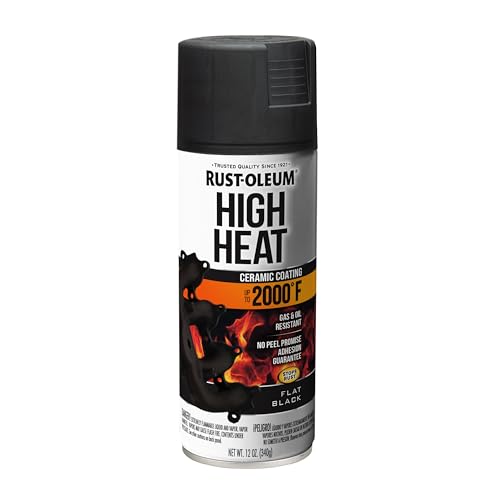
This spray is designed for automotive parts and surfaces that experience intermittent high heat up to 2000°F. The tough enamel uses a Stops Rust formula to prevent corrosion and deliver long-lasting protection. It dries to touch in about 30 minutes and covers up to 10 sq. ft. per can. Best for general engine components, exhaust shields, and nearby metal surfaces. Choose this if you want dependable, broad coverage and corrosion resistance in a flat black finish. A limitation is that extreme handling or direct contact with flame may still cause wear over time.
Rust-Oleum Automotive High Heat Spray Paint, Flat Aluminum

Designed for automotive parts exposed to high heat up to 2000°F, this aluminum finish provides robust corrosion protection with the Stops Rust enamel. It dries quickly to touch and offers broad coverage of about 10 sq. ft. per can. Best for exhaust clamps, heat shields, and manifolds that benefit from a silver-tone finish. Limitations include potential glare or color shift with intense heat cycles, so test on a small area first.
Blk Flame Proof Paint (VHT)
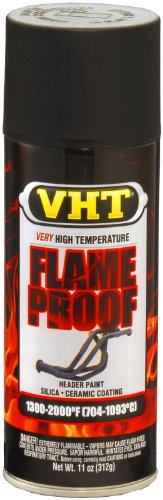
VHT Flameproof Paint tolerates extremely high temperatures from 1300°F to 2000°F, making it a strong choice for headers, exhaust systems, piston domes, and inside heads. It’s widely used in automotive and aerospace contexts for high-heat applications. Best for users needing industrial-grade resilience. As a caveat, curing is required and may be done on or off the vehicle, which adds a preparation step.
Rust-Oleum Automotive High Heat Spray Paint Custom Spray 5-in-1

This 12 oz can offers five spray patterns for enhanced control, plus a high-heat formula up to 2000°F. It’s resistant to gas and oil, helping prevent paint peel and fading. Best for tricky contours or hard-to-reach exhaust components where precision matters. A limitation is that some surfaces may require more curing time depending on thickness and application conditions.
Design Engineering High-Temperature Aluminum Silicone Coating

This aluminum silicone coating protects exhaust wraps and metal surfaces, withstanding temperatures up to 1200°F. It seals and shields while improving heat retention and durability. Best for protecting wrapped pipes, headers, and manifolds. Use this when you want a durable sealant layer rather than a standard paint finish. Limitation: upper temperature ceiling is lower than some other options, so it’s not suitable for the hottest exhaust sections.
Rust-Oleum 249340 Automotive 12-Ounce High Heat Primer
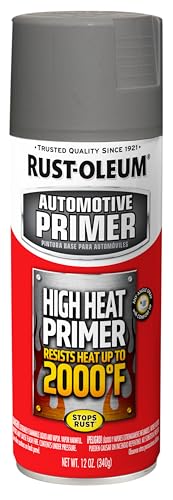
High heat primer is designed for metal surfaces such as engines and mufflers, using a Stops Rust formula to provide a rust-resistant base coat. It covers up to 12 sq ft and dries to touch in 30 minutes with topcoating possible after 1 hour. Best for building a protective base before applying finish coats on automotive components. Use this if you want a reliable base layer to improve adhesion and durability.
Seymour 16-1201 Hot Spot High Heat Spray Paint Aluminum

Designed to withstand continuous up to 1200°F for high-heat metal applications, this coating forms a durable porcelain-like finish that resists peeling, blistering, and discoloration. Best for grills, stoves, engines, and exhaust areas that demand long-term resilience. A limitation is the lower maximum temperature compared to some automotive-specific formulas.
Buying Guide
Key considerations when choosing high-temperature paint for exhaust-related tasks include maximum operating temperature, surface compatibility, and finish style.
- Temperature range: Match the coating’s max heat tolerance to the expected exhaust temperatures. For headers and turbo areas, go for 1300°F–2000°F options; for wrapped exhaust, look at specialty coatings designed for wraps.
- Finish and texture: Flat, aluminum, or ceramic finishes offer different appearances and protective behaviors. Choose based on visibility and corrosion risk.
- Adhesion and rust resistance: Surfaces exposed to oil, gasoline, and road grime benefit from rust-inhibiting formulas and strong adhesion.
- Application and cure: Some products require curing on or off the vehicle and may need multiple coats. Plan installation around curing times and ventilation.
- Surface preparation: Clean and degrease the metal before painting. A primer or corrosion-inhibiting base can improve longevity.
Frequently Asked Questions
- Q: Can I paint directly over old exhaust paint?
- A: It’s best to remove loose material and degrease the surface, then apply a high-heat primer or first coat to improve adhesion.
- Q: Do high-temperature paints require curing?
- A: Many do; check the manufacturer’s instructions for curing times and conditions to achieve full durability.
- Q: Which finish is most durable for exhaust parts?
- A: Ceramic-based high-heat paints and VHT-style flameproof coatings tend to offer strong heat resistance and long-lasting protection.
- Q: Are these paints safe for automotive interiors?
- A: Most high-heat exterior coatings are designed for metal parts exposed to heat and should not be used inside passenger compartments.