If you’re shopping for a hydraulic trailer jack, you want dependable lifting power, smooth operation, and solid stability. This guide highlights five top options best suited for heavy trailers, gooseneck setups, dump and cargo units, or RV towing. Each product is evaluated for who it’s best for, what makes it stand out, and any limitations to consider.
| Product | Lifting Capacity | Best For |
|---|---|---|
| Hydraulic Trailer Jack PFJ-1-ADS-K | 12,000 lb | Heavy trailers needing quick lift at the hitch |
| Hydraulic Trailer Jack PFJ-1-MB-K | 12,000 lb | Bolt-on 12K jack with robust hydraulic action |
| RAM PREMIUM 15K Self-Contained | 15,000 lb lift (up to 59″ height) | Self-contained power unit for frequent, high-load use |
| Hydraulic Trailer Jack PFJ-1-MB-ADS-K | 12,000 lb | Bolt-on 12K jack with hydraulic power |
| Dexter 24,000 lb Hydraulic Trailer Jack Kit | 24,000 lb dual 12K jacks | Dump, cargo, and gooseneck trailers requiring twin jacks |
Hydraulic Trailer Jack PFJ-1-ADS-K

12,000-pound lifting capability enables handling heavy trailers with confidence. The hydraulic system provides quick lifting at the push of a button, reducing the effort required versus manual cranking. A dual holding valve enhances stability during hitching and unhitching, contributing to safer operation on uneven surfaces.
Best for: Heavy trailers and frequent at-hitch adjustments where quick, reliable lift is essential. Caution: Ensure mounting points and frame tolerances match the bolt-on/stand kit configuration to avoid misalignment.
Hydraulic Trailer Jack PFJ-1-MB-K
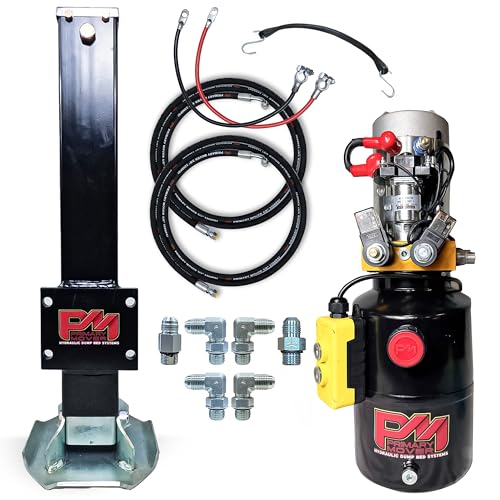
This 12,000-pound class jack pairs a robust hydraulic system with a bolt-on design for solid installations. Its operating characteristics mirror the ADS-K variant, including a dependable dual holding valve for stability during operation and hitching/unhitching. It’s well-suited for garages and shops that perform routine trailer service and towing.
Best for: Plan-to-install setups where a bolt-on 12K jack is preferred. Limitation: Bolt-on installation requires compatible trailer frame geometry and mounting hardware.
RAM PREMIUM 15K Self-Contained Hydraulic Jack

Equipped with a self-contained hydraulic pump unit and a 500W 12V DC motor, this jack delivers higher lifting capacity (15,000 lbs) and extended reach (59″ extended, 34.8″ retracted). A 2.5-quart reservoir and 3000 psi extension/1500 psi retraction create a power unit that reduces manual work on demanding trailers, dumps, or goosenecks.
Best for: Frequent, high-load lifting with integrated power; ideal for operators who want a portable, all-in-one hydraulic jack. Limitation: Higher weight and size may require more storage space and mounting planning.
Hydraulic Trailer Jack PFJ-1-MB-ADS-K

Another 12,000-pound class option with a bolt-on design and hydraulic power, featuring a dual holding valve for stability. This jack emphasizes reliability during frequent hitching cycles and when lifting trailers with heavy tongues. It’s a practical option for shops or fleets that need redundancy in mounting styles.
Best for: Fleet operators seeking a bolt-on 12K jack with proven stability. Caution: Check mounting allowances to ensure compatibility with existing trailer frame members.
Dexter 24,000 lb Hydraulic Trailer Jack Kit
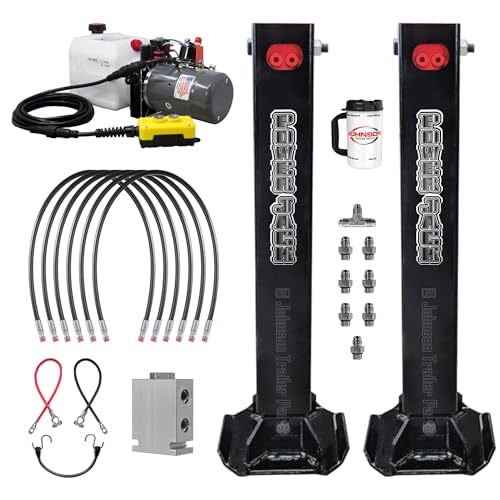
This kit delivers dual 12,000 lb power jacks designed for heavy-duty needs. The kit uses a KTI double-acting pump system to enable controlled raises and lowers with a synchronized operation to prevent uneven lifting. It’s well-suited for heavy gooseneck or dump trailers that require balanced, synchronized lifting on both sides.
Best for: Dual-jack setups needing synchronized lifting for heavy loads. Limitation: More components mean more installation planning and alignment requirements.
Buying Guide: How To Choose The Right Hydraulic Trailer Jack
- Load capacity vs. trailer type: Match the jack’s lifting capacity to your trailer’s tongue weight and intended use. Higher-capacity jacks are better for dual or heavy-haul trailers, while mid-range 12K units suit most single-axle cargo trailers.
- Mounting method: Bolt-on vs. weld-on vs. standalone stands. Choose based on existing frame design, ease of installation, and the potential need for removal or relocation.
- Power source and operation: Manual cranks are simple but labor-intensive. Hydraulic systems with electric or self-contained power units reduce effort, ideal for frequent lifting tasks.
- Stability and control: Dual holding valves and balanced dual-jack operation improve safety on uneven terrain and during hitching.
- Height range and stroke: Ensure the extended and retracted heights align with your trailer tongue height and towing setup.
- Portability and installation space: Consider weight, dimensions, and storage location when selecting a jack for limited garage or trailer compartments.
- Maintenance considerations: Look for robust hydraulic seals, reservoir capacity, and ease of refilling or servicing the hydraulic system.
FAQ
- What lifting capacity do I need for a typical trailer? For most single-axle trailers, 12,000 lb jacks cover common tongue weights. Doubling up with dual jacks is better for heavy gooseneck or dump trailers.
- Is a self-contained hydraulic unit worth it? Yes if you lift frequently and want to minimize manual effort. It simplifies operation and reduces crank workload.
- Should I bolt-on or weld-on a jack? Bolt-on offers easy removal and replacement; weld-on is sturdier but requires permanent frame modification and professional installation.
- Are dual jacks safer than a single jack? Dual jacks provide balanced lifting and reduce frame stress, especially on long trailers or heavy loads.
- What maintenance is required? Regularly check hydraulic fluid, valves, and seals; ensure mounting hardware remains tight; inspect for leaks and corrosion.
- Can these jacks be used on all trailer types? Most are designed for standard trailers, including cargo, gooseneck, and RV setups. Verify compatibility with your trailer’s tongue design and mounting space.